


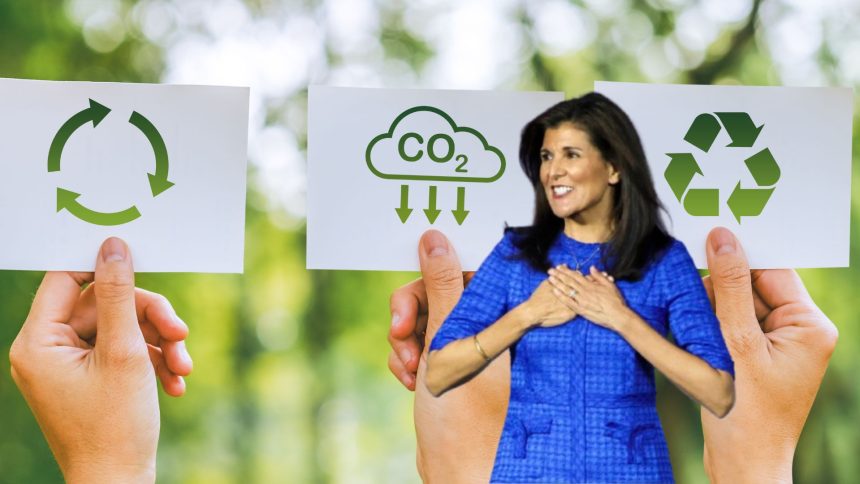
In recent years, climate change has emerged as one of the defining issues in global politics, prompting debates that echo across party lines and national boundaries. As the world grapples with rising temperatures, unprecedented weather events, and shifting environmental policies, prominent political figures are stepping forward to articulate their stances on this urgent challenge. Among them is Nikki Haley, the former Governor of South Carolina and United Nations Ambassador, whose perspectives on climate change reflect a complex interplay of governance, economics, and environmental stewardship.
In this article, we will explore Haley’s views on climate policy, her proposed solutions, and how her approach aligns with, and diverges from, broader Republican narratives on environmental issues. As the 2024 presidential election looms, understanding Haley’s position could provide crucial insights into the future of climate action in the United States.
Table of Contents
- Nikki Haleys Stance on Climate Change: An Overview of Policies and Perspectives
- Key Climate Initiatives Advocated by Haley: Balancing Economic Growth and Environmental Responsibility
- Addressing Climate Challenges: Haleys Recommendations for Federal and State Collaboration
- The Future of Environmental Legislation: Haleys Vision for Sustainable Development and Innovation
- Q&A
- Concluding Remarks
Nikki Haleys Stance on Climate Change: An Overview of Policies and Perspectives
Nikki Haley has articulated a nuanced perspective on climate change, emphasizing the need for practical and balanced solutions. She advocates for policies that promote energy independence while acknowledging the changing climate. During her tenure as the United Nations Ambassador, Haley pushed for innovation in clean energy technologies rather than strict regulations that might stifle economic growth. Her approach centers around a few key principles:
- Innovation over Regulation: Haley promotes technological advancements to combat climate change, preferring solutions that encourage American ingenuity.
- Economic Considerations: She emphasizes that environmental policies should not compromise job creation or the economic vitality of communities.
- Bipartisan Dialogue: Haley calls for collaborative efforts across party lines to develop comprehensive strategies for climate resilience.
Her stance also reflects a cautious acknowledgment of the long-term impacts of climate change. While she acknowledges the scientific consensus on climate issues, Haley maintains that responsive policy must balance environmental stewardship with economic realities. This dual focus reveals itself in her proposed policies, which can be summarized in the following table:
| Policy Area | Haley’s Position |
|---|---|
| Renewable Energy | Supports investment in clean energy technologies |
| Climate Agreements | Advocates for fair agreements that don’t limit U.S. competitiveness |
| Carbon Emissions | Encourages innovation rather than strict regulatory frameworks |
Key Climate Initiatives Advocated by Haley: Balancing Economic Growth and Environmental Responsibility
Nikki Haley’s approach to climate change emphasizes a harmonious relationship between environmental sustainability and economic advancement. Advocating for practical solutions, she supports *innovation and technology* as key drivers in the fight against climate change. Haley points to investments in renewable energy sectors, claiming they can spur job creation while contributing to a cleaner environment. She believes that the answer lies not in imposing stringent regulations that may stifle growth, but in promoting a framework where businesses can thrive alongside nature.
Among her highlighted initiatives are:
- Carbon Capture Technologies: Emphasizing the development of systems that reduce greenhouse gases from the atmosphere.
- Sustainable Agriculture Practices: Encouraging methods that protect the environment while ensuring farmers maintain profitability.
- Incentives for Green Business Investments: Promoting tax breaks and subsidies for companies that adopts sustainable practices.
Haley also stresses the importance of international collaboration on climate issues, advocating for agreements that are both attainable and economically beneficial. She believes a global approach can lead to innovative solutions that reflect shared values and goals, fostering long-term sustainability without sacrificing economic opportunity.
Addressing Climate Challenges: Haleys Recommendations for Federal and State Collaboration
Nikki Haley emphasizes the importance of a collaborative approach between federal and state governments to effectively combat the pressing threats posed by climate change. Her recommendations focus on enhancing communication and developing shared initiatives that align environmental goals with economic growth. By fostering partnerships, Haley believes that states can harness their unique resources and strengths, leading to innovative solutions tailored to local needs. Key proposals include:
- Incentives for Renewable Energy: Establishing federal tax credits that empower states to develop and invest in renewable energy projects.
- Regional Climate Initiatives: Promoting interstate collaborations to address shared climate challenges and resource management.
- Infrastructure Resilience: Implementing grants for states to enhance their infrastructure against climate-related disruptions.
- Public Awareness Campaigns: Developing joint efforts to educate citizens on sustainable practices and environmental stewardship.
Haley also highlights the need for a cohesive data-sharing platform that allows both levels of government to monitor climate impacts effectively. This infrastructure would facilitate timely responses to evolving climate scenarios, ensuring that resources are allocated efficiently. Through transparent collaboration, the federal and state governments can address climate change with a unified front, creating a synergistic effect that optimally leverages their respective capabilities. Such an approach fosters accountability and encourages continuous improvement in climate policies across the nation.
The Future of Environmental Legislation: Haleys Vision for Sustainable Development and Innovation
As the conversation around climate change intensifies, Haley envisions a robust framework of environmental legislation that harmonizes economic growth with sustainable innovation. Her approach emphasizes the importance of collaborative partnerships among government, industry, and academia to drive forward-thinking solutions. She advocates for policies that not only address pressing environmental challenges but also stimulate job creation and technological advancements. By prioritizing renewable energy investments and green technologies, Haley aims to steer the nation toward a future where environmental responsibility is integrated into the core of economic strategies.
In her vision, the implementation of sustainable practices should be both practical and achievable. Haley proposes a three-pronged strategy focused on incentivizing innovation, enforcing regulations, and cultivating public awareness. Key components of her plan include:
- Tax incentives for businesses adopting green technologies
- Strict emissions regulations for industries and transportation
- Education initiatives to foster an eco-conscious society
By employing these strategies, Haley believes that the U.S. can lead the world in sustainable development while ensuring that economic prosperity is not sacrificed on the altar of environmental stewardship.
Q&A
Q&A: Nikki Haley on Climate Change
Q1: What is Nikki Haley’s stance on climate change?
A1: Nikki Haley acknowledges that climate change is a real and pressing issue. She emphasizes the importance of addressing environmental challenges while balancing economic growth and energy independence. Haley advocates for a pragmatic approach that includes innovation and technology rather than solely relying on regulations.
Q2: How does Haley propose the U.S. should address climate change?
A2: Haley believes that the U.S. should invest in clean energy technologies and support solutions that foster economic development. She argues for an all-of-the-above energy strategy that includes not just renewables, but also traditional energy sources like natural gas. This multifaceted approach, according to Haley, would create jobs and help reduce emissions simultaneously.
Q3: What criticism has Haley faced regarding her views on climate change?
A3: Critics have pointed out that Haley’s emphasis on economic growth and energy independence could sideline urgent climate action. Environmental advocates argue that her approach may not go far enough to combat the severe impacts of climate change, and some have labeled her as a proponent of fossil fuels despite the global push for more aggressive climate policies.
Q4: How does Haley respond to calls for immediate action on climate change?
A4: Haley contends that immediate action must be balanced with consideration for the economic ramifications. She argues that hasty measures could harm American families and businesses. Instead, she advocates for solutions that stimulate innovation, arguing that economic prosperity is essential to sustaining long-term environmental efforts.
Q5: What specific policies does Haley support or oppose concerning climate change?
A5: Haley has voiced support for policies that promote research and development in clean technology and opposes regulations that she believes stifle economic growth. For instance, she has expressed skepticism about returning to the Paris Agreement without ensuring that it does not disadvantage American workers.
Q6: How does Haley’s background influence her views on environmental issues?
A6: Haley’s experience as the U.S. ambassador to the United Nations and as the former governor of South Carolina informs her perspective on climate policy. She has had exposure to both national and global discussions on climate change and has often emphasized the need for American leadership in fostering international cooperation while safeguarding American interests.
Q7: What is Haley’s position on international climate agreements?
A7: Haley supports engaging in international climate agreements that are fair and accountable, but she is cautious about commitments that may place undue burdens on the U.S. economy. She has articulated the need for the U.S. to lead by example through innovation rather than through strict regulatory frameworks.
Q8: Looking forward, what role does Haley see for herself in the climate change debate?
A8: Haley aims to position herself as a pragmatic leader who can bridge the gap between environmental stewardship and economic growth. She intends to contribute to the climate change discourse by advocating for policies that leverage American ingenuity to address environmental challenges while ensuring the growth of the economy and job creation.
Concluding Remarks
Nikki Haley’s approach to climate change reflects a nuanced perspective that seeks to balance environmental concerns with economic priorities. As she navigates her political career and potential presidential aspirations, her policies will be scrutinized by both supporters and opponents. The discourse surrounding climate action continues to evolve, and Haley’s stance may play a significant role in shaping the Republican Party’s future position on this critical issue.
As the impacts of climate change become increasingly evident, the need for actionable solutions remains urgent, prompting questions about the effectiveness of various political strategies. Going forward, Haley’s ability to address these challenges may not only define her political legacy but also influence the broader conversation on sustainability in America.


