


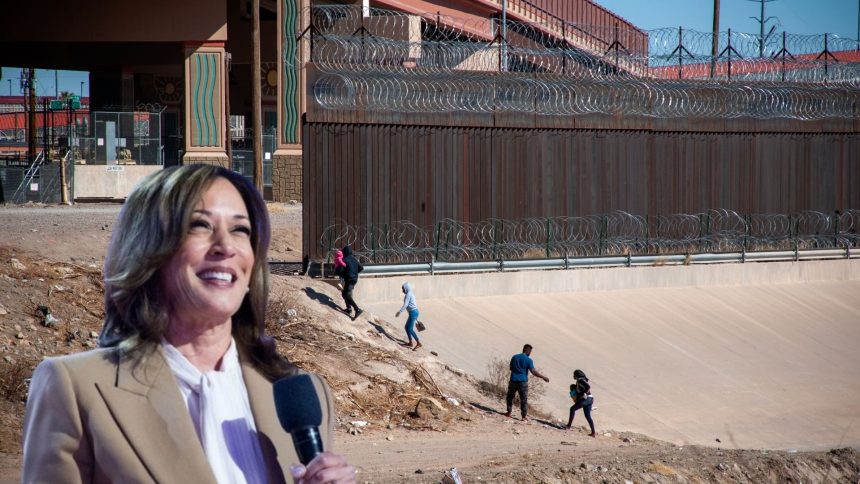
In the ever-evolving landscape of American politics, few issues spark as much debate as immigration and border security. At the forefront of this discourse is Vice President Kamala Harris, whose stance on the controversial border wall has come under scrutiny and sparked discussions about political consistency. Critics argue that Harris has ‘flip-flopped’ on the issue, while supporters assert that her position reflects a nuanced understanding of the complexities surrounding the U.S.-Mexico border.
As the nation grapples with pressing questions about immigration policy, we delve into the varied perspectives on Harris’s statements and actions regarding the border wall, seeking to unravel the intricate web of beliefs, political pressures, and public perceptions that shape her evolving narrative. Join us as we explore the multifaceted dimensions of a topic that resonates with both fervent advocates and steadfast opponents, illuminating the broader implications of her position in the context of contemporary governance.
Examining Kamala Harris’s Evolving Position on the Border Wall
Throughout her political career, Kamala Harris has repeatedly placed emphasis on a multifaceted approach towards immigration, with aide to ensuring safety, dignity, and due process for immigrants. There is, however, an evolution in her perspective on the border wall. Her latest stance reflects a call for the halt of the border wall construction entirely.
- During her 2020 presidential campaign, she pledged to take executive action to stop the border wall construction. She also vowed to invest in smart security solutions rather than a physical barrier.
- While serving as a senator in 2019, she criticized President Trump’s border wall as a ‘medieval vanity project’
- However, in 2018 she expressed support for a compromise budget bill that including funding for a wall in exchange for DACA protections, but later voted against a different version of the same bill after protections were stripped out.
Table: Kamala Harris’ Stance Over the Years
| Year | Position |
|---|---|
| 2018 | Supported compromise bill including wall funding in return for DACA protections |
| 2019 | Criticized Trump’s border wall, but no explicit support or opposition to wall funding prese |
| 2020 | Opposed border wall construction completely, pledging to halt it through executive action |
These points reveal a nuanced stance that has drawn both applause and criticism for evolving over time. While her position was earlier seen as a willingness to consider a physical barrier when coupled with adequate protections for DACA recipients, the current firm opposition to any border wall construction appears to be a shift. Whether this shift is a response to changing political dynamics or indicative of a deeper revision of her stance is something that only time can fully elucidate.
Analyzing Political Implications of Harris’s Stance for the Democratic Party
Democratic Vice President Kamala Harris has drawn significant attention for her shifting stance on the building of a border wall. Early public statements saw Harris adhering firmly to President Joe Biden’s belief in shying away from physical wall construction in favor of prioritizing technological advancements, improved personnel training and holistic immigration policies to address border security.
However, recent signals imply a possible shift in stance. VP Harris’s statements seem to trend towards affording some credence and consideration to the strategic significance of physical barriers. Understanding this subtle shift is of immense importance in discerning the policy positions of the Democratic Party moving forward.
- Early Stance: Prioritizing technological advancements, improved personnel training, and holistic immigration policies
- Current Indication: Acknowledgment of strategic significance of physical barriers in border security
| Date | Public Statement | Interpretation |
|---|---|---|
| Early 2020 | Prioritized technological advancements over physical walls for border security | Harris was initially in line with President Biden’s stance adamant about reshaping the border response |
| Mid 2021 | Acknowledges the strategic significance of a physical wall in certain border areas | Harris may be pivoting to a more pragmatic approach towards border security, indicating a shift within the party’s stance |
| Current | Statements indicate a sustained openness to border wall construction, where strategically necessary | Implicit recognition of the border wall’s value as a component of comprehensive border security |
This new development within the Democratic Party’s platform towards border security could have substantial political implications, both within the inter-party landscape and broader national discourse about immigration reform.
Public Perception and Media Narrative Surrounding Harris’s Immigration Policies
Despite making headlines when appointed as the czar of immigration, Kamala Harris has been under constant scrutiny; her views on immigration policies, particularly about the border wall, seem to have undergone some modifications. Critics have accused her of flip-flopping on her stance regarding the border wall, triggering debates about policy consistency and political maneuvering.
When she served as senator, Harris strongly criticized the Trump administration for their symbol of division and hate, the border wall. In 2017, she even stated on an episode of the Pod Save America podcast:
“Building a wall will not secure our border and I oppose this cynical and harmful allocation of taxpayer dollars”
. However, as the Vice President, her tone seems to have softened. In a Washington Post interview, she mentioned the essentiality of ‘barriers’ at the border, leading some to argue this indicated a shift in her viewpoint.
| YEAR | STANCE |
|---|---|
| 2017 | Opposed the border wall |
| 2021 | Mentioned necessity of ‘barriers’ |
It’s essential to note that the terms ‘wall’ and ‘barriers’ may not be necessarily the same thing, and Harris might be referring to other forms of border security that are not as politically charged or destructive, such as:
- Smart technology for border surveillance
- Improved infrastructure at ports of entry
- Increase in workforce or personnel
Whether this means Harris ‘flip-flopped’ her stance is open to interpretation. It could also suggest a shift from a hardline stance to a more nuanced and comprehensive understanding of border security in her role as Vice President. It should serve as a reminder that our understanding of public figures and their policies should go beyond sound bites and catchphrases and delve into the complexity of the matters at hand.
Recommendations for Clarifying Immigration Strategies in Future Campaigns
On dissecting Kamala Harris’s stance towards the question of building the border wall, it becomes clear that her position has evolved over time. During her presidential campaign, Harris expressed skepticism about the effectiveness of walls and fences in addressing real immigrant problems. She emphasized on comprehensive immigration reform and focusing on the root causes that force people to migrate in the first place. Yet in recent times, Harris has shown support for border wall technology, but this does not mean a complete 180-degree turn from her previous stance. It is more an acknowledgement of the nuanced reality of border security.
- Transparency: Politicians should clarify their immigration strategies early on in their campaigns. By adopting transparent policies, they will not only avoid accusations of flip-flopping, but also allow voters to make informed decisions.
- Communication: Candidates should engage in open and honest dialogue about their proposals. Misunderstandings and misconceptions often arise due to inadequate explanation or insufficient details about the proposed immigration strategies.
- Evidence-Based: Immigration strategies should be evidenced-based with clear link to the outcome they aim to achieve. Debating positions purely on ideological or political lines often do more harm than good.
- Empathy: In framing immigration policies, understanding and showing empathy towards the challenges and difficulties faced by immigrants is crucial. Policies that seem unduly harsh or unfair can lead to public backlash.
| Political Strategy | Benefits |
|---|---|
| Transparency | Helps build trust with the electorate |
| Communication | Avoids misunderstandings and misconceptions |
| Evidence-Based | Creates more effective and achievable policies |
| Empathy | Cultivates a positive public sentiment |
Closing Remarks
the discourse surrounding Kamala Harris’s position on the border wall illustrates the complexity of political stances and the fluidity of public opinion. As we’ve explored various perspectives, it’s clear that definitions of “flip-flopping” can differ significantly depending on one’s political lens. For some, Harris’s evolving stance reflects a pragmatic approach to a nuanced issue, while others see it as a betrayal of original commitments. Ultimately, the dialogue surrounding immigration policy continues to be a battleground for differing ideologies, with leaders like Harris navigating a landscape that is as much about strategy as it is about principle.
As we move forward, it remains imperative for voters and observers alike to scrutinize these shifts critically and understand the broader implications they hold for our national discourse on immigration and security. In a world where policies are rarely black and white, perhaps the most prudent response is to engage in thoughtful discussion about the possible paths forward—a task that is as necessary as it is challenging.


