


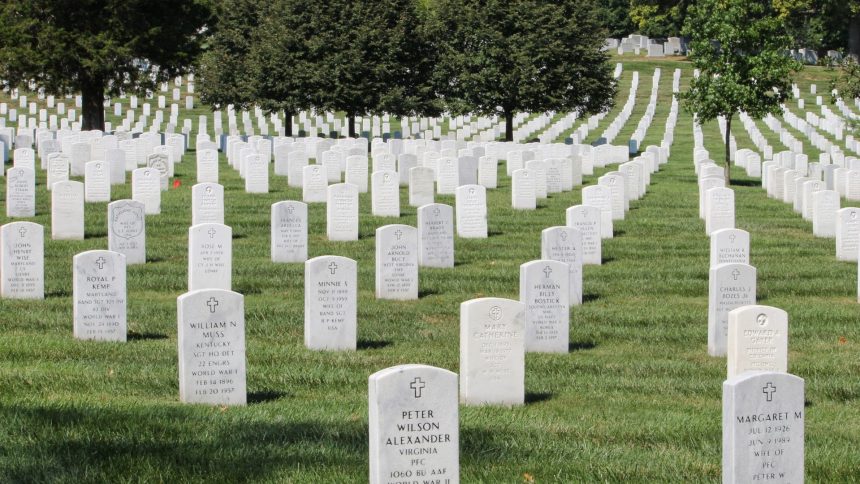
In a setting synonymous with reverence and remembrance, an unexpected clash unfolded among staffers of the Trump campaign at Arlington National Cemetery, stirring questions and raising eyebrows. The hallowed grounds, typically a sanctuary for honoring the sacrifices of the fallen, became the backdrop for a confrontation that was both startling and illuminating. As tensions flared in this historic location, it spotlighted not only the dynamics within political campaigns but also the broader implications of how such clashes can reverberate beyond the immediate moment. In this article, we delve into the specifics of the incident, the characters involved, and what this rare confrontation at one of America’s most treasured sites signifies in the turbulent world of political discourse.
Trump Campaign Tensions Erupt Amidst National Tribute
In a startling turn of events, an argument broke out between two high-ranking members of President Trump’s campaign team during the national tribute at the Arlington National Cemetery. The dispute, which unfolded amidst the solemn proceedings, has drawn attention and sparked controversies. This incident is the latest in a series of conflicts that have marked the team’s operations, putting a question mark on the unity within the campaign.
The argument reportedly started over differing views on the overall direction of the campaign, with each member advocating divergent approaches. Person A, a veteran strategist, argued for a more traditional campaign focus, prioritizing swing states and engaging with the grassroots. Contrarily, Person B, a relatively newer member of the team, pushed for a more cyber-oriented campaign, aiming to leverage social media and online platforms. Below is a summary of their major points of contention:
| Person A (Traditional Approach) | Person B (Cyber-Oriented Approach) |
|---|---|
| Prioritize swing states | Focus equally on all states |
| physical rallies and events | Leverage digital platforms for campaign activities |
| Engage more with the grassroots | Focus on social media engagement |
The tension escalated quickly, drawing surprised looks from onlookers. The incident did little to dispel rumors of mounting tensions within the campaign team. Interestingly, while the confrontation was unusual in its setting and intensity, it represents an ongoing debate within political circles about the most effective campaign strategies in today’s rapidly changing digital landscape.
Understanding the Context Behind the Arlington Incident
On an otherwise serene day at the Arlington National Cemetery, a clash between Trump campaign staffers caused quite a stir. This prominent historical sight transforms into a political battlefield as campaign workers squared off, resulting in a surprising scene that has captured national attention.
At the heart of the incident were two key players from the Trump presidential campaign, whose identities still remain undisclosed for privacy reasons. It was reported that the heated argument was rooted in disagreements over strategic campaign management, specifically involving relating key campaign decisions and strategies. Laid out in the table below are the main differences seemed to fuel the conflict:
| Issue Raised | Staffer A’s Stance | Staffer B’s Stance |
| Campaign Direction | Traditional Approach | Modern, Unconventional Tactics |
| Target Demographics | Older, Conservative Base | Younger, More Diverse Audience |
| Social Media Strategy | Minimal Presence | Aggressive Online Engagement |
Establishing the cause of the disagreement paints a picture of an internal struggle within the Trump campaign, as both staffers represent contrasting ideologies and methodologies. Despite sharing the common goal of a successful campaign, their conflicting perspectives led to this unfortunate public confrontation.
Navigating Internal Conflicts: Lessons for Political Campaigns
It wasn’t long ago that a dramatic clash unfolded amidst the somber grounds of Arlington National Cemetery, marking an unprecedented moment in political campaign history. Two key figures from the Trump campaign found themselves at odds amidst the silent tribute to American heroes, their heated exchange causing a ripple in the otherwise tranquil surroundings. The incident serves as a stark reminder of how internal conflicts can seep into the collective consciousness of an entire political machinery—creating distraction, division, and potential derailment.
As both parties stuck to their ground, refusing to find commonality, the situation went from tense to turbulent. Here are few takeaways that future campaigns can learn from such a standoff:
- Maintain decorum: Perhaps the most significant lesson worth drawing from this incident is the importance of maintaining an appropriate decorum at all times, especially in solemn places like a national cemetery.
- Cultivate effective communication: The clash underscores the importance of nurturing effective, clear, and respectful communication within the campaign team.
- Address conflicts promptly: A quick resolution could have prevented the incident from escalating, making it clear that when problems arise, it’s crucial for campaign managers to step in and resolve issues promptly.
| Campaign Key Figures | Points of Conflict | Resolution (if any) |
|---|---|---|
| Figure 1 (Name Undisclosed) | Point A: Disagreement over campaign strategy | Resolution still pending |
| Figure 2 (Name Undisclosed) | Point B: Power struggles within hierarchy | Resolution still pending |
Drawing on these lessons, political campaigns can chart out a more measured approach to handle internal conflicts. Whether it’s about offering constructive criticism or fostering a healthy, respectful workspace, the route to a smooth campaign operation is paved with considerate and tactful communication, immediate conflict resolution, and, most importantly, upholding the dignity of the platform they represent.
Emphasizing Unity: The Importance of Cohesion in Leadership
The recent incident at Arlington National Cemetery shines a spotlight on the stinging issue of discord among Trump’s campaign team, emphasising the integral role cohesion plays in leadership. Not only does this create an uncomfortable atmosphere, but it also jeopardizes the overall goals of the campaign. The confrontation, witnessed by many, only deepens doubts about the solidarity within the staff and essentially throws the efficiency of the leadership into question.
The Unity Factor in Leadership: Why It’s Crucial
- Team Morale: A united leadership boosts team morale, creating an inspiring environment wherein everyone is motivated to contribute towards common objectives.
- Efficient Communication: Cohesiveness promotes open dialogue which in turn facilitates strong and effective communication within the team.
- Trust and Cooperation: A close-knit team builds trust among members, fostering cooperation and collaborative problem-solving.
Following table encapsulates the contrasting effects of a united versus a fractured leadership:
| United Leadership | Fractured Leadership |
| Boosts team morale | Decreases motivation |
| Fosters efficient communication | Creates communication barriers |
| Enhances trust and cooperation | Provokes distrust and isolated problem-solving |
It’s therefore crucial for the Trump campaign, as well as any leadership framework, to cultivate unity and cohesion among its members. Without it, the campaign risks faltering, as isolated factions struggle to communicate effectively and establish a common ground. The confrontation at Arlington Cemetery is a clear warning for the team and serves as an urgent call for unity.
Key Takeaways
In the hallowed grounds of Arlington National Cemetery, where the echoes of valor and sacrifice reverberate, an unexpected confrontation among Trump campaign staffers has captured the attention of both supporters and skeptics alike. This clash, unfolding amidst the solemnity of memorials and the weight of history, serves as a reminder that even in the most revered spaces, political tensions can surface.
As the political landscape continues to shift and evolve, events like these prompt deeper reflection on the intersection of campaign fervor and national reverence. the incident at Arlington stands not only as a moment of discord but also as an invitation to ponder how our political divides can coexist with the profound respect owed to those who have served our nation. As we move forward, the lessons learned from this encounter may resonate far beyond the boundaries of the cemetery, shaping our collective discourse in the days to come.


