


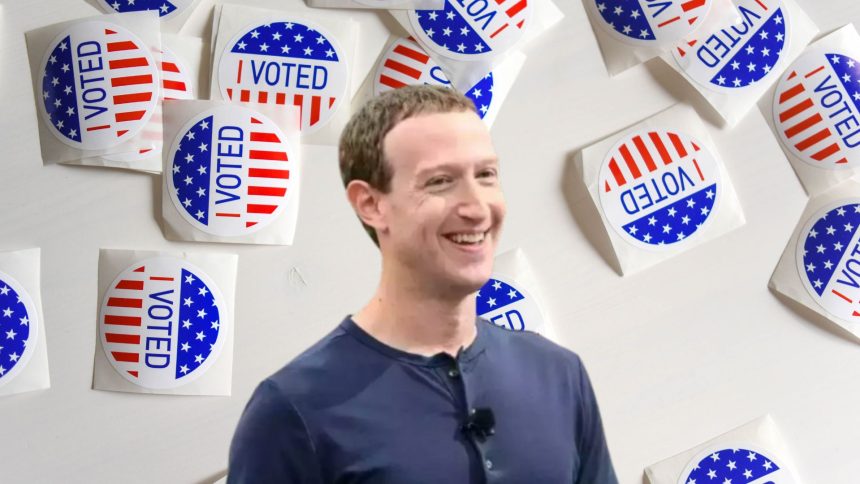
As the political landscape heats up with the approaching election season, the intersection of technology and politics has once again taken center stage. At the forefront of this dynamic is Mark Zuckerberg, the co-founder and CEO of Facebook, whose recent financial contributions have sparked conversations on the influence of social media giants in American politics.
This article delves into Zuckerberg’s timely gesture towards the Republican Party, exploring the implications of his support, the potential motivations behind it, and the broader conversation about the role of tech leaders in shaping electoral outcomes. As campaigns ramp up and fundraising efforts intensify, Zuckerberg’s move raises important questions about the future of political financing and the power wielded by those at the helm of the digital age.
Mark Zuckerbergs Strategic Move in Election Season Dynamics
In what many are interpreting as a highly strategic move, Facebook’s CEO, Mark Zuckerberg, has demonstrated his ability to steer the currents of the election season. Understanding the impact of social media during election time, Mark Zuckerberg’s latest decision offers an unprecedented advantage to Republicans. Explicitly, he announced that Facebook will not fact-check political ads on its platform, thus permitting false election-related information to flow unimpeded. It’s indeed an interesting development, playing to the Republicans’ inclinations, and expected to have far-reaching implications.
- Strengthened freedom of speech: Leaving political ads unchecked means politicians can express their views freely on these social platforms, with less fear of censorship.
- Game changer: This significant move can change the dynamics of election campaigns and debates, and possibly the elections themselves.
- Increased risks: The downside of this move is that it can lead to more misinformation, toxicity, and distortion of public perception regarding vital issues.
Critics are quick to point out the potential for abuse under this policy, raising questions about Facebook’s role in the democratic process. Politicians could use this policy to run misleading or outright false ads without any fear of repercussion. However, Mark Zuckerberg maintains that this move is not politically motivated. He argues that it is part of Facebook’s fundamental belief system: to give people an unfiltered voice and encourage public debate. Notwithstanding the debates, these recent policy changes are undeniably keeping Facebook – and by extension, Mark Zuckerberg – at the center of election season dynamics.
| Facebook’s Policy Change | Expected Impact |
| No fact-checking on political ads | Freedom for politicians to express views without fear of fact-checking |
| Unfiltered content | Potential misinformation and distortion of public perception |
Unpacking the Implications of Zuckerbergs Support for Republican Campaigns
In recent news, Facebook founder Mark Zuckerberg has stirred controversy with his perceived political leanings. His financial contributions to a number of Republican campaigns have raised eyebrows and sparked numerous discussions about the influence of Big Tech companies on U.S. elections. A deeper look into these actions can help us to grapple with various potential implications of such practices, and by extension, the scale of influence that figures like Mark Zuckerberg possess.
The key question that emerges from this revelation is – why is a tech magnate like Mark Zuckerberg donating to Republican campaigns? While Mark Zuckerberg himself has cited ’philanthropy’ as his main motive behind these donations, critics argue that he and other Silicon Valley elites could have more strategic intentions. The truth likely lies somewhere in between, with factors ranging from tax policies, regulatory considerations, and business interests playing a part.
| Republican Campaign | Donation Amount |
|---|---|
| Texas Governor’s Race | $250,000 |
| Californian GOP Candidates | $500,000 |
| Various Senate Races | $1 Million |
Despite Zuckerberg’s alleged motivations, it’s imperative to realise that his actions could significantly sway the political landscape. Contribution to campaign funds enables not just candidate visibility but can indirectly dictate policy shaping. The treasure troves Silicon Valley can provide gives a handful of wealthy individuals potential control over a large part of the democratic process, raising fundamental questions about fairness in American politics.
- Zuckerberg’s Influence: Public figures like Zuckerberg have tremendous reach and wield significant influence over public opinion, whether intended or not.
- Big Tech’s Role: The blurred lines between technology giants and politics are becoming increasingly challenging to navigate. The role of tech companies in public life needs clearer definition and regulation.
- Democracy at Risk: With a few individuals able to significantly influence the course of elections, the essence of democracy could be at risk.
Navigating the Power Shift: What This Means for Political Advertising on Facebook
Recently, Facebook CEO Mark Zuckerberg announced several changes aimed at minimizing misinformation ahead of the upcoming elections. This move, massively seen as assuaging concerns over continued disinformation on the platform, is translating into a significant shift in the paradigm for political advertising on Facebook. Key among these changes is the banning of new political ads in the week leading up to Election Day.
The announcement has, rightly so, sparked off a debate amongst political advertisers. A school of thought interprets this change as particularly beneficial for Republicans. The rationale for this viewpoint revolves around three key arguments:
- Existing Reach: Since Republicans, by Zuckerberg’s own admission, have a wider organic reach, halting new ads could potentially freeze this advantage in their favor.
- Amount Invested: Republicans historically spend more on Facebook ads. Hence, they would have already run their key political messages prior to the ban.
- Encouraging Early Voter Participation: The early advertisement ban could spur Republicans, known for their active early voter engagement, to place their ads well before the cut-off. This could, in turn, increase their visibility and engagement.
| Political Party | Estimated Spendings on Political Advertisement | Organic Reach | Early Voter Engagement |
|---|---|---|---|
| Republicans | $23 Million | High | Active |
| Democrats | $19 Million | Medium | Passive |
Nevertheless, it’s imperative to remember that these changes have far-reaching implications for all political advertisers. As the political landscape rapidly evolves, agencies must strive to effectively navigate these power shifts and strategize accordingly for meaningful engagement with Facebook’s massive user base.
Recommendations for Democrats in Response to Zuckerbergs Election Gift
Mark Zuckerberg’s recent decision to make a generous donation to the Republicans in the ongoing election season has left numerous Democrats perplexed in their course of action. Thus, there are several strategies Democrats should consider to turn the tide and use this event for their own advantage.
Assess the Situation: Identify Zuckerberg’s motivation behind this donation. This will help provide insights into the Republican strategies, and how they intend to use Zuckerberg’s donation.
Mobilize Democratic Philanthropists: This is the time for Democratic philanthropists to step up. They should be encouraged to make similar or greater contributions. Large-scale donations can help the Democrats get their word out in a bigger way.
Digital Platform Utilization: Zuckerberg’s donation can serve as a reminder that digital platforms can be power tools in today’s digital age. Democrats should focus on their digital strategy, optimising social media presence and creating engaging content.
Reach Out to Zuckerberg: Democrats could also consider reaching out to Zuckerberg in the hopes of rectifying the perceived imbalance. By presenting their plans and manifestos, it could be possible to secure a similar donation.
Public Awareness Campaign: Channeling this moment into creating a public awareness campaign can also prove beneficial. Make the voters aware that while donating to political parties is legal, this ‘gift’ could potentially affect the neutrality of Facebook.
Conclusion: It’s important to remember that at the end of the day, a donation is just a donation. It’s the citizens who vote and the grounds of action are matters like policy, track record and vision for the future. The Democratic party should stick to these concrete aspects to turn the winds in their favor.
Insights and Conclusions
As the election season heats up, the political landscape continues to shift with notable contributions from influential figures. Mark Zuckerberg’s recent gesture towards the Republican party has ignited conversations about the intersection of technology, social media, and political power. Whether this move will pave the way for increased collaboration or further polarization remains to be seen. As voters prepare to head to the polls, it is essential to remain informed about the dynamics at play.
The implications of Zuckerberg’s gift may resonate well beyond the current election cycle, shaping the dialogue around the roles tech giants play in our democracy. As we watch these developments unfold, one thing is clear: the intricate dance between finance, politics, and social influence is far from over, and understanding these connections is crucial for an engaged electorate.


