


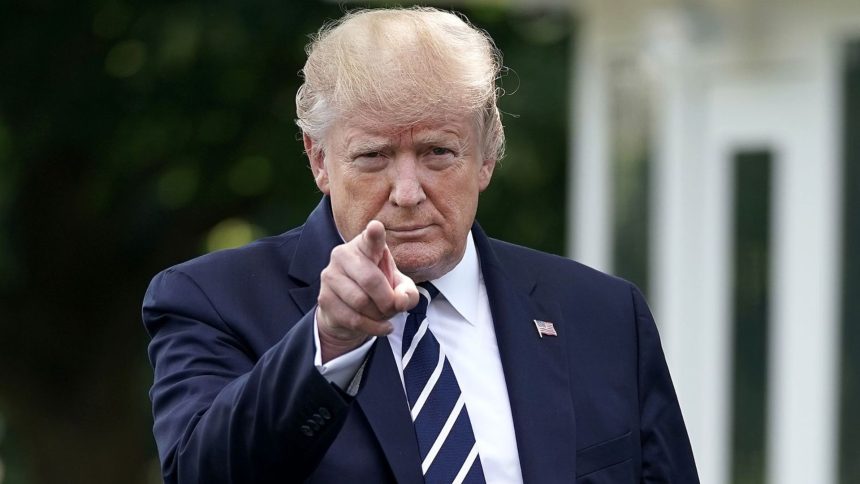
In the intricate tapestry of American political discourse, few figures have woven threads as controversial as Donald Trump. From his early days as a candidate to his ongoing presence on the national stage, Trump’s commentary has often ignited fervor among his supporters, but the ripples of his words extend far beyond their enthusiastic applause. This article delves into the broader implications of Trump’s inflammatory remarks, exploring how they resonate within the fabric of society, influence public sentiment, and shape the political landscape.
While his base may cheer, the echoes of his rhetoric reverberate through varied demographics, igniting discussions, sparking debates, and sometimes isolating allies. As we unpack the layers of his verbal provocations, we seek to understand their impact on the collective consciousness, urging a reflection on the power of language in a deeply polarized nation.
Understanding the Ripple Effect of Inflammatory Rhetoric on Public Discourse
Inflammatory rhetoric often breaches the bounds of responsible discourse and spirals into harmful consequences. Take for instance, former US President Donald Trump’s rhetoric. Often lambasted for its divisive and incendiary nature, Trump’s inflammatory comments not only invigorated his base but also catalyzed a significant shift in American public discourse. The effects were witnessed façades beyond his supporters and echoed across the globe.
In the maelstrom of bickering and accusations, it’s crucial to dissect and understand the ripple effect of inflammatory rhetoric on different aspects of public discourse. Inflammatory rhetoric often creates a distinct binary – us versus them, right versus wrong, and delimits intellectual discourse. This phenomenon significantly impacts three key aspects.
- Public opinion: Inflammatory language polarizes public opinion, cementing pre-existing biases and reducing the chance for nuanced conversations.
- Societal harmony: Such rhetoric can exacerbate societal fractures, leading to unrest and even violence. The assault on the U.S. Capitol on January 6, 2021, is often pointed out as a direct fallout of divisive verbiage.
- Political discourse: The tenor and nature of political convos change, giving way to aggressive communication practices that prioritize short-term gain over the long-term health of the nation’s democratic principles.
| Public Opinion | Societal Harmony | Political Discourse |
|---|---|---|
| Sharp binary division | Increased societal fractures | Aggressive communication practices |
These repercussions paint a grim picture of a society fraught with division and hostility – evidence enough to warrant a conversation about tempering the assaulting swords of inflammatory rhetorics in public discussion arenas.
The Influence of Celebrity Politicians on Polarization and Division
Over the years, the world has witnessed the rise of celebrity politicians, most notably in the figure of Donald J. Trump, the 45th president of the United States. The way Trump carried out his presidential term provoked strong opinions across the globe, and his comments indeed inflamed already tense political landscapes.
Trump is renowned for his unconventional, often abrupt, rhetorical style. His routine use of social media to dismiss his critics, endorse conspiracy theories, and showcase his decisions stirred both acclaim and criticism. Below is a simple illustrative table to better grasp the potential impact of some of Trump’s inflammatory comments on political polarization and division:
| Comment | Potential Impact |
|---|---|
| “There were good people on both sides” | Inflamed racial tensions, justified extreme-right protesters |
| “China virus” | Stirred xenophobic sentiments, blamed China for COVID-19 |
| “This election was stolen” | Fueled baseless claims of a rigged election, undermined democratic process |
Despite his rough and seemingly thoughtless approach to politics, it’s worth noting that Trump’s messaging indeed resonated with a significant number of people. The reasons varied:
- Disconnection with the political elite: Many voters felt unheard and unwelcome in the political landscape, and so they welcomed Trump’s non-political background.
- Economic anxieties: Trump’s promises to restore industries and jobs appealed to several who operated from a space of economic uncertainty.
- Cultural backlash: Trump’s rhetoric emboldened those feeling threatened by cultural changes, including immigration and the fight against systemic racism.
However, while this approach garnered him a devoted voter base, it also played a significant role in deepening the political chasms in the American society. The aftermath resulted in an American population polarized to an astonishing degree, mired in division. As the world moves forward, it remains to be seen what long-lasting effects this type of political practice will have on the fabric of societies.
Strategies for Rebuilding Trust in Political Commentary and Dialogue
One of the pivotal factors that is often disregarded in the discourse regarding political commentary is the long-term impact of volatile rhetoric. Former President Trump’s inflammatory comments, which resonated with a large swath of the American populace, have had a profound impact beyond just his immediate supporters. The ripple effect is felt in the sharp polarization and deep mistrust that permeate American society today. How can we begin to rebuild this frayed trust in political dialogue?
Firstly, it is pivotal to encourage balanced, bipartisan dialogue on mainstream platforms. Now more than ever, it’s important to foster a culture of listening to differing perspectives. This involves not just hearing conflicting views, but truly understanding and valuing them. In this respect, mainstream media outlets have a vital role to play through the inclusion of more moderate voices in their commentaries.
Secondly, public figures, especially those in politics, need to consciously endorse and practice respectful disagreement. Disagreements are inevitable in democratic discourses; it’s the manner in which they are expressed and handled that makes the difference.
Lastly, it is up to each individual to exercise discernment when discussing politics, to challenge biases, and be open to changing their minds. The way forward begins with each of us.
| Strategy | Action |
| Foster Bipartisan Dialogue | Include more moderate voices in mainstream media. |
| Promote Respectful Disagreement | Public figures should endorse and practice constructive criticism. |
| Exercise Individual Discernment | Challenge biases, be open to discussion and change. |
Encouraging Constructive Engagement: Moving Beyond Partisan Boundaries
In the wake of former President Trump’s inflammatory comments, it’s important to evaluate their effect beyond his immediate circle of supporters. Many of these comments have deeper implications; they serve to exacerbate existing partisan tensions and stunt attempts at meaningful conversation and growth. Complicating matters further is the pernicious effect of ‘echo chambers’ – insulated environments where individuals predominantly encounter opinions that align with their own.
Understanding the Impact:
- The Polarization Effect: Contentious comments create a “them-versus-us” mindset, discouraging cooperative dialogue and fostering a divisive culture.
- Normalizing Inflammatory Speech: If habitual, these comments can normalize harsh rhetoric, desensitizing society to extreme views.
- Stagnating Progress: Partisan squabbles waste time and resources that could be better utilized for effective governance and problem-solving.
| Unhealthy effects | Healthy alternatives |
|---|---|
| Divisiveness | bipartisan cooperation |
| Standardizing hate speech | Encouraging respectful dialogue |
| Stagnation in progress | Active problem-solving |
To encourage a healthier political landscape, we need to recognize the damaging effects of inflammatory rhetoric and actively work towards fostering an environment of constructive engagement. Moving beyond partisan boundaries is crucial in unearthing solutions to the pressing challenges our society faces today.
Key Takeaways
In the intricate tapestry of modern politics, the threads of rhetoric weave a narrative that often transcends the intentions of their weavers. Donald Trump’s remarks, while often hailed or condemned by his supporters, ripple outwards, influencing the broader political landscape in unexpected ways. As we step back to assess the various impacts of his inflammatory comments, it becomes clear that the reach of his words extends well beyond his base, igniting conversations, polarizing opinions, and sometimes even reshaping the agendas of his opponents.
In a world where discourse can ignite action, reflection on the implications of such speech becomes crucial. Whether fostering division or galvanizing collective resolve, Trump’s words serve as a reminder of the power of language in shaping societal dynamics. As we navigate this complex landscape, it’s essential to consider not only who is being spoken to, but who is listening, and how the echoes of these comments might resonate in the lives of those far removed from fervent support.
In closing, the conversation surrounding Trump’s inflammatory comments must continue, evolving to examine the diverse consequences that ripple through our interconnected society. After all, in the cacophony of voices in the political arena, every comment matters—echoing in ways we are only beginning to understand.


