


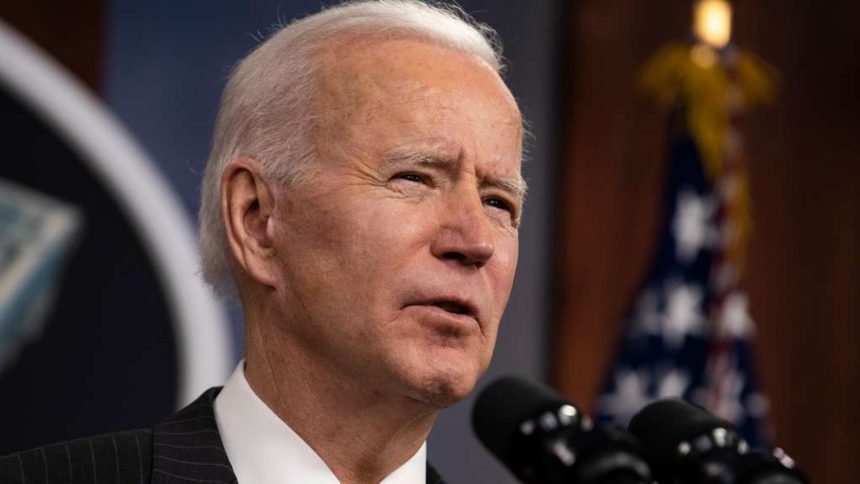
In the ever-evolving landscape of political discourse, where every word is dissected and interpreted through myriad lenses, President Joe Biden recently found himself at the center of a media whirlwind. His remarks regarding Israel prompted a flurry of speculation, leading some to question whether they were merely a product of a “senior moment.” However, the White House swiftly moved to clarify the context behind his statements, asserting that they were not a lapse in cognition but rather a deliberate engagement with complex international issues.
As the political arena continues to grapple with nuanced conversations surrounding foreign policy, this incident underscores the importance of clear communication in an age of heightened scrutiny and instantaneous analysis. In this article, we explore the implications of Biden’s comments, the White House’s subsequent clarifications, and what this reveals about the dynamics of leadership at a time when words carry unprecedented weight.
Understanding the Context of Bidens Statements on Israel
Amid the ongoing conflict between Israel and Palestine, US President, Joe Biden’s statements seem to tilt in favor of Israel, causing much confusion amongst analysts globally. Recently, the White House made an attempt to clarify Biden’s stance on this crucial issue. According to the White House Press Secretary, Jen Psaki, in an official press briefing said, “The president’s words were not ‘a senior moment’ but a statement of his personal belief and commitment towards Israel’s security.”
In consideration of the context behind Biden’s statement, we must remember some critical factors. In the past, Biden, a Democrat, has always maintained his support for Israel; he once proclaimed, “You don’t have to be a Jew to be a Zionist.” Thus, this inclination towards Israel is not a new phenomenon. Furthermore, his comments are not merely personal sentiments but also echo the longstanding bipartisan U.S. support for Israel.
- Deep-Rooted Personal Belief: Biden has repeatedly declared his staunch support for Israel, both as a Vice-President under Obama’s administration and now as President.
- Historical Bipartisan Support: Biden’s statements reflect the traditional U.S policy of supporting Israel, which transcends party lines.
- Strategic Implications: His words also indicate the geopolitical importance of Israel in U.S foreign policy.
| Biden’s Position | Implications |
|---|---|
| Biden’s personal belief | Continued U.S support for Israel irrespective of changing circumstances. |
| Historical Bipartisan Support | Sustainable backing of Israel by the U.S government, regardless of the party in power. |
| Strategic Implications | Israel remains a critical ally to the U.S in the Middle East. |
Therefore, understanding the larger context of Biden’s statements about Israel helps provide a more insightful perspective on the remarks, beyond viewing it as merely a ‘senior moment’.
Analyzing the Implications of the Clarification
Following the recent White House statement, it has become apparent that President Biden’s seemingly controversial remarks about Israel were not the by-product of a momentary lapse in cognition as some critics claimed, but a misunderstood statement. There are certain key considerations that come into play here, reflected in how we understand these comments in the grand scheme of American-Israeli relations.
Firstly, there is a need to highlight the importance of context. The President’s remarks were embedded in a larger discussion about Middle Eastern stability and should be interpreted as such. A list of the key implications include:
- Support for a Two-State Solution: The comment injects fresh vigor into the conversation about a two-state solution - a diplomatic stance the U.S has traditionally supported.
- Diplomatic Misinterpretation: The clarification shows that Biden’s remarks have been diplomatically misinterpreted, potentially affecting future U.S-Israel relations.
- Policy Shift: If the White House’s explanation is taken at face value, Biden’s comment marks a slight departure from past hard-line stances on Israel, hinting at a possible policy shift.
We can analyze these implications through two broad lenses: how they might affect domestic politics in the United States and how they will reshape geopolitics in the Middle East. A concise summary in the form of a table is presented below:
| Category | Implications |
|---|---|
| Domestic U.S. | May heighten criticism of Biden’s approach to international relations. Likely to increase discussions about a two-state solution. |
| Middle Eastern Geopolitics | Could influence a fresh wave of diplomatic engagements. Might precipitate a shift in regional power dynamics. |
this revelation by the White House presents an opportunity to build nuanced understandings of Biden’s approach towards the Middle East. It stands to influence not only American-Israeli relations, but also a wider discourse on peace and stability in the region.
Communication Strategies in Political Leadership
Recent remarks by the US President Joe Biden surrounding the Israel-Palestine conflict caused quite the stir across global political strata. White House officials were quick to assuage concerns, clarifying that the statements were not reflective of a ‘senior moment’, but rather the candid expression of President Biden’s personal thoughts on the matter.
In a public address, Biden stated:
“In my humble view, there isn’t a single answer that can resolve the decades-long conflict overnight. It will take time, patience, and most importantly, open dialogue.”
As with any political communication strategy, conveying the correct message is a tightrope walk that requires intelligence, tact, and a thorough understanding of the immediate and long term implications of the conveyed sentiment. This was further elaborated upon in the official White House statement:
“President Biden did not have a lapse in memory, but rather spoke from a place of deep understanding and concern for the region. His words were a call for diplomatic engagement and constructive dialogue.”
The below table summaries key characteristics of an effective political communication strategy.
| Characteristic | Description |
|---|---|
| Clarity | Presenting views in a clear, concise manner, avoiding misleading ambiguities or uncertainties. |
| Engagement | Acknowledging and understanding the audience’s perspective to foster an environment of mutual respect. |
| Sound Judgement | Gauging the immediate and long-term impact of a message across diverse factions. |
| Transparency | Putting forward the truth, however bitter it may be, reinforcing trust, and credibility. |
The Biden Administration continues to emphasize the importance of these elements in effective political communication, as evidenced in the quick, clear push-back against commentary on President Biden’s remarks.
Recommendations for Future Presidential Messaging on Foreign Policy
Examining President Biden’s recent conversation with Israel’s Prime Minister provides an invaluable blueprint for future presidential messaging on foreign policy. In this context, the White House’s clarification that Biden’s remarks were not a ‘senior moment’ but a calculated and well-thought-out message is crucial.
First and foremost, clarity is crucial. The need for a presidential message to be understood correctly, both domestically and internationally, cannot be overstated. To avoid misinterpretation, clear, concise, and straightforward messages should be the standard. This would prevent the need for subsequent clarifications, which can often draw unwanted media attention.
- Context: Offer a brief backstory, or context, to help the audience comprehend the current situation and its various facets.
- Consistency: Maintain a consistent message across all channels and public statements, which also reinforces credibility.
- Coherency: While maintaining a coherent message, it is key to understand the various viewpoints within the international community and adapt messages accordingly.
Another significant factor to bear in mind is the sensitivity of international relations. A minor miscommunication or misinterpretation can have far-reaching consequences. The goal should be to reduce potential misinterpretation through careful framing and considerate language. Below are a few supplementary recommendations that could be adopted.
| Method | Explanation |
|---|---|
| Non-Provocative Language | Focus on maintaining a respectful and non-accusatory tone to prevent further escalation. |
| Transparency | Be frank about intentions and strategies to foster trust. |
| Diplomatic Etiquette | Always respect established protocols due to their importance in managing international relations. |
By considering these facets of messaging in advance, our leaders can ensure they communicate their intentions in the most effective possible way.
Wrapping Up
the recent clarification from the White House regarding President Biden’s remarks on Israel underscores the complex interplay of communication in high-stakes international relations. As leaders navigate a rapidly evolving global landscape, misunderstandings can arise—yet they also present opportunities for transparency and dialogue. By addressing concerns about the president’s comments, the administration seeks to reaffirm its commitment to a cohesive foreign policy while dispelling notions of cognitive decline.
As the world watches closely, it remains crucial for all parties involved to engage in constructive discourse that fosters understanding and cooperation. With tensions in the region persisting, the focus now shifts to how these clarifications will influence U.S.-Israel relations moving forward and what implications they will have for broader diplomatic efforts. the conversation is far from over, and the clarity, or lack thereof, will play a pivotal role in shaping the narrative ahead.


