


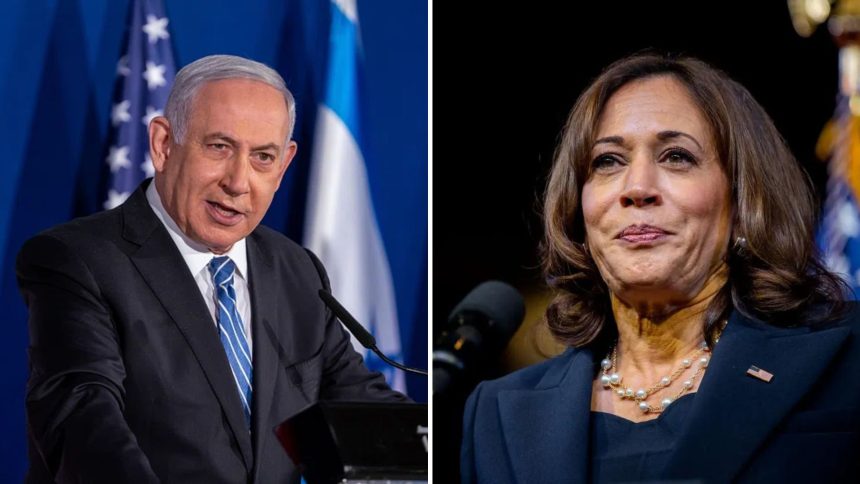
In a world where diplomatic negotiations often dance on the razor’s edge of contention, recent discussions between U.S. Vice President Kamala Harris and Israeli Prime Minister Benjamin Netanyahu have added a significant chapter to the ongoing dialogue surrounding the Israel-Gaza conflict. As the humanitarian crisis deepens and calls for peace resonate across continents, Harris has emerged as a fervent advocate for a ceasefire, urging a transition from violence to dialogue.
This high-stakes meeting not only highlights the complexities of international relations but also underscores the urgent need for a sustainable resolution. In this article, we explore the implications of Harris’s advocacy, the responses from both sides, and what this pivotal moment may mean for the future of peace in the region.
Harris Calls for Compassionate Diplomacy Amid Rising Tensions in Gaza
In a recent meeting with Israeli Prime Minister, Benjamin Netanyahu, US Vice President, Kamala Harris, expressed a profound call to promotion of a peaceful resolution amidst the intensifying Israel-Gaza conflict. She emphasized the urgency of diplomacy based on mutual respect and compassion, with the ultimate aim being the cessation of hostilities and protection of civilians on both sides.
Ambitious for a transformative approach to foreign policy, Harris points out three core principles to guide efforts towards de-escalation:
- Protection of Civilians — Insistent that the sanctity of human life must be at the forefront of the agenda, Harris appeals for strict adherence to international humanitarian law.
- Pursuit of Diplomatic Solutions — A cessation of hostilities is paramount. All parties must work earnestly to arrive at a ceasefire and foster a climate conducive to negotiations.
- Commitment to Humanitarian Aid — With the significant loss of life and destruction of homes, it’s crucial that international organizations be allowed unfettered access to both Israel and Gaza to provide necessary aid.
Upon reviewing the interaction with Netanyahu, Harris also underscored the importance of the role the United States plays in ensuring stability in the region. A table summarizing the key outcomes of this high-profile meeting is presented below, encapsulating the US Vice President’s advocacy for ceasefire:
| Topic | Outcome |
|---|---|
| Ceasefire | Advocacy for immediate de-escalation and cessation of hostilities |
| Diplomatic Solutions | Stressed that diplomatic solutions must be pursued earnestly |
| Humanitarian Access | Emphasized the urgent need to grant humanitarian organizations unrestricted access to provide aid |
Exploring the Implications of a Ceasefire: Humanitarian Needs and Security Concerns
Vice President Kamala Harris has recently stepped forward in advocating for a ceasefire between Israel and Gaza following a strategic meeting with Israeli Prime Minister, Benjamin Netanyahu. This milestone decision is among several measures being taken to sustain peace in the region which has seen escalated conflict and violence in recent days.
Amongst the main implications of this ceasefire, two poignant areas stand out: humanitarian provision and security concerns. Harris emphasized that humanitarian assistance must reach Gaza irrespective of the political dynamics. The ceasefire deal would then create an environment conducive for aid agencies to operate.
- Humanitarian Needs: The violent conflict has led to huge population displacement in Gaza. There is a dire need for food, shelter and medical assistance. The ceasefire will pave the way for help to reach civilians and fulfil their basic needs. It would also provide an opportunity for the reconstruction of destroyed infrastructure.
- Security Concerns: There are worries of a breakdown of law and order post-ceasefire, as seen in other war-torn regions. Harris reiterated the need for establishing strong security measures to uphold peace and prevent the likelihood of the conflict reigniting. The involvement of international peacekeeping bodies may be imperative in this aspect.
| Operation | Impact |
|---|---|
| Ceasefire Implementation | Reduction in violence, aid provision becomes possible |
| Security Measures | Prevention of conflict reignition, maintenance of law and order |
| Humanitarian Aid Provision | Meeting the basic needs of displaced populations, infrastructure reconstruction |
As Harris continues to advocate and push these agendas forward, the world watches with bated breath hoping for a peaceful resolution to the conflict. The brunt of war is borne by the innocent, and the ceasefire, if implemented, will be a major stepping stone towards stability and recovery for the people of Gaza and Israel alike.
Building Bridges: Recommendations for Lasting Peace between Israel and Gaza
Vice President Harris made a firm stand advocating for an Israel-Gaza ceasefire during her recent meeting with Prime Minister Netanyahu. The meeting, noteworthy for its intense discussions and far-reaching propositions, brought to the fore both the complexities of this long-term conflict and the urgency for creating conditions conducive to a durable peace.
Harris’ Fourfold Approach to a Lasting Peace
During the meeting, Harris presented her fourfold vision for the resolution of the Israel-Gaza conflict.
- Immediate de-escalation of violence: This stressed on a return to a ceasefire, with both sides halting rocket attacks and airstrikes.
- Protection of civilians: Acknowledging that any real peace should prioritize human lives, she called for both parties to guarantee the safety of civilians and their properties.
- Humanitarian aid to Gaza: In view of Gaza’s dwindling resources, the Vice President discussed urgent humanitarian assistance as a key factor in creating a conducive atmosphere for peace.
- Re-establishing diplomatic processes: Harris extended an invitation to both parties to return to the negotiating table to iron out their differences, believing that the only way out of this stalemate is through dialogue and diplomacy.
A strategic table is outlined below, capturing Harris’ proposed approach towards achieving a lasting peace, with the central goal in bold and the corresponding strategies in detail.
| Goal | Strategies |
|---|---|
| Establishment of Lasting Peace | Immediate de-escalation of violence Protection of civilians Humanitarian aid to Gaza Re-establishing diplomatic processes |
Harris is resolved that these initiatives would, if executed accurately, achieve a sustainable peace in the region. Nevertheless, the success of these ambitious endeavors hinges largely on the willingness and cooperation of the conflict parties. The world watches in anticipation, hopeful that these recommendations could mark a significant leap towards a lasting peace between Israel and Gaza.
International Response: The Role of Global Leaders in Supporting Ceasefire Initiatives
In the midst of escalating tensions and violence between Israel and Gaza, Vice President Kamala Harris met with Israeli Prime Minister Benjamin Netanyahu, advocating for a ceasefire. Harris emphasized the United States’ commitment to a two-state solution while highlighting the necessity of a ceasefire to prevent further civilian casualties. This showcases how global leaders can actively intervene and work towards the cause of international peace.
Key Discussions Points
- Harris highlighted the deep concern for civilian safety, especially children, in the conflict zone, stressing the importance of immediate de-escalation.
- The Vice President reaffirmed the right of Israel to defend itself, delineating the pivotal role of international law in guiding such conflicts.
- She proposed revitalizing diplomatic ties and encouraging dialogue among conflicting parties as key approaches towards a sustainable ceasefire.
During the meeting, the international response to the Israel-Gaza conflict was also analyzed diligently. Harris insisted on soliciting global support to pressurize the warring factions to agree to a ceasefire and, subsequently, peace talks. Reflecting her stance, a table summarizing the global position on the ceasefire is presented below:
| Country | Stance on Ceasefire |
|---|---|
| United States | Advocates for ceasefire, supports Israel’s right to defend itself |
| Russia | Calls for immediate ceasefire, emphasizes dialogue |
| China | Urges for ceasefire and multilateral negotiations |
| European Union | Demand an immediate end to the violence and supports a two-state solution |
Harris’ discussion with Netanyahu is a reflection of the potential influential role global leaders can play in advocating for ceasefire initiatives. It stresses the importance of dialogue, diplomacy and international cooperation in addressing conflicts and maintaining global peace and security.
The Way Forward
As the echoes of diplomatic dialogues continue to resonate, the call for a ceasefire between Israel and Gaza reflects the urgent need for renewed hope and reconciliation in a region long plagued by conflict. Harris’s meeting with Netanyahu underscores the complexities of a situation that requires not only political will but also a commitment to humanity and peace. The conversations that transpired offer a glimpse into the possibility of forward momentum, where advocacy for dialogue can potentially pave the way for lasting solutions.
As stakeholders on both sides weigh the implications of these discussions, the pursuit of tranquility must remain at the forefront of international attention. In the turbulent landscape of the Middle East, every step towards ceasefire is a step towards the promise of a brighter and more harmonious future for all.


