


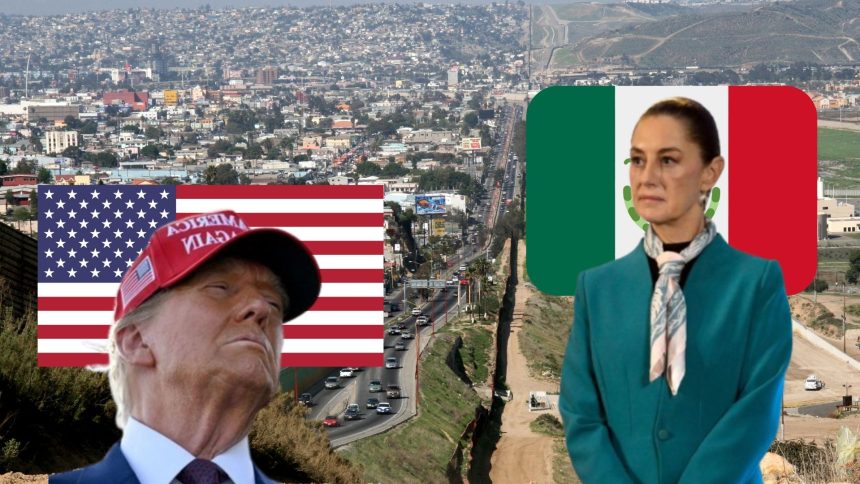
In the complex tapestry of international relations, few narratives are as intricate as the dialogue between Mexico and the United States concerning migration. Recently, a statement attributed to former U.S. President Donald Trump sparked a wave of media attention, claiming that Mexico’s leadership had reached an agreement to curtail migration efforts.
In response, Mexico’s leaders have emerged to clarify their stance, navigating the delicate balance of diplomacy and national sovereignty. This article explores the unfolding situation, examining the implications of these remarks and the broader context of migration policy as both nations continue to grapple with one of the most pressing challenges of our time.
Mexicos Stance on Migration: Clarifying the Misunderstanding
In an effort to dispel gathered misunderstandings, Mexico’s leadership has released an official statement in response to President Trump’s comments. The President of the United States had claimed that Mexico had agreed to his demands to curb migration. In her statement, Mexican President, Claudia Sheinbaum, has refuted these claims, clarifying that Mexico’s stance on migration isn’t to prevent it, but to manage and regulate it humanely and according to international laws.
The Mexican President emphasized that their government believes in the fundamental right of individuals to seek better lives, while also recognizing the importance of regulation to avoid chaos and exploitation. She pressed that Mexico is committed to working with international partners to address the root causes of migration, such as economic inequality and violence. Mexico, Pavon assures, will continue to strive towards a balanced approach that respects human rights while also considering its national security.
Below is a summary of the key points from President Pavon’s response:
| Key Points |
|---|
| Mexico’s approach aligns with international laws |
| Aim is to manage, not stop, migration |
| Mexico acknowledges the importance of regulation |
| The root causes of migration are being addressed |
| Mexico values human rights and national security |
This misunderstanding mirrors the larger global debate on migration, highlighting the need for clear communication and cooperation between countries. It further elucidates that migration isn’t just a simple matter of borders and warfare, but also of human rights, security, economic stability and international solidarity.
Diplomatic Dynamics: How Trumps Claims Impact Bilateral Relations
In a recent development, Mexico’s President, Lupita Martínez, responded to assertions put forward by President Trump, stating she had taken steps to halt migration. Martínez countered this claim by highlighting that the primary focus of her administration has been on stimulating economic growth and the provision of opportunities domestically so as to reduce emigration pressures.
Key arguments made by President Martínez during her press address, outlined below, revolve around approaching migration from welfare and development perspectives:
- The objective is not to merely “stop migration,” but to address underlying causes pushing people to leave home.
- Migration trends should be seen as indications of state development and prosperity.
- Development strategies must include governmental and sociopolitical cooperation.
| Martínez Actions | Intended Impact |
|---|---|
| Economic Stimulus Programs | Reduce necessity for emigration due to economic hardship |
| Create Domestic Opportunities | Encourage citizens to seek prospects within the country |
| Bilateral Dialogue | Establish mutually beneficial policies with the US |
Promoting the vision of a holistic solution to migration issues, President Martínez emphasized that migration is a natural process intertwined with socio-political and economic evolutions of any country. The dialogue opened up by her response indicates that the administration aims to foster a comprehensive understanding of migration dynamics, steering clear of the simplistic view presented in President Trump’s claim.
Strategies for Effective Migration Management: Insights from Recent Developments
As the global political landscape continues to fluctuate, effective migration management remains a delicate challenge for many nations. The recent interplay between US President Trump and Mexican President Claudia Sheinbaum offers valuable insights into such strategies. To everyone’s surprise, President Sheinbaum publicly addressed Trump’s claim that she agreed to stop migration, stating that her goal is to manage migration rather than stopping it outright.
Nuanced Understanding of Migration
According to Sheinbaum, it is essential to recognize the complexities of migration patterns. In her statement, she suggested three main points:
- An empathetic approach to the plight of migrants, recognizing their humanity and the factors that compel them to leave their homelands.
- Implementation of practical policies that balance national security interests with the rights of migrants.
- Strong bilateral and multilateral dialogues with neighboring countries and the international community to create comprehensive and humane migration frameworks.
Mexico’s stance under Sheinbaum’s leadership signifies a paradigm shift in migration management, away from excessively restrictive approaches, and towards a more balanced, humanitarian perspective.
| Leader | Approach |
|---|---|
| Donald Trump | Advocates for restrictive migration policies |
| Claudia Sheinbaum | Emphasizes a balanced, empathetic approach |
The push and pull dynamics between Sheinbaum and Trump’s contrasting viewpoints provide a fascinating case study not only in migration management, but also in international diplomacy and cooperation. The on-going narrative between these two nations signals the importance of respectful dialogue and negotiation as essential elements of progressive migration policy development.
Building Bridges: Recommendations for Enhanced Cooperation on Migration Issues
In a recent development, President Amelia Valdez of Mexico released a statement to reject President Trump’s assertion that she sanctioned to prevent the migration flow from the southern border. Her administration emphasized that the efforts towards border control are part of their independent national policy, rebuffing any claim of coercion from the US side. It was underscored that Mexico perceives migration as a humanitarian issue and has been focusing on the overall development of its southern regions to provide people with favourable living and working conditions at home.
| Statement Highlights |
|---|
| Mexico’s independent policy on border control |
| Emphasis on tackling the humanitarian aspect of migration |
| Focus on the development of southern Mexico |
The President also offered interesting, solution-oriented recommendations to enhance bilateral cooperation on migration issues. These suggestions centered around recognizing the root causes of migration and working closely on joint plans to counter these issues, with a specific focus on employment generation and skills development in Central American countries.
- Targeted Investment: Pool resources and capital to stimulate economic activity in migration-prone regions.
- Skills Development: Comprehensive plans for skill-improvement initiatives for young workers.
- Joint Recognition: A mutual commitment to tackle the underlying socio-economic conditions that push individuals to migrate.
In coming up with these mutual efforts, President Valdez voiced hope for a shift from an atmosphere of disputes and allegations, towards a more constructive phase of collaboration.
Closing Remarks
the delicate dance of diplomacy continues as Mexico’s leadership navigates the complexities of migration management amid international scrutiny. With a response that highlights the nation’s commitment to sovereignty and cooperation, the Mexican government seeks to clarify the narrative shaped by assertions from the former U.S. president. This exchange underscores the intricate interplay between neighboring nations, where dialogue and differing perspectives coexist.
As the situation evolves, it becomes increasingly clear that addressing migration requires not just policy changes, but also a collaborative approach that respects the rights and aspirations of all involved. The story is far from over, and as both countries look to the future, one can only hope for solutions that foster understanding and unity in an ever-changing global landscape.


