


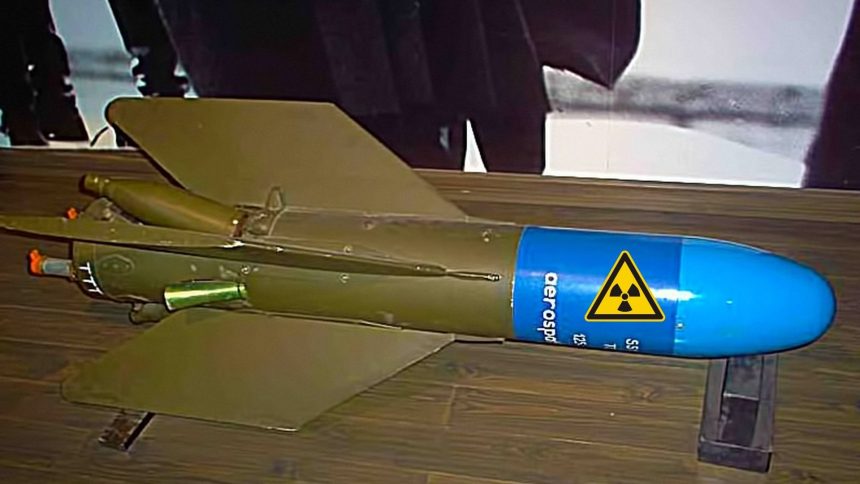
In a world where the echoes of past conflicts resonate with present realities, the landscape of international relations remains ever-shifting. Recently, Russia’s deployment of a nuclear-capable missile has drawn attention, signaling a seismic shift away from the Cold War-era doctrine of deterrence that once defined global power dynamics. This move not only rekindles memories of a time when the specter of nuclear confrontation loomed large but also raises urgent questions about the principles governing security and stability in the modern age.
As nations grapple with the implications of such actions, understanding this departure—and its potential impact on the delicate balance of power—becomes increasingly critical. In this article, we will explore the motivations, context, and consequences of Russia’s strategic choices, as well as how they redefine the parameters of deterrence in an evolving geopolitical landscape.
Reevaluating Nuclear Doctrine in Contemporary Russia
Historically, nuclear deterrence was the strategic cornerstone of the Cold War, where the principle of mutually assured destruction kept both superpowers at a tense standoff. However, revelations over Russia’s use of a nuclear-capable missile suggest the de facto abandonment of these traditional deterrence principles. Fueled by a blend of geopolitical ambition and internal consensus-building, this change could fundamentally transform international nuclear relations and escalate tensions in the global security environment.
By deploying such a missile, Russia sends an alarming signal to the international community. The missile’s use strays far from the nuclear doctrines of non-first-use and minimal deterrence prevalent during the Cold War, leading to a paradigm shift in nuclear strategizing. This is notably a departure from the relative predictability of the Cold War era and opens a proverbial ‘Pandora’s box’ of potential escalations.
| Cold War Doctrine | Contemporary Russian Doctrine |
| 1. Mutual Assured Destruction | 1. Aggressive Posturing |
| 2. Non-First-Use Policy | 2. Preemptive Strike Capability |
| 3. Minimum Deterrence | 3. Nuclear Proliferation |
- Aggressive Posturing: Russia projects its nuclear arsenal as a tool of coercion and intimidation, rather than purely for deterrence.
- Preemptive Strike Capability: Unlike non-first-use policy, Russia indicates that it might employ nuclear weapons early in a conflict, altering the nuclear doctrine’s traditional defensive approach to a more offensive one.
- Nuclear Proliferation: Russia’s readiness to use nuclear weapons shows a shift away from efforts to minimize nuclear armament, moving towards a policy of proliferation.
The Shift from Deterrence to Aggression: Implications for Global Security
In a dramatic departure from traditional Cold War tactics, Russia has begun to flex its nuclear capabilities in a brazen display of aggression. Instead of using these weapons as a deterrent, they are now being used to send a clear and potent message. This presents a significant shift in global security strategies and poses profound implications.
The repercussions of this shift are multifold. Here’s a quick look at some of them:
- Escalation of potential threats: With aggression replacing deterrence, the chances for conflict escalation are much higher. This could lead more nations to adopt a proactive rather than defensive stance.
- The destabilization of power balance: The cold war strategy ensured a balance of power, with nations deterred from lashing out due to shared potential for destruction. The use of such weapons for aggression disrupts this equilibrium.
- Deterioration of diplomacy: The moment a nation showcases its aggressive intent instead of adopting a defensive strategy, it seriously undermines existing diplomatic relations and negotiations.
In the table below, we see some of the significant nuclear powers and the potential risk posed by the shift from deterrence to aggression.
| Country | Nuclear Warheads | Potential Risk Level |
|---|---|---|
| Russia | 6345 | High |
| USA | 5800 | High |
| China | 320 | Moderate |
This shift in policies from deterrence to aggression poses a critical challenge for global security. The resultant increase in nuclear tension and potential conflict escalation urges nations to rethink their security strategies and policies.
Strengthening International Response: Strategies for Diplomacy and Deterrence
Moscow’s recent testing of a nuclear-capable missile represents a significant shift in tactics, positioning Russia in a much more aggressive stance than characterised by the Cold War doctrine of deterrence. It marks a seismic departure from the principle of “mutual assured destruction” (MAD), a bedrock principle of deterrence strategy wherein the aim was to prevent nuclear warfare than to provoke or initiate it. The dangers inherent to such a strategic shift are manifold, not least of which is the potential initiation of a renewed global nuclear arms race.
Strategies for Diplomacy:
- Emphasize on multilateral disarmament: With a renewed focus on arms reduction agreements, international bodies must urge Russia to reconsider its tactical shift.
- Enhance transparency: Encourage Russia to promote transparency in its nuclear activities and agendas, to build mutual trust and understanding.
- Leverage Economic Sanctions: If diplomatic measures fail, economic sanctions should be considered to discourage hostile activities.
Strategies for Detterence:
- Strengthen Nuclear Non-Proliferation Treaty (NPT): Enhancement of the NPT, with stricter penalties for violation can act as a powerful deterrent.
- Bolster defenses: Encourage NATO countries to collectively bolster their defenses against potential nuclear attacks.
- Counter-Posturing: Countries can enact a strategy of counter-posturing, signaling readiness to react to any threat, while avoiding aggression.
| Category | Action |
|---|---|
| Diplomacy | Emphasize on multilateral disarmament, Enhance transparency, Leverage Economic Sanctions |
| Deterrence | Strengthen Nuclear Non-Proliferation Treaty (NPT), Bolster defenses, Counter-Posturing |
These approaches must be navigated carefully, with an understanding that the ultimate goal remains the maintenance of international peace and security. Leaders have to bear the responsibility of standing up against this shift in nuclear posture before this becomes a norm, lest we risk a new age of unpredictability and insecurity in the nuclear landscape.
Preparing for a New Era: Recommendations for Policy Makers and Military Leaders
The recent deployment of a nuclear-capable missile by Russia denotes a radical divergence from the Cold War doctrine of deterrence, issuing a blaring signal to policy makers and military leaders around the globe. What bekeys this novel era is a precarious equilibrium between newly emergent powers and established superpowers, where traditional deterrence tactics may no longer offer a safeguard.
In this light, it’s prudent for political and military heavies to start educating themselves on the possible outcomes and necessary counter-measures. A good starting point would be understanding the philosophy that motivated this shift. For this, we recommend:
- Thorough analysis: of the-Russo geopolitical strategy to comprehend the motives behind this dramatic deviation.
- Conduct human intelligence: to ascertain the mood of the Russian military commands and gather deep insights on their preparedness to engage in a nuclear standoff.
- Prep for bilateral negotiations: to assertively express international chagrin over the flagship change in doctrine and seek ways to restore status quo.
| Consideration | Action |
|---|---|
| Russian geopolitical strategy | Careful, nuanced analysis |
| Russian military preparedness | Human intelligence gathering |
| Restoring status quo | Negotiations, diplomatic pressure |
Significantly, this must not be viewed as an impromptu challenge that can be overlooked. Instead, it should be accorded the seriousness it deserves in light of the potential consequences of a nuclear escalation. It’s a paradigm shift that calls for the rethinking and reframing of national security policies and the deterrence doctrine globally. The period of taking solace in mutually assured destruction (MAD) seems to be swiftly receding, making room for an uncharted era calling for judicious navigation.
Closing Remarks
Russia’s deployment of nuclear-capable missiles represents a pivotal shift from the well-trodden paths of Cold War deterrence. Rather than relying solely on the equilibrium of fear that characterized much of the 20th century, this current strategy suggests a willingness to embrace a more aggressive posture, one that raises questions about the global security landscape. As nations reevaluate their own defense policies in response, we find ourselves at a crossroads where the past’s stalemates collide with the uncertainties of the present.
Ultimately, the implications of this change resonate far beyond military strategy, challenging diplomatic relations and the very frameworks that have historically kept tensions at bay. As we look to the future, it is crucial for global leaders to navigate this evolving terrain with a keen awareness of history and a commitment to forged dialogue in the face of shifting doctrines.


