


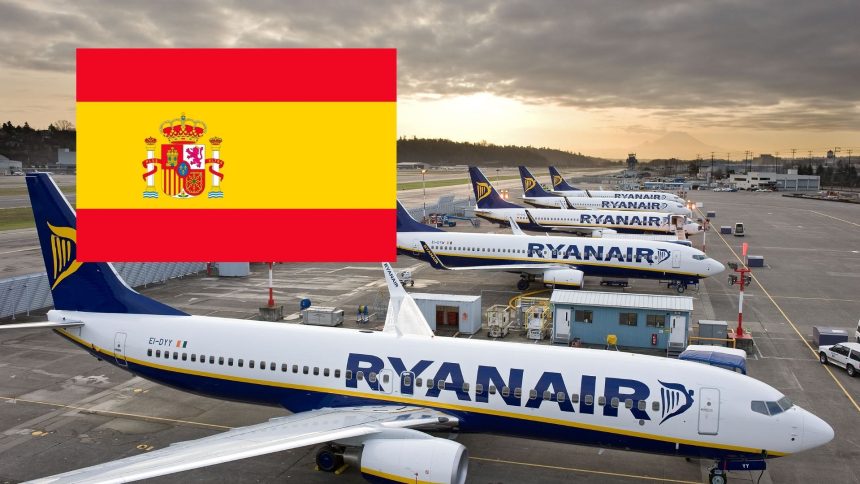
In a move that has sent ripples through the European aviation sector, Spain has announced hefty fines totaling €179 million against several budget airlines, with industry giant Ryanair taking the lead in the financial crosshairs. This decision highlights the growing tension between regulatory authorities and low-cost carriers, as issues surrounding consumer rights, transparent pricing, and operational standards come to the forefront.
As travelers increasingly turn to budget options for their journeys, the implications of these fines could reshape the landscape of air travel in Spain and beyond. In this article, we delve into the details of the fines, the reactions from the airlines involved, and what this means for both consumers and the future of budget travel in Europe.
Spain Takes Action Against Budget Airlines with Significant Fines
In a recent move framed as a clampdown on unfair pricing and consumer mistreatment, Spain’s regulatory authorities have embarked on a significant crackdown against leading budget airlines. As part of their punitive measures, Ryanair, the Irish low-cost airline, has been dealt a hefty fine of €179 million. This hit is in response to violations of Spain’s consumer protection laws including deceptive pricing, denying passengers their rights and breaking contract terms. Numerous other budget airlines are also facing colossal fines as part of this nationwide action.
Spain’s consumer watchdog “El Instituto Nacional de Consumo (INC)” identified multiple unscrupulous practices. These include:
- Incorrect Pricing Information: Ryanair and other budget airlines had been found obscuring mandatory additional costs in their advertised ticket prices.
- Restricted Passenger Rights: These airlines often declined passengers their rightful services like re-routing without any additional cost during flight cancellations or heavy delays.
- Unfair Contract Terms: Concerns were raised over automatically added services during online booking where customers needed to manually unregister.
The severity of the penalties imposed highlights Spain’s commitment to protect consumers. A table summary of the significant fines imposed on each airline is provided below.
| Airline | Fine (€) |
|---|---|
| Ryanair | 179m |
| Airline 2 | To be disclosed |
| Airline 3 | To be disclosed |
These actions have been deemed necessary to ensure a level playing field, demonstrating Spain’s bid to foster a fair and transparent culture within the aviation industry. While impactful, only time will tell whether these practices will truly deter airlines from resorting to such unscrupulous strategies in the future.
Understanding the Implications of the Ryanair Penalties for Consumers
Recent sanctions on several airlines, including the prominent budget carrier Ryanair, by the Spanish aviation regulatory bodies have seen record fines totaling the sum of €179 million. This has triggered widespread debates amongst consumers, analysts, and stakeholders on how these penalties might directly and indirectly influence the average traveler’s experience.
Foremost, it’s predicted that there will be a rise in ticket prices, which happens to be the pivotal point that arises from these Ryanair penalties. While it’s too early to confirm this assumption, there is a strong possibility that increased operational costs will lead to higher ticket prices, given that the airline will be forced to recoup its lost revenues somehow. The second implication can be traced to the services that Ryanair offers in-flight. There could be decreases in complimentary services and the introduction of additional charges for extras.
| Potential Impact | Description |
|---|---|
| Rise in Ticket Prices | Possible increase in the cost of airfare as airlines try to recover lost revenues caused by the hefty fines |
| Change in In-Flight Services | Airlines may reduce complimentary services and start charging for certain extras which were previously free to passengers |
However, on the bright side, these penalties might lead to security improvements as airlines reassess their practices to avoid future penalties. This could increase overall passenger safety. Also, there’s a minor possibility that other low-cost carriers could seize this opportunity to gain a sizeable market share, potentially shaking up the industry dynamics. All in all, these changes could vastly impact the consumer travel experience.
To sum it up:
- Boosted security systems: Airlines could invest more in safety measures. An increase in passenger safety is always a win.
- Increased competition: Other low-cost carriers could try to capitalize on Ryanair’s situation, leading to improved services and potentially cheaper travel alternatives.
Exploring the Reasons Behind Spains Crackdown on Airline Practices
In an unprecedented move, Spain’s aviation regulator, AESA (State Agency for Air Safety), has imposed heavy fines totalling €179m on several major budget airlines operating within its borders, including Ryanair. This action comes in response to complaints about the airlines’ practices involving the undue increase of airfares during popular periods for travel, overbooking flights, and engaging in misleading advertising among other allegations.
The largest share of the penalties, a staggering sum of €89.5m, was meted out to Ryanair, one of Europe’s largest low-cost carriers. The others to face the music included airlines such as EasyJet, Vueling, and Jet2. Each of these airlines were allegedly in violation of different components, which can broadly be categorised into:
- False Advertising: Airlines misleading customers with low prices, only to add hidden charges later.
- Overbooking: Selling more tickets than available seats and bumping passengers off the flight.
- Unjustified Fare Hikes: Unreasonable price increase during peak travel seasons, exploiting travelers’ needs.
In the following table, we illustrate the breakdown of fines imposed by the AESA on four of the major airlines penalised:
| Airline | Fine Imposed (€m) |
|---|---|
| Ryanair | 89.5 |
| EasyJet | 44.2 |
| Vueling | 29.9 |
| Jet2 | 15.4 |
This move affirms Spain’s commitment to upholding fair trade practices in their aviation industry, setting a strong precedent for the protection of consumer rights. It sends a clear message to airlines operating within Spain’s airspace, urging them towards transparency, customer-centric practices, and adherence to regulations.
Navigating the Future: Recommendations for Budget Airlines and Travelers
The Spanish government just delivered a costly wake-up call to budget airlines, with fines totaling a whopping €179m issued to operators including Ryanair for various breaches. The severity of the fine sends a clear message to the industry: governments will no longer tolerate rogue practices, and stricter regulations are on the horizon.
Airlines should brace for such strictures and plan accordingly. Clear, ethical practices and transparent policies should be the mantra going forward, highlighting the need for reforms in areas like baggage fees, seat allocation and cancellation policies. Major airlines that have absorbed this fine have an opportunity to turn things around and become leaders in responsible, customer-focused air travel.
- Transparent pricing models are a must.
- Investing in customer service can build loyalty and repetition.
- Flyers need precise information about their rights.
| Issue | Proposed Solution |
|---|---|
| Hidden charges | Full transparency in pricing |
| Poor service experience | Invest in training and service quality |
| Lack of information for passengers | Clear communication about passenger rights |
For travellers, this situation underscores the need to be proactive in understanding our rights and privileges when flying with budget airlines. It’s time to take accountability for examining the fine print, asking the right questions before buying tickets and standing up when we think we’re being treated unfairly. The travel industry is rapidly changing – and passengers should evolve along with it by learning to be savvy consumers.
Air travel is an essential service, and its democratization via budget airlines is something worth preserving. As we chart out a journey in a changed landscape, it’s essential both airlines and flyers understand the cost of not valuing transparency and honesty.
- Always read the fine print when buying tickets. Be aware of the conditions that apply to your ticket, especially on budget airlines.
- Know your rights as a passenger. If your flight is delayed or canceled, you may be entitled to compensation. However, different rules apply depending on the airline and the country.
In Retrospect
the recent €179 million fine imposed on budget airlines, including Ryanair, by Spanish authorities marks a significant moment in the ongoing discourse around consumer rights and regulatory enforcement in the aviation sector. As the landscape of air travel continues to evolve, this action serves as a reminder of the delicate balance between affordability and compliance.
With travelers increasingly prioritizing service standards and transparency, the implications of this ruling may ripple across the industry, prompting airlines to sharpen their practices and prioritizing customer satisfaction in tandem with cost-efficiency. As we watch how this unfolds, one thing is clear: the skies above Europe are becoming a battleground for not just competition, but for the rights and experiences of the passengers who canvas them.


