


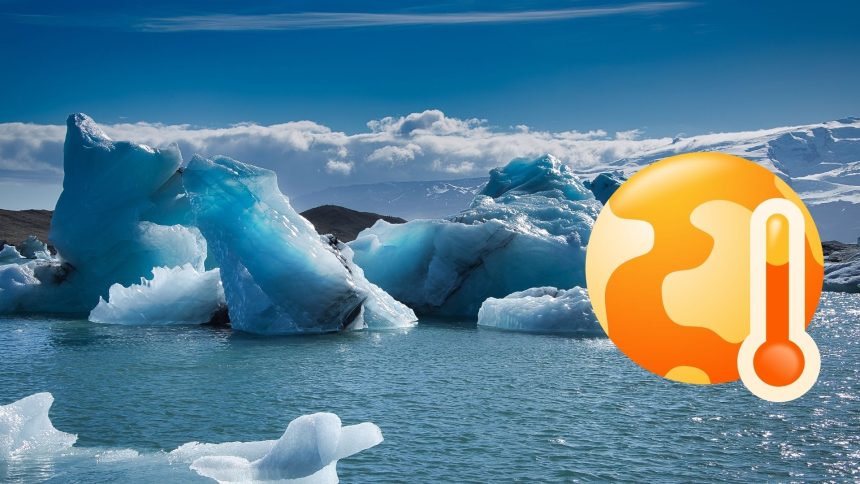
As winter settles in, a familiar chill blankets the landscape, inviting thoughts of snow-covered streets and cozy nights by the fire. However, a transformative force is at play, reshaping our seasonal expectations—climate change. While we often associate global warming with rising temperatures and relentless heatwaves, it is also manifesting in ways that make our winters wetter and more unpredictable.
This article delves into the intricate relationship between a warming planet and the atmospheric shifts that lead to increased precipitation during the colder months. Join us as we unpack the science behind these changes, revealing how climate change is rewriting the rules of winter weather and what this means for ecosystems, communities, and the future of our planet.
The Science Behind Wetter Winters and Climate Change
As the planet warms, the delicate balance of weather patterns is disturbed, sparking a series of changes that may feel counterintuitive – enter the phenomena of wetter winters. It hinges on two main scientific principles of the climate system: warmer air can carry more water vapor, and a warming Arctic alters the jet stream.
Firstly, as air temperature increases, its capacity to hold water vapor also escalates. This is based on the Clausius-Clapeyron relation, a principle of thermodynamics. As a result, for every 1°C rise in temperature, the air’s moisture-carrying capacity increases by about seven percent.
- Moisture-carrying capacity:The amount of water vapor the air can carry at a specific temperature and pressure. It increases as the temperature rises.
- Clausius-Clapeyron relation: A principle of thermodynamics expressing the relation between saturation vapor pressure and temperature.
Secondly, it’s important to understand the role of the Arctic and the jet stream. Rapidly warming Arctic temperatures (“Arctic Amplification”) are reducing the temperature gradient between the Arctic and the equator. This temperature gradient drives the jet stream, a fast flowing air current in the atmosphere. As the gradient decreases, it affects the jet stream’s velocity and trajectory, causing it to meander. These ‘dips’ in the jet stream allow cold Arctic air to penetrate further south, often causing heavy and prolonged snowfall in the affected areas.
| Term | Description |
|---|---|
| Arctic Amplification | The observation that the Arctic is warming twice as fast as the global average. |
| Jet Stream | A high-speed air current in the atmospheres of some planets, including Earth. |
The truth is, ‘wetter winters’ isn’t just an occurrence noticed here or there. It is a consequence of an interconnected array of climate changes that we are only beginning to understand and experience.
Understanding the Role of Atmospheric Patterns
The world is witnessing drastic climatic changes with a heightened sense of discernment; it’s impossible to ignore its impact on our daily lives. One such occurrence is the shift in seasonal patterns, particularly the intensification of winter conditions. Presumably, climate change indirectly influences these dimensional alterations of winter, making them wetter and colder than ever before. But how exactly does this happen? To understand this, we need to delve deep into the intricacies of atmospheric patterns.
Climate change mainly occurs due to amplified greenhouse emissions, notably carbon dioxide and methane. This exacerbates the greenhouse effect which results in a rise in the earth’s average temperature. This heat influences the atmospheric pressure in diverse ways, triggering distinct patterns. Two significant patterns influenced are –
- The North Atmospheric Oscillation (NAO)
- The Arctic Oscillation (AO)
These are contrasting pressure zones over the Atlantic and Arctic, driving the winds and weather over the Northern Hemisphere.
| Pattern | Description |
|---|---|
| North Atmospheric Oscillation (NAO) | When the NAO index is high, there is higher-than-average pressure in the subtropical Atlantic and lower-than-average pressure in the Icelandic region. This leads to strong westerly winds bringing warm and moist air to northern Europe, contributing to wetter winters. |
| Arctic Oscillation (AO) | AO is a climatic pattern characterized by winds circulating counterclockwise around the Arctic at around 55°N latitude. When the AO index is in its positive phase, a ring of strong winds circulating around the North Pole acts to confine colder air across polar regions. This leads to a rise in winter temperatures over northern Europe and North America. |
Impacts on Ecosystems and Agriculture
The gradual creep of global warming is not without significant consequences, the most noticeable being, paradoxically, an increase in heavy snowfalls and wetter winters. Evaporation intensifies as global temperatures rise, propelling more water vapour into the atmosphere, which raises the humidity. This phenomenon fuels severe winter storms and increased precipitation.
A rapid rise in sea surface temperatures, in particular, enhances the amount of moisture that air above the ocean can hold. This moisture-laden air then circulates and precipitates in continental regions, which can lead to ❛snowier❜ winters, despite the general warming trend.
The Ripple Effect on Ecosystems and Agriculture
The ripple effect of wetter winters on ecosystems and agriculture can be stark. Ecosystems suffer from instability due to the changes in precipitation patterns and increased snowfall, which can cause a shake-up in local flora and fauna. Changes in regular feeding, mating, and migration patterns can occur, especially in vulnerable species. At worst, these alterations can lead to a drastic loss in biodiversity. The agricultural realm is also not spared as wetter winters can negatively alter cropping schedules and lower yield quality.
- Instability in ecosystems: A change in snowfall patterns and magnifying precipitation can force alterations in local wildlife behaviour including feeding, mating, and migration patterns.
- Loss in biodiversity: In some instances, ongoing changes in winter weather could lead certain species towards extinction.
- Limited cropping schedules: Excessive winter wetness can delay sowing of crops in spring due, causing farmers to miss optimal planting windows.
- Lower yield quality: An increase in winter precipitation often leads to water logging which can decrease the yield quality and also render fields vulnerable to weed and pest attacks.
| Ecosystem Impact | Agricultural Impact |
|---|---|
| Changes in wildlife behaviour | Delayed sowing of crops |
| Loss in biodiversity | Lower yield quality |
| Increased vulnerability of habitats | Increased susceptibility to pest attacks |
Ultimately, understanding these impacts paints a clear picture of the deep interconnections between climate change and wetter winters. As such, interventions need to be cross-cutting, ensuring both the preservation of ecosystems and maintaining agricultural productivity.
Strategies for Adaptation and Resilience in Changing Climates
Climate change is a complex phenomenon with far-reaching implications for our planet’s weather patterns. One of the shifting patterns we’re seeing is a trend toward wetter winters in many parts of the world. Intensifying heat from global warming is causing more evaporation, leading to more moisture in the atmosphere and subsequently, heavier precipitation.
The science behind this shift is rooted in the principle that warm air can hold more moisture than colder air. As the Earth’s temperature rises, the capability of the atmosphere to hold water vapour increases, leading to increased probabilities of intense rainfall and snowfall events. A warmer atmosphere also leads to accelerated evaporation rates from bodies of water, contributing further to the overhead water vapour content.
| Climate Change Effect | Result |
|---|---|
| Increased global temperature | More moisture held in the atmosphere |
| Warmer atmosphere | Increased evaporation rates |
On the other hand, increased evaporation in warmer conditions can lead to dry soil, especially in the absence of concurrent precipitation. Depending on the specific balance between these factors, this could result in either moist or dry winter conditions. Furthermore, the ‘wetter winter’ scenario is not uniformly applicable around the globe. Some regions could experience extreme cold snaps due to changes in the polar vortex while others might experience milder winters.
- Increased evaporation can lead to drier soils.
- The interplay between evaporation, soil moisture, and precipitation is complex and region-dependent.
- Changes in the global climate can also lead to alterations in the polar vortex, causing colder winters in some regions.
As such, the key strategy for adaptation and resilience in the face of these changing climates is understanding and anticipating these changes. This will allow us to develop appropriate systems and mechanisms for water management, agricultural planning, flood defense, and more. Climate models, ongoing research, and global collaborative efforts are paramount in achieving this understanding.
The Way Forward
As we draw the curtains on our exploration of how climate change is orchestrating wetter winters, it becomes clear that the intricate dance of atmospheric currents and temperatures is reshaping our seasonal expectations. The implications reach beyond mere inconvenience; they weave into the fabric of our ecosystems, infrastructure, and daily lives. Embracing this reality necessitates a blend of awareness and action as we navigate the shifting landscape of our climate.
While the phenomenon of milder, wetter winters might seem like a novel twist in our environmental narrative, it heralds challenges that demand our attention. From increased flooding risks to impacts on agriculture and wildlife, the cascading effects can be profound. Yet, within these challenges lies the potential for innovation and resilience. Communities are already rising to the occasion, reimagining strategies for water management, urban planning, and conservation efforts.
understanding the connection between climate change and our increasingly damp winters empowers us all. As we look towards the future, let us commit to fostering sustainable practices, advocating for climate equity, and participating in the global conversation that shapes our collective response to this pressing issue. After all, as stewards of our planet, it is our actions today that will dictate the winters of tomorrow.


