


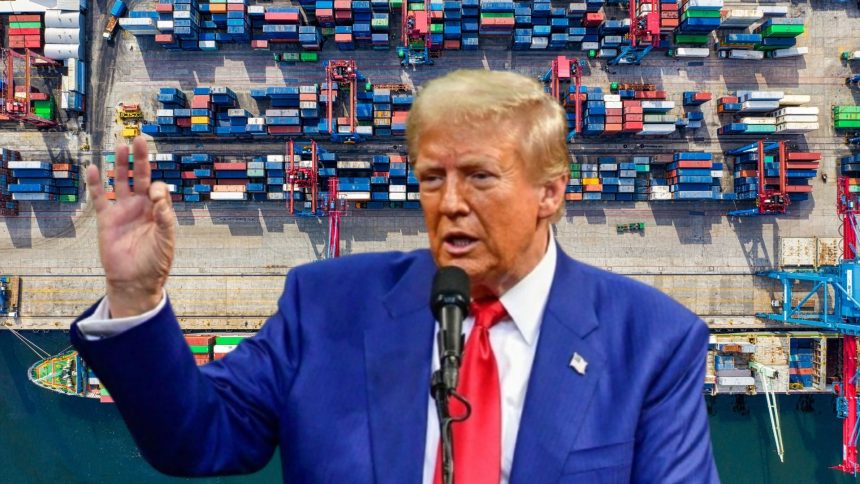
In the swirling maelstrom of economic policies and international relations, President Donald Trump’s approach to tariffs has become a standout element of his administration. While often framed within the confines of trade negotiations, his recent actions suggest that the implications stretch far beyond mere economics. As Trump once again asserts his authority over global markets, it becomes imperative to look closely at the motivations behind his tariff decisions.
In a landscape that is not just about balancing trade deficits, but about asserting national identity, securing political power, and navigating complex diplomatic waters, the reality is that tariffs under Trump serve as both a tool and a signal—a signifier of seriousness that transcends traditional trade dynamics. This article delves into the intricate web of motivations behind Trump’s tariff strategy, revealing that the stakes are higher and the implications broader than mere statistics of trade balance.
The Strategic Shift: Understanding Trumps Broader Intentions Behind Tariffs
Unveiling the layered strategy behind president Trump’s implementation of tariffs reveals a greater narrative that extends beyond the limitations of trade. These tariffs are not merely a hardball business approach designed to balance inequalities between the U.S. and its trading partners. Instead, there’s a clear indication that these tariffs are being used as a strategic impetus to achieve a wider spectrum of geopolitical and domestic policy objectives.
Geopolitically, a key objective of the imposed tariffs is to curb China’s aspiring dominance in key high-tech industries under the ‘Made in China 2025’ plan. Keeping this in perspective, Trump’s ‘tariff hammer’ approach compels China to negotiate on long-standing issues such as intellectual property theft and forced technology transfers. The impacts are notable, as they not only reinstate economic balance of power, but also potentially prevent China from reaching technological superiority. This is a classic example of economics being leveraged for broader geopolitical objectives.
Domestically, the tariffs have been a firm demonstration of Trump’s commitment to protect American industries, particularly those in the manufacturing sector that have suffered from globalization. This strategy not only resounds his ‘America First’ rhetoric but also subtly appeals to his electoral base, thereby strengthening his political footing.
| Geopolitical implications | Domestic implications |
|---|---|
| • Curtailing China’s tech ambitions • Re-establishing negotiation power |
• Protecting American industries • Reinforcing ‘America First’ rhetoric • Strengthening electoral support |
It’s important not to underestimate the astute maneuvering inscribed in this strategy. While it’s easy to get caught up in the immediate global trade implications, one must look at the bigger picture. The strategic shift is hard to miss: Trump’s usage of tariffs extend way beyond mere trade tool. It’s a detailed plan of enforcing international compliance, curbing rival powers, and ensuring domestic political gains.
Economic Implications: Analyzing How Tariffs Impact Domestic Markets
Amidst an unstable economic climate, President Trump’s policies have highlighted his belief that existing trade agreements disadvantage the domestic market. A staunch advocate of protectionism, he tactics center on enforcing duties to safeguard American industries. However, the underlying motivations may not be about balancing trade as heavy tariffs could trigger counteractive responses – a scenario many fear, given its potential to escalate to a trade war.
Assertions of economic benefits related to tariffs often overshadow the possible unforeseen drawbacks. While the immediate effect of this policy may prevent foreign competition and promote domestic production, the long term consequences could be more severe:
- Price hikes: Tariffs are a type of tax that importers pay, but the cost is often passed onto the consumer. As a result, goods become expensive, which negatively influences buying power and living standards.
- Retaliation: Other countries may enforce their own set of protectionist measures, setting off a chain reaction of escalating tariffs, stunting global trade.
- Domestic productivity: With less competition, domestic industries could become complacent and less innovative. This can result in the stagnation of domestic product quality and efficiency in the long term.
Understandably, it becomes clear that imposing tariffs is not a straightforward solution to remedying trade deficits. Below, see the summarized effects:
| Short Term | Long Term |
|---|---|
| Protection of domestic industries | Potential price increases |
| Immunity from foreign competition | Possible retaliation overseas |
| Boost to local production | Potential stagnation of domestic industry |
Political Game Theory: The Role of Tariffs in Strengthening Global Negotiations
Through a lens of political game theory, tariffs have emerged as a key tool in global negotiations. While often perceived as a strategic maneuver in trade wars, this approach serves a dual purpose by also establishing a country’s position within the world stage. Diving into the contentious tenure of former US President Donald Trump, it’s clear that his use of tariffs was less about trade and more about establishing America’s omnipresence in global diplomacy.
Trump’s Seriousness on Tariffs
- One of his first acts in office was withdrawal from the Trans-Pacific Partnership, a strategic pivot towards bilateral trade deals.
- To renegotiate the North American Free Trade Agreement (now USMCA), Trump imposed tariffs on steel and aluminum imports from Canada and Mexico. The coercive strategy paid off, leading to new terms more favorable to the US.
- Trump not only turned up the heat on China but also used tariffs as a weapon in diplomatic skirmishes with the European Union and others.
| Year | Significant Tariff Actions |
|---|---|
| 2017 | Withdrawal from TPP, Introduction of steel and aluminum tariffs |
| 2018 | Increase in tariffs on Chinese goods, threat of tariffs on imported autos |
| 2019 | More tariffs on China, imposition of tariffs on European goods |
In political game theory, players aim for optimal outcomes through strategic decisions. Trump’s bold moves on tariffs were not merely about trade but a strategy to construct an image of a fearless negotiator, influencing other countries to concede to US demands. By adopting a ‘take no prisoners’ approach in his tariff policies, he showed he was serious in fighting for better deals, even at the risk of upsetting longstanding allies and a delicate global trade environment.
Looking Ahead: Recommendations for Businesses Navigating Tariff Changes
While the current administration’s stance on tariffs has indeed proven resolute, the implications for businesses are far from static. With the landscape continually shifting, enterprises are urged to stay vigilant and adaptive. Various strategies can be deployed to help businesses mitigate the potential damage and capitalize on new opportunities that arise in light of these changes.
To begin with, businesses, particularly those with heavy dependence on imported goods, should consider diversifying their supply chain. Don’t be hesitant to scout for alternative sources from other countries or explore the feasibility of local suppliers. This strategic move not only lessens vulnerability to tariffs but also opens the door to new, potentially profitable alliances.
Furthermore, adapting and upgrading your business models to incorporate or increase digital services can in many cases work to combat tariff impacts. From finance to retail, many industries have witnessed a promising surge in virtual service adoption. This can serve as a virtual safeguard against physical import-export implications.
Key Strategies To Navigate Tariff Fluctuations:
- Supply Chain Diversification: Reduce over-reliance on a single country or supplier.
- Digital Transformation: Implement or deepen digital services to mitigate physical trading impacts.
Lastly, staying on top of changing policies and market conditions becomes crucial in such volatile times. Make it a point to foster open communication with suppliers and consumers regarding possible implications and changes due to tariffs. This level of transparency promotes goodwill, understanding, and breeds a collaborative spirit to address the challenges.
Key Compliance Considerations
| Sectors | Possible Compliance Measures |
|---|---|
| Manufacturing | Scouting for local suppliers |
| Distribution | Re-evaluating logistic routes and costs |
| Retail | Exploring virtual markets or services |
While these recommendations cannot guarantee a shield against tariff repercussions, they can provide some essential guidance to navigate this shifting terrain with resilience and tenacity. Always remember, in every challenge, there lies an opportunity for reevaluation, reinvention, and ultimately, growth.
Wrapping Up
while President Trump’s assertive stance on tariffs seems largely rooted in economic strategy, the implications extend far beyond mere trade negotiations. This approach reveals a multifaceted agenda that encompasses national identity, foreign relations, and domestic politics. As we continue to navigate the complexities of global trade and its intersection with domestic priorities, it remains crucial to monitor how these tariff strategies will shape not only the economic landscape but also the broader narrative of American power in an increasingly interconnected world.
The coming months may very well redefine the relationship between trade policy and the fundamental values that drive it, perhaps prompting us to rethink our assumptions about the motivations behind these economic maneuvers.


