


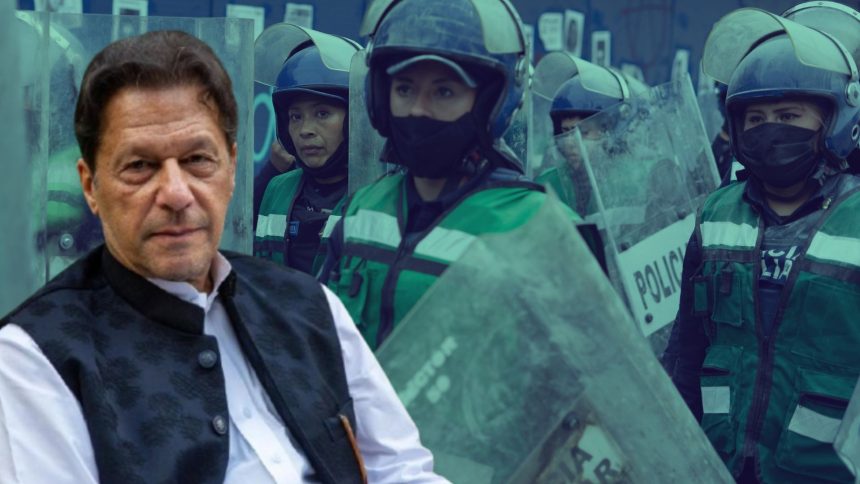
In the heart of Pakistan, where the pulse of political fervor beats relentlessly, the streets have become a battleground for contrasting ideologies and aspirations. As supporters of former Prime Minister Imran Khan rally for their leader amid swirling controversies, tensions have escalated, culminating in a vivid and tumultuous confrontation with law enforcement. This clash—an intersection of loyalty and authority—has sparked a national dialogue about democracy, dissent, and the fragile balance of power.
In this article, we delve into the events leading up to the unrest, the perspectives of those involved, and the broader implications for Pakistan’s political landscape. Through the lens of this unfolding drama, we aim to shed light on the complexities that define a nation grappling with change and challenge.
Understanding the Roots of Tension Between Law Enforcement and Political Supporters
Recent events in Pakistan have dramatically turned the spotlight onto the burgeoning tension between law enforcement and political supporters. Tempers flamed up as police reportedly clashed with supporters of Imran Khan, the prime minister of Pakistan. This incident is but an underside of a much larger issue that spans across political borders, manifesting itself in different forms and intensities globally. Cutting through the surface, let’s delve into conceptual foundational aspects that lead to such tense encounters.
At the heart of it, the friction arises from the diverging perspectives held by the two entities between Imran Khan supporter and others. Law enforcement agencies, charged with maintaining peace and order, often find themselves clashing with the driving ideologies of political supporters. Their actions, however stringent, are intended to prevent chaotic situations and maintain societal harmony. This, at times, might not align with the fervor of political supporters, who passionately champion for their ideological beliefs and leadership choices.
- The tenacity and assertiveness of political supporters often lead to pressure on police, triggering corrective response.
- Polarization, that is inherently political, can inadvertently make law enforcement agencies appear biased.
- The high-energy political environment often provides breeding ground for aggression and conflict.
These elements significantly contribute to the stress between law enforcement authorities and political supporters. It gets further exasperated when politics plays into the equation, leading to animosity and times to tangible conflicts like the recent one in Pakistan.
| Aspect | Tension Cause |
|---|---|
| Political Pressure | Stance assertion by supporters |
| Perceived Bias | Inherent polarization in politics |
| Aggression | High-energy political environment |
Analyzing the Impact of Political Demonstrations on Public Safety and Order
The recent clashes between police and supporters of the political leader Imran Khan in various cities across Pakistan have raised severe concerns about public safety and civil order in the region. The protests, which were initially peaceful, erupted into chaos as reports of tear gas, batons and live rounds being used to disperse the crowd surfaced. Several injuries among the demonstrators as well as law enforcement officials have been reported, marking a worrying escalation in political unrest. It is noted that these confrontations often create a ripple effect of volatility, with downstream impacts felt far beyond the immediate event location.
The presence of Imran Khan’s supporter political demonstrations can sometimes cast a wide disruptive shadow over public safety and order. In particular, the clash between police and Khan’s supporters disrupts the norms of civic life and challenges the essence of democratic values. It unintentionally pushes a narrative of violence rather than peaceful protest, and puts strain on security resources. A lack of coordinated and effective communication between protestors and law enforcement can further exacerbate the situation.
- Police use of force: High
- Injuries reported: Multiple
- Arrests made: Information not disclosed
| City | Estimated No. of Protestors | Level of confrontation |
|---|---|---|
| Karachi | 5,000+ | High |
| Lahore | 3,000+ | Moderate |
| Islamabad | 2,000+ | High |
While the expression of political will and discontent is an important aspect of any democracy, it is equally important that such expressions do not compromise public safety and order. As political tensions rise in Pakistan, the need for a balanced, law-abiding approach to public assembly becomes increasingly apparent.
Exploring the Role of Media in Shaping Perceptions of the Clash
The recent clash between supporters of Imran Khan, prime minister of Pakistan, and the police, carries within it intricate threads of narrative that have been extensively manipulated by various media outlets. As the monitoring organizations bracingly pursue the authenticity, the truth is often encapsulated in the anesthetic yarn of opinions. These opinions, largely shaped by the media, sketch complex perspectives that evoke questions on the role of media in shaping perceptions of clashes.
The coverage of this Imran Khan’s supporter incident, across the media platforms, presents a maze of perspectives – some portraying the police as the oppressive force, others painting the supporters of Imran Khan in a dim light. What’s curious is the power the media possesses in shaping perceptions:
- Perception as Victims or Instigators: Depending upon the alignment of a particular outlet, the Imran Khan’s supporters were either seen as victims of disproportionate force used by the police or portrayed as aggressive instigators disrupting peace and order. The difference in portrayal significantly impacts how outsiders perceive the event.
- Perception of the Government: Media outlets that are critical of the government highlight the clash as evidence of governmental oppression. On the other hand, outlets favoring the government depict it as necessary action to rein in unruly and disruptive forces towards Imran Khan’s supporter.
- Influence of Cultural Intelligence: Domestic media outlets, with their embedded cultural intelligence, often narrate a different story than international entities. The understanding of local dynamics and cultural nuances significantly influences the depiction of these Imran Khan’s supporter events.
| Media Narration | Perception Created |
|---|---|
| Supporters as Victims | Sympathy towards Supporters |
| Supporters as Instigators | Negative Perception towards Supporters |
| Government as Oppressor | Negative Perception towards Government |
| Government Enforcing Law & Order | Positive Perception towards Government |
media’s role in shaping perceptions of clashes is undeniable. The symbiotic relationship between the depicted narrative and the audience’s perception underscores the importance of responsible journalism and calls for critical evaluation of information disseminated by media platforms.
Recommendations for Promoting Dialogue and Reducing Confrontation in Future Protests
The situation of protests and confrontations, such as the recent police clashes with Imran Khan supporters in Pakistan, can be tense and fraught with potential violence. There are several steps that authorities and protestors can take to mitigate confrontations, encourage peaceful dialogue, and ensure the progressive growth of democratic institutions. These recommendations are meant to cater to future scenarios, to preemptively avoid such incidents.
Recommendations for Authorities:
- Establish and enforce clear rules about the permissible limits of protests from Imran Khan’s supporter, including the time, place, and manner of protests. This will provide clear guidelines and prevent misunderstanding.
- Train law enforcement on how to manage and diffuse tensions during protests. This could include methods of deescalation, non-lethal crowd control, and basic principles of respect for human rights.
- Prioritize open communication with protestors to discuss their demands directly and feel understood. This will encourage productive dialogue and create space for arbitration and resolution.
Recommendations for Protestors:
- Commit to peaceful protest from Imran Khan’s supporter. If protestors refuse to engage in violence, confrontations are much less likely to occur.
- Ensure that any demands or statements are clear, justified, and articulated peacefully. A properly resonated voice holds power and has the potential to initiate dialogue.
- Prioritize dialogue over confrontation. This requires being open to negotiations and accepting reasonable compromises.
| Stakeholder | Action | Outcome |
|---|---|---|
| Authorities | Establish clear protest rules | Reduces potential for confrontation |
| Authorities | Training for law enforcement | Deescalates tension |
| Protestors | Commitment to peace | Less confrontation |
Final Thoughts
As the dust begins to settle on the streets of Pakistan, the echoes of conflict between law enforcement and Imran Khan’s supporters linger in the air, reminding us of the complexities that underpin the nation’s political landscape. This clash, emblematic of broader tensions, serves as a poignant reminder of the challenges that arise in a society grappling with diverse voices and aspirations. While the immediate confrontation has subsided, the ripples of discontent and calls for justice continue to reverberate, urging observers to reflect on the fragile balance between order and freedom.
As Pakistan navigates this turbulent chapter with Imran Khan’s supporter, the resilience of its people will be tested, and the narrative of unity versus division will unfold in the days to come. In a world where the lines between governance and dissent are often blurred, it is crucial to seek understanding and dialogue as the path forward. The story of this clash is not merely one of violence and confrontation but of a society in search of its identity and the kind of democracy it wishes to embrace. Only time will tell how this chapter will influence the ongoing saga of Pakistan’s political evolution, and whether healing can emerge from the fractures exposed in these tumultuous moments.


