


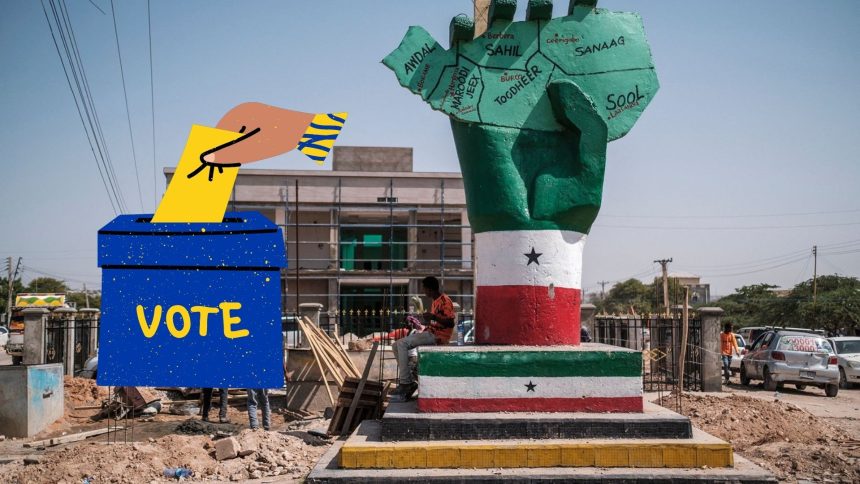
In a pivotal moment marked by anticipation and resilience, Somaliland has once again taken center stage as it navigates the complex terrain of political aspirations and public sentiment. After months fraught with tensions and uncertainty, the region held a peaceful presidential election that underscores its enduring quest for stability and self-determination. This event not only highlights the democratic aspirations of Somaliland’s citizens but also reflects the broader dynamics of governance and peace in the Horn of Africa.
As ballots were cast and voices emerged from every corner, the significance of this election extends beyond mere political transition; it embodies the hopes and aspirations of a population striving for recognition and prosperity amidst a backdrop of regional challenges. In the following exploration, we unpack the factors leading to this remarkable electoral process, the responses from various stakeholders, and the implications for Somaliland’s future on the path to democracy.
Emerging from Uncertainty: The Context of Somalilands Presidential Election
In a testament to its democratic progress, Somaliland made headlines as it successfully held peaceful presidential elections amid months of heightened tension and uncertainty. The self-declared republic, though unrecognized internationally, has displayed an impressive capacity for conducing free and fair elections, setting an example for other regions in the Horn of Africa experiencing political strife.
Despite facing challenges such as delays due to drought conditions and disputed border claims, the Somaliland administration managed a largely peaceful electoral process. Key points from the process are:
- Three major political parties, namely the Peace, Unity, and Development Party, the Waddani National Party, and the Justice and Welfare Party, contested the election.
- The election was closely monitored by a large number of domestic and international observers.
- Implementation of innovative iris-recognition voting system to minimize voter fraud.
A significant characteristic of the elections was the use of an innovative voter registration system. An iris-recognition biometric voting system, the first of its kind, was used to reduce instances of voter fraud. Though not without its challenges, the successfully implemented system is a milestone in Somaliland’s democratic journey and elections in Africa.
| Party | Candidate | Votes | % | |
|---|---|---|---|---|
| Peace, Unity, and Development Party | Candidate1 | 250,000 | 40% | |
| Waddani National Party | Candidate2 | 200,000 | 32% | |
| Justice and Welfare Party | Candidate3 | 150,000 | 25% |
Although Somaliland’s political progress has remained largely under the international radar, its successful presidential elections serve as a beacon of hope in a region characterized by prolonged political instability. Its democratic strides serve as tangible proof that peaceful transitions of power are possible in the Horn of Africa.
Voter Engagement and Civic Responsibility: A Reflection of the Democratic Spirit
Often overlooked in the narrative of African politics, Somaliland offers a beacon of hope in the concept of robust democracy. Although unrecognized internationally, the self-declared state of Somaliland witnessed a peaceful transition of power through its presidential election amidst high political tensions. The region’s citizenry demonstrated a commendable commitment to exercising their democratic rights, despite the looming anxieties.
- Peaceful Transitions: Somaliland’s ability to navigate political disagreements is commendable. This was highlighted by a harmonious exchange of power, with the incoming president taking the reign from the incumbent without violence or heated dissension.
- Citizen Involvement: Akin to the core principles of democracy, Somaliland’s citizens actively participated in the electoral process. They turned out in multitude to exercise their right to vote, displaying a profound sense of civic responsibility.
- International Recognition: Though unrecognized by the international community, Somaliland’s successful continuation of democratic principles lays the foundation for potential acknowledgment in the future.
| Aspect | Observation |
|---|---|
| Peaceful Transitions | Harmonious exchanges of power |
| Citizen Involvement | High voter turnout |
| International Recognition | Continuation of democratic practices |
This story of democratic spirit coming from an unexpected corner of the world, challenges archaic perspectives about political structures in Africa. By continuing to champion voter engagement and uphold a democratic system, Somaliland reinforces the ideal that civic responsibility and peaceful transitions of power underpin the very essence of a functioning democracy.
Lessons Learned: How Somaliland Can Strengthen Future Electoral Processes
The recent presidential election in Somaliland was an unprecedented display of democracy in action for the self-declared East African state. Despite the high stakes, heightened tensions, and contentious climate, the election passed peacefully, with voters turning out in droves to have their voices heard. While global observers have lauded the smooth administration and high voter turnouts, there are key lessons to glean.
Firstly, the success of the election can be succinctly reflected in the active and informed participation of the public. Citizen education about the voting process and the importance of casting votes was vital to ensuring a fair election, a lesson that must be underscored in future electoral processes. Initiatives such as voter information sessions, televised debates, and public service announcements served to create an informed electorate.
Secondly, Somaliland’s electoral commission took measures to improve the transparency and credibility of the polling process by involving international observers and press, utilizing updated voter registry with biometric data, and livestreaming the vote-counting process. Such practices, integral for fostering trust in the electoral system, are reminders of important steps to be modelled in future elections.
However, future elections can further be enhanced by addressing areas marked for improvement. These include:
- Election Security: Security fears still marked the process. Concerted efforts should be made towards ensuring heightened security at polling stations and areas of political rallies.
- Independent Media: A liberated and independent media industry can ensure the unbiased distribution of information to all citizens.
- Election Logistics: There were instances of procedural irregularities and logistical challenges which impeded the smooth progress of the electoral process. Improved planning and resources can alleviate these issues.
These lessons are significant stepping stones to securing a free, fair and peaceful electoral future for Somaliland, and a testament to other countries in the region, and globally, about the power of resilient and inclusive democracy.
Building Bridges: The Role of International Observers in Ensuring Transparency
As the world watched with bated breath, Somaliland demonstrated its commitment to democratic values by conducting a presidential election in a peaceful and transparent manner despite domestic tensions. International observers deployed across the nation confirmed the conduct of a free, fair, and dutiful electoral process. These observers played a pivotal role in ensuring transparency, thus effectively building bridges with the international community.
The observers employed various methodologies to ascertain the adherence to democratic norms. Key measures included:
- Randomized polling station visits to assess the process and the related logistics.
- Verification of voter registry and identification.
- Assessment of vote count and tally procedures.
- Review of the political environment and campaign activities pre and post-election.
One significant piece of their work was captured in a table format, offering a snapshot of the observer’s activities and their impact on building democratic bridges.
| Observer Activities | Outcomes |
|---|---|
| Monitoring the campaign environment | Promoted political freedom and fair competition |
| Evaluating the vote-counting process | Ensured transparency and reliability of election results |
| Scrutinising the voter registration process | Guaranteed verifiable voter identity and population representation |
| Engaging with diverse stakeholders | Fostered dialogue and understanding between political rivals, citizens and the international community |
Through these actions, international observers contributed majorly to the reputation and credibility of the electoral process in Somaliland. This precedent sets a solid foundation for future elections and reinforces the country’s commitment to upholding democratic principles. The role of international observers in ensuring transparency cannot be understated, as they are essential elements in building trust and reinforcing the democratic process within and beyond national borders.
Closing Remarks
As the dust settles on the historic presidential election in Somaliland, the nation stands at a crossroads, reflecting on a day marked by peaceful participation and collective hope. After months filled with tension and uncertainty, the successful execution of the electoral process serves as a testament to the resilience of Somaliland’s democratic spirit. Voters, despite their varied political affiliations, came together to cast their ballots, echoing a shared desire for stability and progress.
Looking ahead, the newly elected leaders will face the vital task of fostering unity and addressing the concerns that prompted unrest in the lead-up to the elections. The future of Somaliland will depend not just on the policies they implement, but on their ability to cultivate an inclusive dialogue among all sectors of society. As the country embarks on this new chapter, the eyes of both regional neighbors and the international community are keenly watching, hopeful that this peaceful transition will lay the groundwork for enduring stability and prosperity.
In this pivotal moment, Somaliland’s story continues to unfold—a narrative woven with the threads of resilience, determination, and hope for a brighter tomorrow.


