


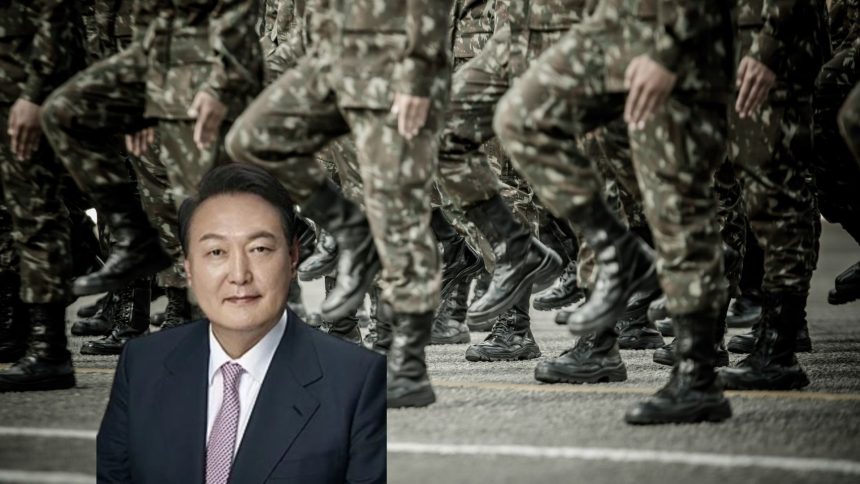
In the complex tapestry of South Korea’s political landscape, where echoes of history often reverberate through the present, recent events have once again drawn attention to the delicate balance between governance and civil liberties. In a surprising turn of events, South Korean President [Name] has publicly apologized for the controversial declaration of martial law during a time of heightened unrest. This unprecedented acknowledgment not only raises questions about the implications of such a decision but also sheds light on the government’s approach to handling dissent and maintaining order.
As citizens reflect on past struggles and the trajectory toward democracy, the apology serves as a prompt for a broader dialogue about accountability, trust, and the ever-evolving relationship between the state and its people. In this article, we delve into the circumstances surrounding the martial law declaration, the president’s reasoning behind the apology, and the potential impact on South Korea’s socio-political climate.
South Koreas Leadership and the Unfolding Response to Institutional Authority
In a stunning development, the leadership of South Korea, under President Moon Jae-in, has recently issued an apology for a martial law declaration, a move that has raised serious questions about the nation’s decision-making processes and its response to institutional authority. This unprecedented action has intensified debate over the democratic fundamentals of the nation, bringing underlying tensions about institutional authority to the fore.
The President’s apology followed the revelation of the implementation plans of martial law during 2018, which he stated were a move driven by desperation to protect democratic processes. However, the very invocation of martial law stands as an apparent contradiction to the democratic ideals that the nation supposedly stands for. These incidents highlight a growing trend in South Korea, pointing towards a shifting understanding and response towards institutional authority.
- Institutional Trust: The recent martial law aftermath has posed serious issues in public trust towards government. This skepticism and unrest may significantly impact the democratic fabric of the nation and profoundly influence future politics.
- Democratic Values: South Korea, as a democratic nation, puts great emphasis on human rights, freedom of speech, and the rule of law. However, the martial law declaration is perceived as a direct violation of this democratic ethos, causing a rift in the public’s perception of the government.
- Leadership Accountability: The Apology from President Moon Jae-in exhibits a sense of leadership accountability. While this move has been met with mixed reactions, it undeniably sheds light on the question of accountability of those in power.
Fascinatingly, these unfolding events around South Korea’s leadership and institutional authority are not isolated. They reflect ongoing global conversations about the delicate balance between maintaining order, upholding democracy, and ensuring leaders are held accountable. With the world watching intently, the future prospects of South Korea’s political landscape remain thrilling and unpredictable in equal measure.
Assessing Historical Context and the Implications of Martial Law in Recent Events
In an shocking turn of events, the South Korean President, has issued a public apology for the use of Martial Law during recent upheavals. This decision, steeped in historical precedent, has led to a fallout of mixed reactions and intense debates among citizens and global onlookers. It’s vital to analyze the historical context of Martial Law and its role in South Korea’s political panorama.
The President’s apology, while surprising, is not entirely unprecedented in the annals of global politics. South Korea itself has a complex history with Martial Law, particularly during the infamous Gwangju Democratization Movement of May 1980. This event saw brutal military clampdowns resulting in the tragic loss of innocent lives. Understanding the implications of this decision in accordance with these historical realities can help contextualize the President’s seemingly sudden transformation of stance.
- Historical Context: Martial Law was declared in South Korea during major political upheavals, particularly in the Gwangju Democratization Movement of May 1980, before the country transitioned to Democracy.
- Presidential Apology: The current president issuing an apology reflects an acknowledgment of past mistakes and a promise to uphold Democratic values above political unrest.
The recent invocation and subsequent apology for Martial Law cannot be discussed without referencing the broader implications for democratic processes and human rights in South Korea. This seemingly abrupt decision has prompted a renewed focus on the country’s political landscape, where power dynamics and democratic integrity are constantly in flux.
| Event | Description | Year |
|---|---|---|
| Declaration of Martial Law | The initial decision was taken amidst political turmoil and conflicts. | Recent |
| Presidential Apology | The apology was issued to address public dissatisfaction and to encourage peace and stability. | Following the Declaration |
| Gwangju Democratization Movement | A significant historical event highlighting Martial Law’s brutal consequences. | 1980 |
Public Sentiments and the Need for Healing Through Transparency and Dialogue
In the anticipation of national disharmony following the decision to militarize the nation, South Korean President came forward with an humble apology. The martial law declaration was an extreme measure to cope with internal strife and challenges the country was facing.
In essence, the President’s address was highly reflective of two key aspects – Public Sentiment and the Need for Healing. Here’s a brief insight into these integral facets:
- Public Sentiment: The public sentiment significantly serves as an important gauge for the political atmosphere of a country. As South Korea braced itself for the enforcement of martial law, the citizens understandably reacted with concomitant mix of fear, anger, and bewilderment. Engaging in dialogues, the President sought to allay their concerns and openly listened to their grievances.
- Need for Healing: The nation, fraught with tension and uncertainty, needed a healing touch. The President’s apology, in this situation, served as a first step towards healing the societal scars. The intention was to reinstate the spirit of unity and bolster the national morale in the face of adversities.
Perhaps the most reassuring aspect of the leader’s address was the commitment to transparency and dialogue. The citizens were informed about the steps taken, the reasons for undertaking such steps and what lies ahead for the country.
| Steps Taken | Reasons | What Lies Ahead |
|---|---|---|
| Declaration of Martial Law | Addressing Internal Strife | Potential for Restoration of Normalcy |
| Apology | Placating Public Sentiment | Establishing Trust & Unity |
| Transparency & Dialogue | Keeping Information Flow | Clarity & Cooperation for Citizens |
This incident vividly highlights the importance of understanding public sentiments and the indispensable role of open dialogue and transparency in healing and moving forward.
Path Forward: Recommendations for Strengthening Democratic Processes and Accountability
In the wake of the recent declaration of martial law, South Korean President’s apology marks the first step towards rebuilding trust in the democratic process. It is crucial now to utilise this momentum and work towards strengthening both democratic processes and accountability. Here are some recommendations:
- Strengthening Rule of Law: The declaration of martial law highlighted a loophole that allowed the leaders to sidestep due democratic processes. An urgent task is to reinforce the rule of law with ultimate respect for human rights and fundamental freedoms.
- Political Accountability and Education: Hold political leaders accountable for their conduct. This includes working towards a culture of transparency, including open public consultation prior to significant legislative changes. Moreover, invest in civic education to ensure an informed populace capable of critical thinking.
- International Monitoring: Inviting international monitors during critical political transitions or during elections could build credibility and assert commitment to democratic values.
Also, an overhaul of the existing democratic structures is necessary for bringing forth these changes. This implicates both structural and procedural aspects. The following table breaks down the potential areas requiring change:
| Structural Changes | Procedural Changes |
|---|---|
| Constitutional Amendments: Review and amend the constitution to close loopholes that allow for martial law to be declared without proper checks and balances. | Transparent Decision Making: Enforce laws mandating public access to meetings and records, and insist on transparency in all decision-making processes. |
| Decentralisation: Reduce concentration of power by distributing it across various levels of government and independent institutions. | Fair Electoral Practices: Introduce electoral reforms to ensure fair and free elections, free from tampering or undue influence. |
The Way Forward
the recent apology from South Korean President [Name] regarding the declaration of martial law marks a significant moment in the nation’s ongoing dialogue about governance, accountability, and historical memory. This act not only acknowledges the complexities of past decisions but also serves as a reminder of the importance of transparent leadership in a democratic society. As South Korea continues to navigate its path forward, the President’s gesture may help to bridge divides and foster a renewed commitment to democratic principles.
The unfolding narrative will undoubtedly influence both political discourse and public sentiment, as the nation reflects on its past while striving for a more united future. The journey of reconciling history and fostering trust within the populace remains ongoing, with the hope that such apologies lead to meaningful discussions and lasting change.


