


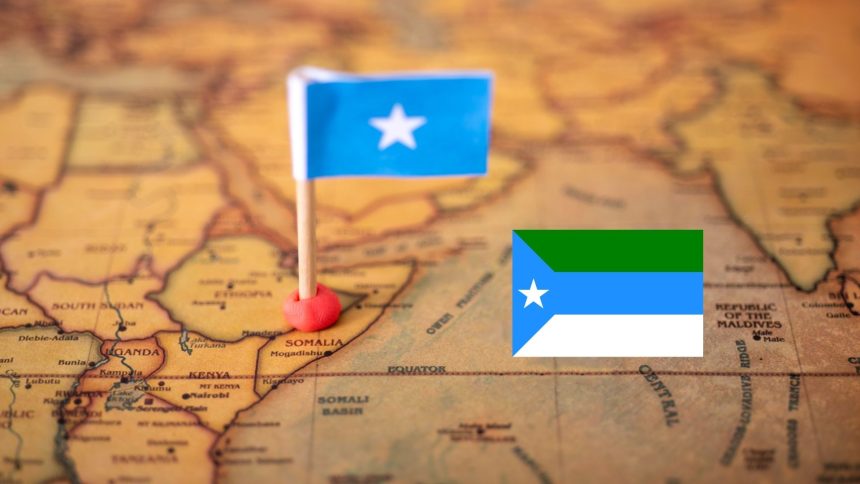
In the heart of the Horn of Africa, a new chapter of uncertainty unfolds as tensions escalate between Somalia’s Federal Government and Jubaland State. While the country’s recent strides toward stability have been met with cautious optimism, the simmering discord between these two political entities threatens to unravel the delicate fabric of peace that has been painstakingly woven over the past few years.
As Somalia grapples with issues of governance, resource allocation, and regional autonomy, the clash of interests reveals deeper divisions that could have far-reaching consequences. In this article, we delve into the complexities of the escalating rivalry, examining the historical context, the players involved, and the potential implications for the nation’s future. As narratives of unity and division intertwine, the question remains: Can Somalia navigate its way through this turbulent period to secure a harmonious path forward?
Navigating the Political Landscape: Understanding the Roots of Tension Between Somalias Federal Government and Jubaland State
Current tension levels between Somalia’s Federal Government and Jubaland State has turned global attention towards the Eastern region of Africa. This conflict is root-linked to the competing visions for Somalia’s political path. The Federal Government aims to consolidate its authority nationwide, while Jubaland State is keen on protecting its autonomy.
The History:
The friction which has viciously escalated over recent years didn’t happen overnight. It stems from a long-standing ideological divide tracing as far back as the disintegration of the Somali state in 1991. Post this catastrophe, the rise of Jubaland State can be significantly attributed to the historic battle against Al-Shabaab militants.
- Kismayo seizure in 2012: Jubaland forces supported by Kenyan troops, forcefully took control of Kismayo – a seaside city in Southern Somalia- from Al-Shabaab in 2012. This marked a significant turning point for Jubaland’s assertion of autonomy.
- Election tensions: Disagreement over the electoral process has been a source of consistent conflict. Jubaland, along with other regional states, has opposed the “one-person, one-vote” model proposed by the Federal Government.
Recent Flashpoints:
Although differing political ideologies were always existent, certain incidents have subsequently heightened these tensions.
| August 2019: | Jubaland’s contested election sparked violence. |
| February 2020: | A stand-off between Jubaland’s forces and national army near the Kenyan border caused heavy casualties. |
| March 2021: | Jubaland refused to acknowledge legitimacy of Somali President after his term officially ended. |
As the roots of this tension run deep, long lasting peace may likely remain elusive without comprehensive, inclusive dialogue and sustainable political compromise amongst the divergent forces.
Key Stakeholders in the Conflict: Examining the Roles of Regional Leaders and International Actors
The on-going strife between Somalia’s Federal Government and Jubaland State has escalated, prompting reactions from regional leaders and international actors. The key stakeholders’ involvement has thus become more prominent as efforts to maintain peace escalate.
The regional leaders in question include those from Ethiopia, Kenya, and Eritrea. Each with particular vested interest in the stability of Somalia and varying relationships with the conflicting parties. For instance, Kenya backs the Jubaland leadership due to security concerns — Jubaland borders Kenya and is a buffer zone against Al-Shabaab militants. Ethiopia, on the other hand, has mainly backed the Federal government bolstered by their mutual enmity against Al-Shabaab and tension with Kenya. Eritrea, a recent player, follows closely as they also have vested regional and economic interest.
| Country | Align With | Reason |
|---|---|---|
| Ethiopia | Somalia’s Federal Government | Common enemy (Al-Shabaab), Tension with Kenya |
| Kenya | Jubaland State | Security Concerns |
| Eritrea | Observing | Regional and Economic Interests |
Key international actors inclusive of the United Nations, European Union, African Union, and United States have also weighed in on the matter. The United Nations and European Union primarily advocate for dialogue between the parties, warning against the escalation of armed conflict, whereas the United States concerns itself mainly with countering terrorist groups in the region, namely Al-Shabaab. The African Union, on the other hand, operates a peacekeeping mission in Somalia, aimed at stabilizing the situation.
List of International Intervention:
- United Nations — Advocacy for Dialogue
- European Union — Advocacy for Dialogue / Warning against Escalation
- United States — Counter-terrorist Operations
- African Union — Peacekeeping Mission
Strategies for De-escalation: Recommendations for Building Trust and Promoting Dialogue
In the face of rising tensions between Somalia’s Federal Government and Jubaland State, de-escalation strategies are paramount. To this end, fostering trust and promoting meaningful dialogue will be key to this process. Oftentimes, open and honest communication can prevent minor altercations from spiraling into major conflicts.
Several strategies can be employed in the bid to curb this escalating situation. Firstly, is the need for mutual respect. Both parties need to uphold the dignity of the other and avoid actions that would further stoke the fires of disagreement. Secondly, both parties should be open to negotiations. They could consider employing a third-party mediator to facilitate these talks. Lastly, there is the need for diplomatic pressure. Both local and international actors have roles to play in exerting influence on both parties to return to the dialogue table.
| Strategy | Action |
|---|---|
| Mutual Respect | Promote dignity and avoid actions that stoke disagreement |
| Open to Negotiations | Consider employing a third-party mediator to facilitate dialogue |
| Diplomatic Pressure | Local and international actors to exert influence for dialogue |
Using these strategies could help build trust and promote dialogue, potentially leading to an amicable resolution that respects the interests of both the Federal Government and Jubaland State. Allowing open and candid communication channels can prevent a minor disagreement from escalating into serious conflict. Every effort must be taken to ensure peace and stability reign in Somalia.
Towards a Unified Somalia: Fostering Collaboration Between Federal and Regional Governments for Lasting Peace
Recent incidents have drawn attention to the growing tension between the Federal Government and the autonomous Jubaland State in Somalia. Analysts argue that this friction has the potential to stall the pivotal progress made in the unified Somali agenda. The discord centers around key issues such as the distribution of national resources, the authority over paramilitary forces, and the delineation of federal and regional legislative jurisdiction.
The Federal Government and the Jubaland State have each made some bold moves. A brief comparative analysis highlights the escalating situation:
| Federal Government | Jubaland State |
|---|---|
| Halted financial support | Unilaterally halted liaison with Federal Government |
| Directed Regional Forces Integration | Dissented the decision |
| Adopted a ‘Single Authority’ stance | Challenged the stance with autonomous policies |
In the context of these widening fissures, it becomes imperative to foster collaboration between both entities for attaining lasting peace. A potential roadmap for this could include:
- Respect for autonomy: Acknowledging the authority of the Jubaland State and allowing for the necessary degree of autonomy can serve as a significant trust-building measure.
- Dialogue and negotiation: Addressing the contentious issues through dialogue and negotiation, ratifying agreements that respect the interests of both, the Federal Government and the Jubaland State.
- Shared responsibility: Formulating a shared roadmap towards a unified and peaceful Somalia, with both entities recognizing and fulfilling their responsibilities.
The road to unity may indeed be challenging, but with shared goals, mutual respect, and peaceful dialogue, lasting peace and unity are achievable for Somalia.
Concluding Remarks
As the sun sets over the Horn of Africa, the political landscape in Somalia remains as tumultuous as ever. The escalating tensions between the federal government and Jubaland State highlight not only the complexities of local governance but also the intricate web of alliances and rivalries that define the region. As stakeholders navigate this volatile environment, the hopes for stability and unity hang in the balance.
The coming days will be crucial in determining whether dialogue can prevail over discord and if Somalia can move toward a more cohesive future. With the eyes of the nation and the world upon them, the actions taken now will reverberate through the corridors of power for generations to come. Only time will tell how this chapter in Somalia’s storied history will unfold.


