


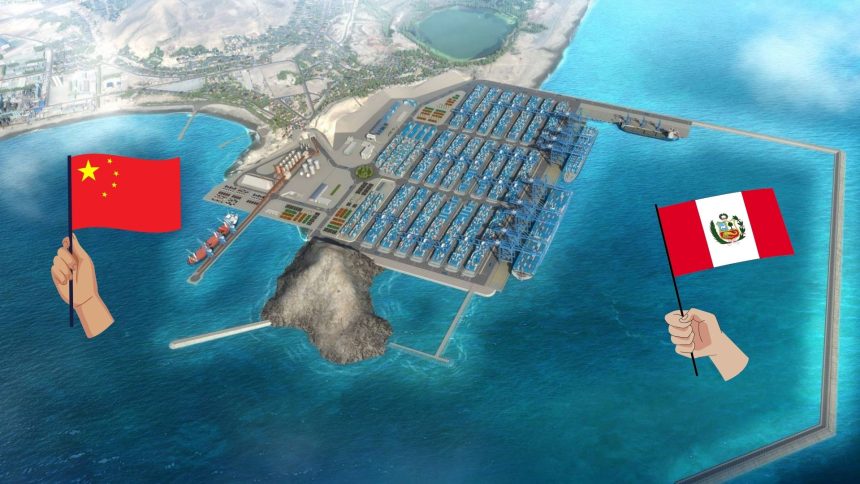
In the heart of South America, where the Andes meet the Pacific, a transformative project is reshaping the landscape of international trade and diplomacy. China’s ambitious venture to develop its first megaport in Peru has the potential to redefine economic dynamics in the region. While proponents herald the initiative as a landmark achievement in infrastructure and connectivity, a ripple of concern flows from across the Pacific.
The United States, traditionally a dominant player in Latin American affairs, watches closely as this new megaport not only symbolizes a shift in trade routes but also raises questions about influence, security, and regional stability. As the sands of the Peruvian coast give way to towering cranes and bustling docks, the stakes are high, and the implications are profound. This exploration delves into the complexities surrounding China’s megaproject and the reactions it elicits from stakeholders both locally and globally.
Emergence of Chinas Megaport and Its Strategic Implications
In a strategic move that has raised eyebrows globally, China has successfully established its first megaport in Peru. The development is considered a significant advancement for China’s Belt and Road Initiative (BRI), aiming to improve regional connectivity and create a more vigorous and effective global economic landscape. Given the dominance of the port, it’s not surprising that it captures the attention and concerns of multiple nations, particularly the US.
The strategic implications of this development are worth noting as well. For China, this megaport can arguably facilitate its access to goods and commodities from Latin America. However, from a US standpoint, it intensifies concerns about China’s growing influence in the region. This development has led the US to re-evaluate its engagement strategy with Latin America and its allies.
Key Factors about China’s Megaport in Peru:
- The megaport is a crucial part of China’s Belt and Road Initiative.
- It enhances China’s regional connectivity and fosters a more effective global economic landscape.
- The port intensifies US concerns about China’s growing influence in Latin America.
| Country | Megaport Name | Key Focus |
|---|---|---|
| China | Chancay Megaport | Regional Connectivity, Trade Expansion |
| US | N/A | Monitoring Rising Influence |
Economic Opportunities and Potential Risks for Peru
With China financing its first megaport in San Juan de Marcona, Peru, the scale is tipped in favor of increased economic opportunities for the South American country. However, these advantages are not devoid of potential risks. Experts anticipate substantial job creation, enhanced trade connections, especially with Asian markets, and infrastructure development. Furthermore, the port promises to spur development in the mining and fishing sectors in Southern Peru.
Consider the economic benefits:
- Job creation: Construction and operational roles at the port provide both direct and indirect employment.
- Trade connections: The port strengthens Peru’s trade ties with China, thus bolstering its position in the global economy.
- Infrastructure development: The advent of the megaport encourages urban development around the region, potentially leading to an influx of investments.
- Boost to mining and fishing: With improved shipping facilities, these sectors can access better markets and see increased trade.
Despite these economic opportunities, there remain potential risks. Critics voice concerns over the possibility of increasing Peru’s dependence on Chinese investments. There’s also worry about potential environmental damage from the construction and operation of the port, and whether the potential benefits will adequately be shared within the local communities.
Consider the potential risks:
- Increased dependence on China: The significant Chinese investment in this megaport could increase Peru’s economic dependence on China, potentially limiting their capacity to maneuver in the global market.
- Environmental impact: Construction and operation of such a large facility could cause significant environmental damage, both on land and in sea.
- Inequality: There are concerns that the wealth generated by the project may not trickle down to the local communities.
the development of China’s first megaport in Peru offers both significant economic opportunities and potential risks. It is essential for Peru to strike a balance between leveraging these opportunities and managing the potential risks.
Assessing the Geopolitical Landscape: The US Perspective
China’s recent expansion in Peru with its first megaport has roused concerns in the US political circles. It’s a major strategic move that underscores China’s growing maritime prowess and intentions of growing territorial influence. Located in Peru, the megaport of Chancay is a multi-billion-dollar venture that is designed to facilitate and regulate China’s considerable trade with the west coast of South America. Additionally, it serves as a strategic countermove to the US Ports in the region.
The geopolitical implications of this expansion are profound. From the U.S perspective, China’s strengthening foothold in Latin America can be seen as a challenge to the traditional US influence in this part of the world. The following factors highlight the U.S’s concerns:
- Fears of Chinese military ambitions with the port potentially serving as a naval base in the future.
- Shifts in trade power dynamics as China strengthens its trade routes and commerce across the globe.
- Impact on local politics as China’s increasing influence could impact leadership choices in regional governments.
| Region | Reason for Concern |
|---|---|
| Latin America | Shift in power dynamics, Influence on local governments |
| US Western Coast | Trade disputes, potential military threats |
Given these factors, it is crucial for the U.S to reassess its geopolitical strategies. Keeping a close eye on China’s activities and establishing progressive partnerships with Latin American countries should play an integral part in the U.S’s revised approach. This situation also calls for thorough diplomatic negotiations aimed to secure U.S’s interests without escalating to a potential conflict.
Navigating Future Collaborations: Recommendations for Stakeholders
The construction of China’s first megaport in Peru has notably raised eyebrows in the American quarters leading to a flurry of concerns. It’s not just an infrastructural move but a strategic one, boosting China’s geo-political leverage and trade arsenal. However, this development has potential implications for all stakeholders, from governments to businesses, and strategic foresight is key in responding to this change. The given circumstances demand the understanding of the changing dynamics and future collaborations.
US concerns primarily navigate around strategic imbalance, a shift in the power equation, and the potential usage of the port for military purposes. However, there is a wide range of stakeholder dynamics to consider:
- For Peru, this development can boost the local economy, improve shipping efficiency, and increase global trade involvement.
- The international business community should adapt to possibly revised routes and new gateways, leading to shift in supply chain dynamics.
- For China, it’s another pearl in their strategic ‘string of pearls,’ further enhancing control over key maritime trade routes while inserting an increased influence in Latin America.
Meanwhile, shared international concerns continue to hover around possible environmental impact, labor rights, and debt-trap diplomacy.
| Stakeholders | Recommendations |
|---|---|
| US Government | Monitor developments closely, engage in diplomatic multilateral dialogues, pursue framework agreements to ensure security. |
| Peruvian Government | Ensure the project aligns with socio-economic objectives, mitigate environmental impact, safeguard labor rights. |
| Business Community | Adapt to new supply chain dynamics, identify opportunities to leverage improved connectivity. |
Navigating future collaborations and developments will require stakeholders to exhibit strategic agility to safeguard their respective interests and maintain a cooperative balance of power. The megaport’s implications reach far beyond Peru – it may reshape the entire maritime geopolitical landscape.
Wrapping Up
As the cranes continue to loom over the horizon of Peru’s coastline and the docks of China’s first megaport take shape, the implications of this monumental development resonate far beyond the borders of South America. While the economic opportunities and potential for enhanced trade are undeniable, the strategic undercurrents alarm the United States and raise questions about regional influence and security. In navigating this complex landscape, Peru finds itself at a crossroads — poised to reap significant benefits, while also balancing the international interests that vie for its attention.
As global powers reassess their positions in an increasingly interconnected world, the megaport stands as both a gateway to prosperity and a symbol of the intricate dance of diplomacy and competition. The coming years will not only shape the future of Peru but could also redefine the dynamics of international relations in a rapidly evolving geopolitical arena. As this story unfolds, stakeholders across the globe will undoubtedly be watching closely, eager to see how this ambitious project influences the delicate balance of power in the Pacific and beyond.


