


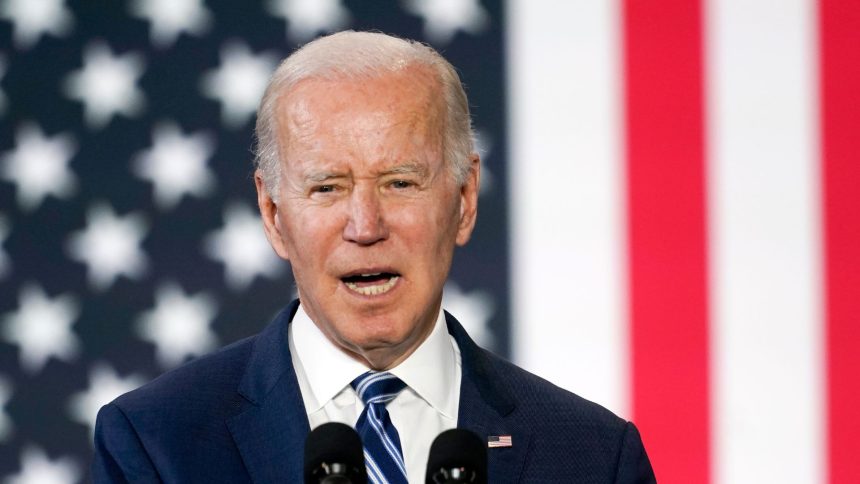
As the 2024 election season heats up, President Joe Biden finds himself navigating a complex landscape where foreign policy, once deemed a cornerstone of his administration, may now serve as a potential liability in his re-election campaign. The echoes of diplomatic triumphs and challenges, from the shifting sands of international alliances to the nuanced intricacies of global crises, resonate deeply within the national electorate’s consciousness.
As voters weigh their choices, the Biden administration’s foreign policy decisions are scrutinized through a dual lens of hope and skepticism. This article explores the intricate challenges facing the Biden campaign, illustrating how international affairs might influence domestic perceptions and ultimately shape the path ahead. With a global stage set against the backdrop of American expectations, the narrative unveils the delicate balance between foreign engagements and the political journey within the nation.
Navigating the Complex Landscape of Global Relations and Domestic Expectations
In the run-up to the 2020 presidential elections, Joe Biden faced a complex intertwining of delicate international relations and strong domestic sentiments. While trying to navigate these intricate paths, Biden’s campaign stumbled upon a unique challenge – his foreign policy became a liability.
In his illustrious career as Vice-President under Obama’s administration, Biden developed a foreign policy strategy that was based on robust international alliances, conflict resolution and the promotion of human rights. However, these policies, which were once an asset, have now become a hurdle in securing the trust of a section of American voters. The challenge lay in reconciling his foreign policy inclinations with the domestic expectations of a populace that has grown disillusioned with international interventions and alliances.
Different Settings, Different Expectations:
- Home Ground: As the trend of ‘America First’ has gained momentum, many Americans advocate for a more isolationist policy, calling for a reduced international involvement and focusing resources on domestic issues.
- Global Stage: On the other hand, international allies and even some adversaries expect America to take on leadership roles in global crises – be it humanitarian, political or environmental.
Biden’s campaign had a gargantuan task of managing these multiple expectations. As a strategist, Biden managed to do this by choosing a path of strategic ambiguity and promising to restore international alliances while putting America’s interests first.
| Challenge | Strategy |
| Domestic expectation of isolationism | Promise to focus on domestic issues and reduce international meddling without isolationism |
| International expectation of leadership | Commitment to restore international alliances and take up international responsibilities |
Though he managed to navigate his campaign through these complex waters, Biden’s foreign policy continues to be a keen topic of discussion and a potential obstacle for his presidency. The question remains – Will the wind of domestic expectations shift in favor of international commitments, or will the need for global leadership force a break in isolationist sentiments? As we move forward, these dilemmas are likely to shape perceptions of Biden’s presidency, both home and abroad.
Reassessing Alliances: Balancing Traditional Partnerships with Emerging Threats
In the uncertain times of global political fluctuation, reevaluating alliances is an indispensable activity. The Biden administration is stuck in the middle of a crucial balancing act – maintaining relationships with traditional partners while dealing with the complications that arise from emerging threats. It is a tricky situation, where preserving the time-honored partnerships could be perceived as an inability to adapt. At the same time, acknowledging emerging threats could be seen as an invitation to chaos.
The Biden Administration’s Foreign Policy
- Revitalizing and mending relationships with traditional allies like the European Union, NATO, etc.
- Dealing with emerging threats, such as the intensifying technology race with China, Russia’s increasing hostility, and North Korea’s nuclear ambitions.
- Engagement in non-partisan diplomacy to preserve global stability and peace.
The table below outlines some of the key alliances, how they are being reassessed by the Biden administration, and the potential threats they face.
| Alliance | Biden’s Approach | Potential Threats |
|---|---|---|
| European Union | Revitalizing the transatlantic relationship | Influence of China and Russia |
| NATO | Restoring trust, emphasizing shared defense commitment | Aggressive moves from Russia |
| Quadrilateral Security Dialogue (QUAD) | Pivot to the Indo-Pacific | China’s territorial claims, North Korea’s nuclear ambitions |
While reassessing alliances, it is essential to remember that any foreign policy decision carries hefty political risks. Effectively considering and addressing these unforeseen challenges will certainly define the success of Biden’s foreign policy. Maintaining the much-needed equilibrium between traditional alliances and emerging threats is an intricate diplomatic dance that the administration needs to master to achieve global stability.
Communicating a Cohesive Strategy: Overcoming Misunderstandings at Home and Abroad
During the President Joe Biden’s campaign period, certain international policies influenced political views both domestically and internationally. There were several common themes that manifested as potential liabilities arising from varying interpretations and misconceived biases.
Among these, three stood out prominently. Firstly, there was the issue of relations with China. This topic provoked intense debate and the propagation of misinformation, often leading to exaggerated perceptions of hostility. Secondly, the mixed messages surrounding America’s engagement with the Middle East were also a point of contention. Lastly, ambiguities about how the country should approach its relationship with Russia created further confusion and concern.
| Foreign Policy | Perceived Liability |
| Relations with China | Exaggerated perceptions of hostility. |
| America’s engagement in the Middle East | Mixed messages and misinterpretations. |
| Relations with Russia | Ambiguities causing confusion and concern. |
The ability to effectively communicate a cohesive strategy to a diverse audience is the cornerstone of any successful campaign. Unfortunately, nuanced foreign policy issues are often oversimplified or misconstrued, leading to misunderstandings at home and abroad. To counter such misconceptions, it is imperative to employ clear, consistent messaging and ensure that the public is accurately informed. Whether it’s countering misinformation, clarifying ambiguities, or proactively engaging with a concerned public, a thoughtful and thorough communication strategy can greatly mitigate these types of challenges.
Innovative Solutions for a Shifting World: Proposals for a Forward-Thinking Foreign Policy
As the Biden campaign gears up for the elections, it is up against several challenges. The state of the global arena has changed significantly and demands an innovative foreign policy approach that is both progressive and resonates with the shifting world. Unresolved legacy issues, relations with major global players, and a divided home front are just a few of the hurdles that need to be addressed with urgency.
The campaign’s foreign policy platform, while comprehensive, faces a barrage of criticism. Central to these critiques are points such as:
- Lack of focus on emerging global influences: Rapid technological progress and influential global players require constant vigilance and innovative solutions. Some critics argue that the Biden campaign needs to bring a more proactive approach to these areas.
- Handling of legacy issues: The policy implications of decisions made during the Obama era are still a contentious point. Opponents argue a more decisive strategy for dealing with these issues is needed.
- Domestic division: The need for solidarity at home and an inclusive foreign policy has never been stronger, but critics say that the Biden campaign is struggling to rally support from a divided and fluid public opinion.
Each of these issues warrants attention and requires a forward-thinking approach to foreign policy. However, it is clear that the Biden campaign faces an uphill battle in transforming such critiques into effective strategies.
Concluding Remarks
In navigating the complex landscape of foreign policy, President Biden finds himself at the intersection of ambition and apprehension. His administration’s strategies, shaped by a diverse array of global challenges, have not only defined his presidency but also cast a long shadow over his re-election campaign. As voters weigh their options in the upcoming election, the question remains: can Biden turn potential foreign policy liabilities into assets that resonate with the American public?
The path forward requires not just a keen understanding of international relations but a deftness in translating those nuances into a compelling narrative that speaks to the hopes and concerns of citizens at home. Ultimately, the success of Biden’s campaign may very well hinge on his ability to reconcile these dual roles as both a leader on the world stage and a candidate seeking the trust of his electorate. As the campaign unfolds, all eyes will be on how effectively he navigates these turbulent waters, highlighting the intricate balance between domestic priorities and global responsibilities.


