


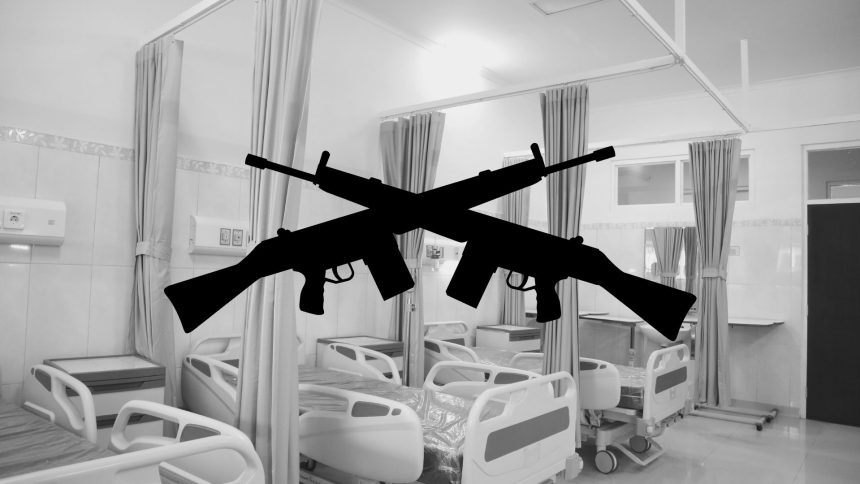
In the heart of a conflict that has raged for decades, Gaza’s hospitals — sanctuaries of healing and hope — have transformed into makeshift battlegrounds, where medical professionals, patients, and first responders navigate the treacherous intersection of war and care. As a relentless cycle of violence engulfs the region, these vital institutions find themselves at the forefront of a crisis that blurs the lines between healthcare and humanitarian disaster.
Once havens meant to shelter the sick and injured, they now contend with the chaos of bombings and siege while striving to provide lifesaving services amidst dwindling resources and rising despair. This article seeks to unravel the complex tapestry of challenges faced by Gaza’s hospitals, exploring how their walls, meant to cradle life, have become entangled in the harsh realities of a protracted conflict, reflecting an unyielding resilience in the face of adversity.
Shattered Shields: The Transformation of Healthcare Facilities in Conflict Zones
Delving into the heart of conflict zones, hospitals are facing a critical newer function – transforming into impromptu battle zones. In the shadowy alleyways of Gaza, once bustling with life, now echo with the ominous sounds of impending warfare. The region’s strife-torn hospitals, serving as unintentional bulwarks against escalating conflict, tell a grim tale of survival.
The scars of relentless assaults, etched plainly on the walls of Gaza’s healthcare edifices, have woven a new narrative around the area’s medical care manoeuvres. Gaza’s hospitals are no longer merely life-saving havens; they have morphed into reflexive shields, caught up in the volley of conflict pitting human resilience against unabated political disparage.
- Battlefield Transformation: Healthcare facilities have been forced to transform their operational structure. They have had to refocus resources and personnel to cope with the constant threat of imminent attacks, often leading to compromises in the quality and accessibility of healthcare services.
- Resource Mobilization: With numerous roadblocks affecting crucial supply lines, efficient allocation, and utilization of resources have been a lifesaving challenge.
- Personnel Resilience: Amid a strife-ridden working environment, healthcare professionals in Gaza have been exhibiting unyielding determination, consistently compromising their safety for the welfare of the public.
| Role of Hospitals in Gaza | Transformations enforced by Conflict |
|---|---|
| Premier healthcare providers | Becoming safe houses during strife |
| Access to Quality care | Quality of care compromised due to resource allocation |
| Standard Operating Environment | Adaptation to a conflict-ridden working environment |
Much like the shattered shields they embody, Gaza hospitals reveal a poignant commentary on the brutality of conflict and its transformation of essential health care facilities in contested zones. A loud call for the world to acknowledge, address and help mend these shattered shields.
Resilience Under Fire: Stories from Medical Professionals in Gaza
In the face of unimaginable conditions, medical professionals in Gaza continue to serve tirelessly, providing critical care to countless civilians caught amidst the crossfire. Within the walls of the local health facilities, medical staff persist through sustained and targeted attacks on these healthcare structures. To understand the gravity of the situation, one only needs to look at the numbers. During the 2014 conflict, 17 hospitals and 56 primary healthcare clinics were damaged severely, crippling their ability to provide adequate healthcare services. Nevertheless, medical professionals soldier onward, with a spirit that has been rightfully dubbed, Resilience Under Fire.
Dr. Tawfiq Nasser, a seasoned oncologist, shares his account of working within one of these constantly threatened health structures- Al-Shifa Hospital. The hospital, buffeted by air raids and a constant influx of casualties, struggles to stay operational. Amidst the gloomy corridors filled with cries of the injured, and a scant supply of essential drugs and equipment, Dr.Nasser and his team manage to operate with unyielding resilience.
| Medical Professional | Field | Location |
| Dr. Tawfiq Nasser | Oncology | Al-Shifa Hospital |
| Dr. Mohanad Shurrab | Emergency Medicine | Khan Younis Hospital |
| Nurse Rana Alsarraj | Pediatrics | Gaza City Hospital |
From performing surgery in candlelight due to power shortages, to innovatively using basic household materials as medical equipment, the stories of Gaza’s medical professionals bear testament to an indomitable spirit in the face of adversity. This spirit, marked by steadfast courage, an unwavering zeal to save lives and tenacity in perilous conditions, turns these hospitals into battlegrounds where healthcare professionals are the unsung heroes.
- Repurposing ordinary objects, such as clothing and utensils, as emergency medical tools when standard equipment is not available.
- Working round-the-clock under strenuous conditions, often without rest or break.
- Persisting through the ever-present risk of attack on the healthcare facilities.
These stories of the medical professionals in Gaza resonate with elements of extraordinary bravery, resilience, and dedication. Their fight is a testament to the human spirit and an inspiration that transcends borders and conflict zones.
The Human Cost: Patients Caught in the Crossfire
Caught between the clashing forces of war in Gaza, an often overlooked casualty emerges: the healthcare system. As hospitals morph into battlegrounds, patients’ ability to receive crucial treatment further dwindles, amplifying the human cost of conflict. Hospitals, once havens of healing, witness scenes of desperation as they grapple with diminishing resources and rising casualties.
The intricate network of Gaza’s hospitals operates under unmanageable stresses, seriously imperiling patient recovery rates. Basics like electricity and medicines become luxuries. Principally, three primary challenges have turned these medical facilities into high-risk zones:
- Inadequate resource availability: Whether it’s the scarcity of life-saving drugs or the constant power outages, hospitals are beset with innumerable resource shortages. The impact: critical care cannot be rendered at the desired quality and scale.
- Physical strikes: Hospitals have not been spared in the conflict zone. Direct attacks and shelling have devastated some facilities, leaving them in ruins. The devastation affects both the physical infrastructure and the morale of medical teams.
- Overflowing capacity: The surge in casualties has overwhelmed hospitals beyond their coping capacity – leaving many without necessary aid and overcrowding those that can afford to cater. The increased patient-load stresses an already burdened system.
| Challenge | Impact |
|---|---|
| Inadequate resource availability | Impedes quality and scale of healthcare |
| Physical strikes | Destroys infrastructure and demoralizes medical teams |
| Overflowing capacity | Denies necessary aid to scores of patients and stresses hospital resources |
To truly grasp the nature of the human cost embroiled in this conflict, we must zoom in on these factors – unforeseen casualties of war – and work towards solutions for a fragmented healthcare system caught in the crossfire.
Pathways to Peace: Recommendations for Safeguarding Healthcare in War-Torn Areas
As the volatile tensions continue to escalate in Gaza, the hospitals have been shred into open-ended zones of crossfire. It is a grave reality that these institutions of welfare and human dignity, meant to foster life, have themselves become emblematic arenas of trauma, violence, and despair. The rules of warfare, distinguishing between combatants and civilians, have been brutally usurped with hospitals being incessantly targeted.
The Violence Impact
- Injury and death: Frequent and chancy shelling have resulted in on-duty medical personnel and patients getting injured, or even worse, killed.
- Dwindling resources: The bombardments have led to the destruction of medical infrastructures, creating a massive shortage of essential pharmaceuticals and equipment.
- Panoramic threat: The incessant violence has deterred international aid suppliers, thus fatalizing the already precarious situation.
Recommendations for Safeguarding Healthcare
It is now paramount to usher in a pathway to peace and safeguard Gaza’s healthcare system from further degeneration. Here are some recommendations:
| Recommendation | Action |
|---|---|
| Ensure Hospital Neutrality | International entities must enforce respect for medical neutrality and secure hospitals as safe zones. |
| Swift Response to Violations | Accelerate investigation into war crime violations for immediate action and reparation. |
| Support Local Healthcare | Invest in local healthcare to rebuild shattered infrastructures, and to train medical professionals. |
| Crisis Communication | Establish clear lines of communication, allowing the healthcare system to effectively respond in times of crisis. |
A strategic and humanitarian approach can help prevent hospitals from falling into the grayscale of conflict. The hope is to restore them as sanctuaries of wellbeing and peace, a purpose they were originally built for.
Wrapping Up
In the ever-evolving landscape of conflict, the corridors of Gaza’s hospitals stand as poignant reminders of the harsh realities facing civilian life amid warfare. Once sanctuaries for healing and solace, these institutions have tragically transformed into battlegrounds, where medical personnel navigate the fine line between care and survival. As we reflect on this unsettling juxtaposition, it becomes clear that the human cost of such conflict extends well beyond the frontline, seeping into the very fabric of society and challenging the fundamental right to health and safety.
The narratives emerging from these hospitals serve as urgent calls for compassion and understanding, urging us to recognize the broader implications of conflict on human dignity. Just as the doctors and nurses strive to uphold their oath to save lives, the world must also bear witness to their plight, advocating for peace and a return to the sanctity of healthcare. In contemplating the future, we are reminded that amid the rubble of war, hope can still rise, and the commitment to protect the vulnerable must prevail over the chaos of violence.
As we move forward, let us carry these stories with us—imprinted not only on our minds but also in our hearts, fueling a collective desire for dialogue, healing, and ultimately, a resolution where hospitals can once again fulfill their intended purpose: to heal, not to harm.


