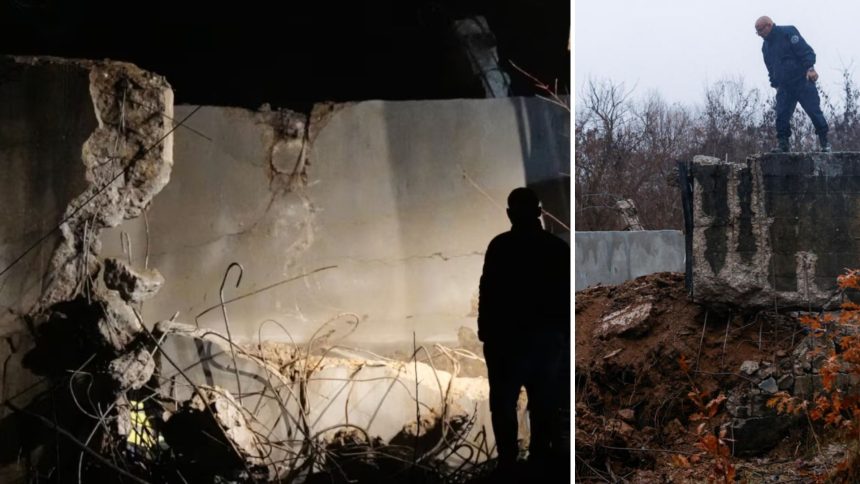
In the heart of the Balkans, a delicate dance of diplomacy and tension unfolds as Kosovo has leveled serious accusations against its neighbor, Serbia. In a dramatic twist of events, Pristina alleges that the recent explosion at a critical water canal, vital for the region’s infrastructure, was not merely a tragic accident, but rather a calculated act orchestrated from across the border. This incident has intensified the longstanding historical grievances and political rivalries between the two nations, sparking not only local outrage but also a renewed call for international scrutiny.
As investigation teams sift through the debris and officials engage in heated rhetoric, the question lingers: what does this explosion mean for the fragile peace in the Balkans? In delving into the ramifications of this incident, we uncover the complexities of regional relations and the ongoing struggle for stability in a land still healing from the scars of conflict.
Accusations Unveiled: Kosovos Claims on the Water Canal Explosion
In an intensifying diplomatic row, Kosovo officially lodged accusations against Serbia for the recent explosion that crippled a pivotal water canal supplying a significant part of the country. According to official representatives, they argued that this action was not a mere act of sabotage, but a carefully orchestrated attempt to undermine Kosovo’s sovereignty and security.
There are mounting pieces of evidence that seem to bolster Kosovo’s claims:
- An unexpected surge of power was reported in the control systems of the canal just before the explosion. This anomaly was traced back to a Serbian IP address.
- CCTV footages showed a suspicious vehicle with Serbian number plates parked near the canal around the time of the attack.
- Telltale signs of plastic explosives typically used by Serbian covert operations were discovered at the blast site.
| Claim | Evidence |
|---|---|
| Power Surge | Serbian IP traced |
| Suspicious Vehicle | Serbian number plates |
| Explosives | Typical of Serbian covert operations |
While the authorities are striving to reconstruct the water canal, the incident sparked serious concern about a potential instigation of a violent conflict. What is clear, however, is that these accusations have catapulted tensions between Kosovo and Serbia back into the international spotlight.
In contrast, Serbian officials have categorically denied the allegations, labeling them as ludicrous and unfounded, echoing the hostile political climate that engulfs the region. The international community, on its part, must act swiftly but judiciously to calm the escalating flare-up in order to avert any potential catastrophe.
Examining the Evidence: Analyzing Kosovos Assertions Against Serbia
On a sweltering afternoon, a blast echoed through the drought-ridden regions of Kosovo, its epicenter traced to a strategically important water canal. Swiftly, fingers pointed towards Serbia, accusing it of orchestrating this devastating act. While mere accusations cannot shape the realities of international relations, it’s crucial to scrutinize the assertions put forth.
The Kosovo government asserts that the ‘evidence’ it has against Serbia is significant in nature. The points underscored are –
- Historical rivalry and tension dating back to the Yugoslav wars.
- The strategic importance of the water canal for Kosovo, both in terms of public health and agricultural productivity.
- The recent series of unsettling incidents in the past months, aligning with Serbia’s alleged involvement.
However, circumstantial evidence can be misleading, and it’s beneficial to consider the following caveats:
- Historical tension alone isn’t enough proof of culpability. Animosity usually accompanies territorial disputes, but an attribution of direct accountability needs more concrete evidence.
- The Canal’s strategic importance could indeed make it an attractive target. However, this doesn’t exclusively point to Serbia. Other factors such as internal threats or third-party involvement cannot be disregarded.
- The pattern of incidents should be carefully evaluated, ensuring that each claim substantiates the overall argument firmly and isn’t merely incidental or coincidental.
| Assertion | Evidence | Evaluation |
|---|---|---|
| Historical tension | Conflict traces back to the Yugoslav wars. | Inconclusive without additional supporting evidence. |
| Canal’s strategic importance | Water supply vital for public and agricultural use. | Not exclusive to Serbia; internal and third-party threats possible. |
| Pattern of incidents | Previous allegedly Serbia-linked disruptive occurrences. | Should be examined for substantial correlation. |
Therefore, while Kosovo’s allegations against Serbia carry weight, a thorough investigative process is essential to establish the truth.
Regional Tensions: The Wider Implications of the Incident on Balkan Stability
The recent accusation leveled by Kosovo towards Serbia for allegedly orchestrating an act of sabotage on an essential water canal has inflamed existing tensions in the Balkan region. As underlying resentments deepen, there is a growing alarm over the broader implications for regional politics and stability. This incident is perceived as more than an isolated act of vandalism; it’s an assault on Kosovo’s sovereignty and a potential spark for conflict escalation between the Balkan nations.
The incident and subsequent finger-pointing indicate a high level of mutual distrust and animosity that could escalate beyond borders, impacting regional stability. This assertion becomes even more alarming when considering:
- The history of ethnic tension, territorial disputes, and political disagreements in the Balkans.
- The unpredictable effect of this conflict on the fragile geopolitics of the region, potentially influencing alliances and political alignments.
- The potential provocation of further incidents, both direct and indirect, against important infrastructure in the region, disrupting vital services and causing economic damage.
| Impact Areas | Potential Implications |
|---|---|
| Political alignments | Shifts in alliances, increasing regional instability |
| Economic Impact | Damage to vital infrastructure disrupting services, resulting in substantial financial loss |
| Socio-Ethnic relations | Heightened ethnic tensions, potential for renewed conflict |
While immediate effects of this incident are localized to Kosovo and Serbia, the broader implication on Balkan stability is a concern for the international community, with fear of escalating tensions leading to far-reaching repercussions. Continued monitoring by regional and international bodies will be critical in maintaining stability and preventing an escalation of conflict in this volatile region.
Path Forward: Recommendations for Diplomatic Engagement and Conflict Resolution
In view of the recent instability in the Balkans, particularly the explosives incident at the Gazivoda water canal where Kosovo accused Serbia of sabotage, it’s evident that direct diplomacy and concerted conflict resolution strategies are essential for the normalisation of relations between both nations.
Firstly, open channels of direct communication should be set up between Pristina and Belgrade. A reduction in rhetoric and the fostering of mutual respect and understanding will be significant for maintaining peace and composure between the two capitals. Efforts can include:
- Regular bilateral talks: Emphasis should be placed on the relaunch and adherence to EU-facilitated talks, as well as both nations showing commitment to these dialogues.
- The building of trust: It is important to create an atmosphere of trust, and enforcement of agreements that have been reached in the past can help achieve this.
- Involvement of International Organizations: The involvement of the United Nations, European Union, and other international bodies will be crucial in helping to mediate these discussions.
Secondly, conflict resolution frameworks need to be established and reinforced. Conflict resolution will be significant in meeting the long-term stability prerequisites in the Balkans, specifically the hope for Serbia and Kosovo to gain membership in the EU. Measures that can be adopted include:
| Framework Element | Action Step |
|---|---|
| Legal Resolutions | Settlement of disputes encompassing territorial issues, community rights, and shared resources through arbitration or courts of law. |
| Conflict Avoidance Mechanisms | Introduction of mechanisms such as early warning systems to identify and address potential conflicts before they escalate. |
| Reconciliation efforts | Encouragement of cultural exchanges, negotiated narratives of shared history, and public apologies for past offenses to foster peace and reconciliation. |
While the journey to reconciliation is long and complex, robust diplomatic engagement and efficient conflict resolution strategies offer a tangible path to harmony for Serbia and Kosovo.
Key Takeaways
As tensions escalate in the Balkans, the accusations between Kosovo and Serbia regarding the recent explosion at a crucial water canal underscore the fragility of their relationship. With each side firmly entrenched in their narratives, the appeal for international assistance and dialogue becomes ever more pressing. The incident not only highlights the physically tangible conflicts in the region but also the underlying geopolitical dynamics that continue to shape the lives of those caught in between.
As both nations grapple with their histories and aspirations for the future, the hope for peaceful resolution remains an essential goal. In navigating these complex waters, the path to stability will require not just accountability but also a commitment to dialogue, ensuring that the voices of those most affected are at the forefront of the conversation. Whether this latest episode deepens the divide or fosters an opportunity for understanding remains to be seen, but one thing is clear: the quest for peace in the region is far from over.