


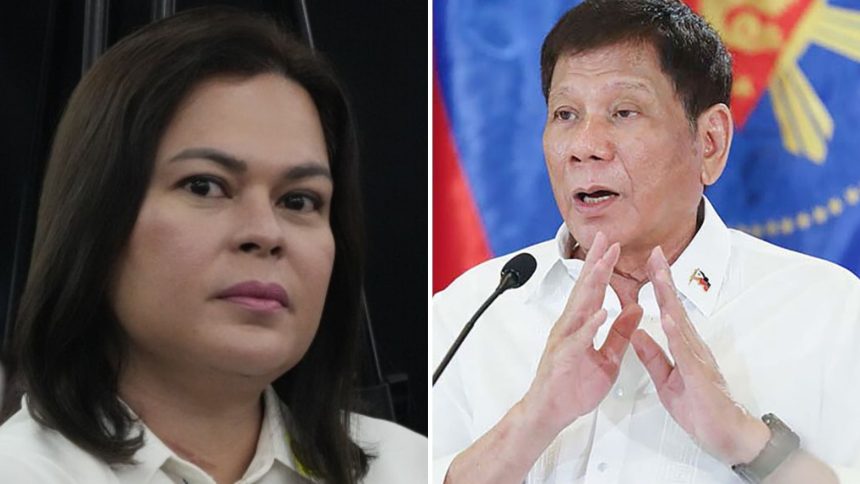
In a gripping revelation that has sparked widespread discussion, Philippine Vice President Leni Robredo recently made headlines with a controversial comment regarding her own safety amidst a politically charged atmosphere. In an unexpected twist, she stated that should her life be threatened, she would resort to drastic measures against the nation’s controversial leader, Ferdinand “Bongbong” Marcos Jr.
This remark underscores the precarious nature of political discourse in the Philippines, where tensions run high between rival factions and historical legacies continue to shape contemporary governance. As the nation grapples with its complex past and uncertain future, this statement not only raises questions about personal safety but also highlights the fraught landscape of power dynamics in the Philippines. In this article, we delve deeper into the implications of Robredo’s words and what they reveal about the ongoing interplay of fear and politics in the archipelago.
Impact of Political Rhetoric on National Discourse
In an unexpected statement that sparked nationwide discourse, Philippine Vice President said that she would have former dictator Ferdinand Marcos assassinated should her own life be ended prematurely. This assertive assertion not only demonstrates a severe tension in the country’s political framework but also affects the quality of national dialogue. The utterance serves as a litmus test for how political rhetoric can permeate and significantly impact the level of national discussions.
There are several ways in which such a form of political rhetoric affects the national discourse:
- Extreme Divisiveness: This type of rhetoric can amplify the sense of polarization within a nation. Instead of encouraging unity and common understanding, it can deepen divides and create an ‘us-versus-them’ frame of perception.
- Normalization of Violence: If such phrases become commonplace, they can trivialize serious issues like political assassination. Hence, unintentionally normalizing acts of violence within the public sphere.
- Inappropriate Precedent: Such statements made by a public figure can set a dangerous precedent. It can encourage impressionable youth and common citizens to adopt a similar approach towards violence and vendetta.
| Statement | Impact on National Discourse |
|---|---|
| Public figure endorsing violence. | Normalizes violence, making it seem less severe. |
| Use of hostile rhetoric by leaders. | Deepens divisions among the nation’s populace. |
| Threats of violence and revenge if harmed. | Sets a dangerous precedent for other citizens. |
Understanding the Context Behind the Vice Presidents Provocative Statement
In a surprising turn of events, Philippine Vice President Leni Robredo has delivered a provocative statement concerning the toxic political climate in her country. Her controversial declaration, wherein she asserted that she would order the assassination of Ferdinand Marcos Jr., the son of the late dictator, should she herself be killed, sent shockwaves through the nation.
The context behind these statements is fraught with tension and powerplays. The political landscape in the Philippines has been tumultuous, with deadly rivalries not uncommon. There’s a widespread suspicion that the vice president’s life could be under threat owing to her opposition to the influential Marcos family. The bold proclamation can be seen as a pre-emptive strike, a demonstration of her own resolve that she’s not afraid to meet fire with fire.
- Marcos Jr’s response: He has yet to publicly address these statements
- Public Reaction: The sentiment is mixed, with some lauding the vice president’s spirit, while others criticize it as unstatesmanlike.
- International Perspective: Though international bodies have not officially commented, certain sectors have raised concerns over the exacerbation of hostilities in the country.
| Ferdinand Marcos Jr. | Son of late dictator Ferdinand Marcos |
| Leni Robredo | Vice President of the Philippine |
| Potential murder-spree | A grim possibility if political tensions escalate |
Certainly, the vice president’s remarks need to be understood in the wider political context of the Philippines. However, they have definitely added another layer of complexity to an already tense environment. Only time will tell how this situation will unfold and what implications this could have on the future of the country.
Exploring the Ethical Implications of Violence in Political Dialogue
In a shocking development, Philippines Vice President Leni Robredo has apparently stated she would have former dictator Ferdinand Marcos ordered off if she were to be assassinated. Aiming at the underbelly of Filipino politics which has very often been marred by violence, intimidation, and bloodshed, these statements have spurred a fervent debate on the ethical propriety of violence in political discourse and whether such retaliation negates or amplifies the cycle of retribution.
Robredo’s Comment and Interpreting Political Violence
In unpacking Robredo’s comments, critics observe a brusque deviation from the usual diplomatic rhetoric. Political leaders, they argue, ought to serve as role models in promoting peace, tolerance, and respect for democratic processes. Thus, endorsing violence, even as a defensive strategy, augments a culture of mistrust and fear. It could furthermore deter potential leaders who might be intimidated by the prospect of physical harm. On the contrary, advocates of her stance declare that such assertiveness is a method of check and balance to tackle the impunity of those misusing power.
- Redrawing political lines: A tactic of deterrence or an invitation to anarchy?
- Is violence or the threat thereof a legitimate tool in political discourse?
- Does advocating for retaliatory violence endorse the Law of the Jungle or humanity’s inceptive instinct for survival?
The Historical Context: Ferdinand Marcos and the Ethical Implications
The backdrop of the Marcos dictatorship era adds contentious dimensions to this debate. The monstrous human rights abuses during his regime, vouched for by countless documented cases and testimonials, accentuate the bitterness and distrust that lingers in Filipino politics.
| Years of Marcos dictatorship | Human rights abuses documented |
|---|---|
| 1965-1986 | Approximately 75,000 |
Critics argue that by calling for future retribution against Marcos, Robredo is essentially returning to the violence of the past, which she should ideally be guiding the nation away from. However, supporters maintain that until the Marcos family is held accountable for their alleged crimes, such calls for justice, however shocking they may be, will remain inevitable.
- How does historical context influence the ethical appropriateness of responses?
- Is it ethical to balance the scales of justice with violence?
- Can the dark shadows of the Marcos era ever be surmounted by calls for peace without accountability?
Strategies for Promoting Peaceful Political Engagement in the Philippines
The national landscape of politics in the Philippines has never been binary; it’s a spectrum that ranges from far-left to extreme-right. The recent statements by the country’s vice-president, however, give a glimmer of hope in the enhancement of peaceful political engagement. The vice-president clearly emphasized that any action against her life would not incite further violence, but rather an even stronger determination to maintain peace and unity. In her words, “If I am killed, the only person I would have assassinated is Marcos.”
It’s a powerful assertion that speaks towards the vice-president’s commitment towards preserving the country’s democratic ideals. While her statement insinuates a potential plan of action, the context behind it underscores a broader strategy:
- Engagement without fear: The vice-president’s bold proclamation underscores the fact that the fear of uncertainty or violence should not deter political engagement. She maintains that even in the face of adversity, her goal would remain towards asserting democratic freedom.
- Preventing further chaos : By suggesting that her death would not result in a typical reactionary sequence of events, she’s also asserting that her political approach is geared towards preventing further upheaval in the country.
- Consolidation of democracy: In the grand scheme of politics, her stance suggests that even in her absence, she expects the consolidation of democracy and peaceful political engagement to be of high priority.
In the following table, you can see some of the steps that the vice-president and other political actors might consider to further promote peace and unity:
| Steps to Promote Peaceful Political Engagement | Possible Outcomes |
|---|---|
| Promote democratic values | Increases understanding and respect for democratic principles |
| Discourage incitement of violence | Reduces potential for unrest and instability |
| Encourage active engagement | Enhances political participation and accountability |
Concluding Remarks
In the intricate tapestry of Philippine politics, narratives often emerge that capture the imagination and spark robust discussions. The statements made by the vice president not only highlight the intense rivalry that characterizes the political landscape but also reflect the deep-seated emotions and concerns surrounding governance and leadership. As the nation grapples with its historical complexities and future ambitions, the interplay between power and accountability remains a pressing conversation.
Whether viewed as hyperbole, a rallying cry for reform, or a reflection of genuine fear, her words underscore the urgency for dialogue and understanding in a society navigating the waters of political legacy. As the story unfolds, the need for transformative leadership that prioritizes unity and progress remains paramount. Only time will tell how this chapter will influence the ongoing narrative of the Philippines.


