


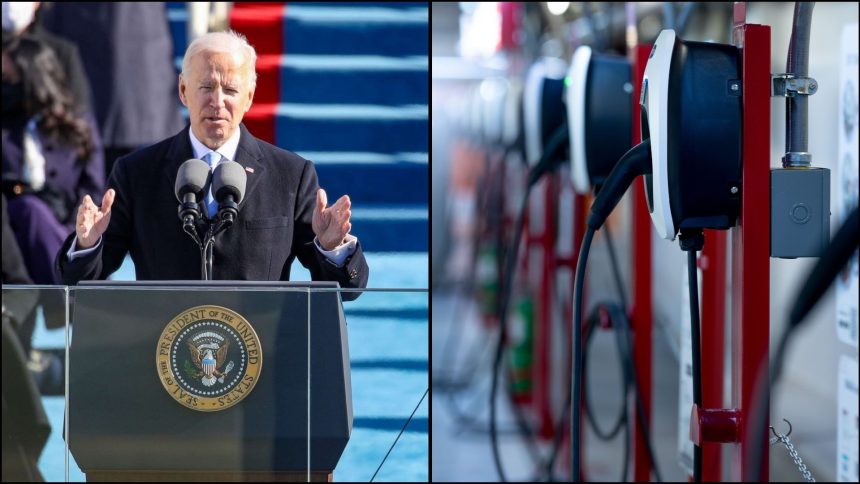
As the world accelerates toward a sustainable future, the United States is embracing a pivotal transformation in its transportation landscape. Under President Biden’s administration, the number of public EV chargers has surged, effectively doubling in just a few short years. This ambitious leap signifies a commitment to electrifying the nation’s roads and reducing carbon emissions, aligning with broader climate goals.
However, as the infrastructure expands, pressing questions linger: Is this rapid growth sufficient to meet the rising demand for electric vehicles? Will it keep pace with the anticipated influx of drivers making the switch? As we explore the dynamics of public EV charges and its’ infrastructure, we delve into the complexities behind this critical initiative and assess whether the current momentum is enough to support a truly electrified America.
Expanding the Network: How Public Chargers Have Grown Under Bidens Leadership
Under President Biden’s leadership, the landscape of public electric vehicle (EV) charging infrastructure has shown considerable growth. Progressive policymaking, promotional green initiatives, and an increased governmental focus on sustainable transport have all played roles in fostering an environment conducive to EV adoption. Additionally, the Biden Administration has devoted copious amounts of resources to expanding the current network of public EV chargers, aiming to future-proof transport and reduce reliance on fossil fuels. This commitment to green energy is evident in the notable increase in public EV chargers, their number has almost doubled since Biden took office.
The Biden administration’s commitment is highlighted in several initiatives and programs:
- The American Jobs Plan, boasting $15 billion to accelerate the deployment of public EV chargers to achieve a network of 500,000 plugs.
- Clean Cities Coalition Network, a government-industry partnership aimed at increasing energy efficiency in transportation.
- EV Infrastructure Incentive Program, designed to facilitate private investment in EV infrastructure.
| Program | Amount |
|---|---|
| American Jobs Plan | $15 Billion |
| Clean Cities Coalition Network | Varies |
| EV Infrastructure Incentive Program | Varies |
While the growth in public EV chargers under the Biden administration is a step forward, it’s crucial to ask - is it enough? Meeting climate objectives will necessitate an aggressive rate of EV infrastructure expansion. Furthermore, an evenly distributed network of chargers remains a challenge, particularly in rural and lower-income areas. Thus, continuous monitoring and strategic planning will be essential in ensuring that the promise of mass-scale EV adoption doesn’t fall short due to infrastructure constraints.
Evaluating Accessibility: Are the New Chargers Meeting Consumer Needs?
Over the last year, the Biden administration has made a significant effort to boost the electric vehicle infrastructure in the United States. With a strong push, the number of available public EV chargers has doubled. However, it’s essential to assess whether these new installations are meeting the needs of consumers. While the increase in numbers is undoubtedly encouraging, several critical factors need to be taken into account.
| Factor | Explanation |
|---|---|
| Location | Are these new chargers located in areas convenient for consumers? City centers, shopping malls, and highway rest stops are ideal places for public EV chargers. |
| Charge Speed | Faster charging stations can help reduce waiting times and make electric vehicles a more attractive option for potential buyers who are worried about “refuelling” times. |
| Availability | As more people switch to electric, it’s imperative to ensure that the supply of chargers meets the demand to avoid crowded charging stations and long waiting times. |
Ensuring widespread availability, swift charge times, and strategic location of these new chargers can significantly impact consumer uptake of electric vehicles. Addressing these factors is essential not only to meet current users’ needs but also to encourage more people to consider electric vehicles as a viable alternative to traditional gasoline models. While numerical growth is promising, qualitative growth is just as, if not more, crucial in making sure these chargers genuinely serve the people they’re intended to assist - the consumers.
Assessing Future Infrastructure: Balancing Quantity with Quality
As part of President Biden’s commitment to reaching net-zero emissions by 2050, his administration has launched an ambitious push for new electric vehicle (EV) infrastructure. Recent reports show that the number of publicly accessible public EV chargers across the U.S has effectively doubled under his watch. However, this rapid increase in quantity has sparked a vital conversation about the quality of these EV charging points.
Experts agree that for the country to achieve a successful shift to electric transportation, two crucial elements must be balanced: availability and reliability. Indeed, while it’s heartening to see the proliferation of public EV chargers, it’s equally important to ensure these charging stations are well-distributed, efficient, and reliable.
- Availability: Charging stations need to be conveniently located for a wide range of users. This means not only in cities but also in suburban areas and along major roadways for long-distance travel.
- Reliability: A common complaint among EV owners is finding charging stations that are out-of-service. The maintenance of these stations is as important as their installation.
Moreover, when gauging the effectiveness of public EV chargers and its’ infrastructure, it’s worth considering its accessibility and usability. A focus on user-friendly design—clear signage, easy-to-use payment systems, provision for those with disabilities—is essential for encouraging mass adoption of electric vehicles.
| Availability | Reliability |
|---|---|
| Plentiful city, suburb, and roadside stations | Maintenance to ensure continual service |
| Inclusion in underprivileged areas | Upgrade for fast-charging capabilities |
To meet President Biden’s clean energy goals, the nation must strive towards not just a greater number of public EV chargers but also a higher quality of service. The path towards a greener, more sustainable future is not just about investing in quantity but also improving quality.
Recommendations for Sustainable Growth: Strategies to Enhance EV Charging Accessibility
The accelerated growth in the Electric Vehicle (EV) market has left many industry experts wondering if the current charging infrastructure can meet the growing demand. Under President Biden’s administration, the number of public EV chargers has doubled, a testament to their commitment to transition towards a greener economy. However, the question of whether this progress is enough still persists.
Achieving sustainable growth in the public EV chargers and its’ market requires strategic planning and investment, especially in terms of infrastructure. Multiple strategies could play a significant role in amplifying the accessibility of EV charging stations. Here are three potential courses of action:
- Increase Federal Funding: Current federal funds for EV charging stations amount to $7.5 billion – a modest sum considering the ambitious goals set to curb carbon emissions. Amplifying this figure could help speed up the rate of infrastructure development.
- Private Sector Collaboration: Engaging businesses through various incentives like tax credits can increase the number of private sector charging stations. These partnerships would also drive innovation and cost effectiveness.
- Rural Area Focus: Remotely located charging stations are pivotal for the uptake of EVs in less populous areas. Increased coverage could help EVs become a more feasible option for long-distance travel.
| Strategy | Potential Impact | Challenges |
|---|---|---|
| Increased Federal Funding | Accelerated Infrastructure Development | Funds Allocation |
| Private Sector Collaboration | Increased Number of Charging Stations | Regulatory Issues |
| Rural Area Focus | Increased EV Adoption in Rural Areas | Cost of Infrastructure Development |
The path to boosting the accessibility of public EV charger is not linear. However, adopting these strategies can create a more robust charging infrastructure and reduce ‘range anxiety’, thereby encouraging more drivers to switch to electric vehicles.
In Retrospect
As we draw the curtain on our exploration of the impressive growth in public EV chargers during the Biden administration, it becomes clear that while quantity has surged, the conversation must also pivot to quality. The doubling of public charging stations is more than just a statistical milestone; it represents a commitment to a cleaner, more sustainable future. Yet, as we reflect on this achievement, we must ask ourselves if the pace of change is sufficient to meet the evolving demands of an electrifying automotive landscape.
The road ahead remains complex for public EV chargers, intertwined with challenges such as accessibility, equitable distribution, and the readiness of infrastructure to support an electrified fleet. As policymakers, stakeholders, and communities continue to work together, the question becomes not just about how many chargers we have, but how effectively we can harness this momentum to create a truly robust and adaptable network.
this journey towards a greener future is just beginning, and while we celebrate progress, we must stay vigilant and proactive in ensuring that our ambitions for electric vehicle infrastructure keep pace with the rapid evolution of technology and consumer adoption. The evolution of transportation is at our feet—now it’s time to charge forward.


