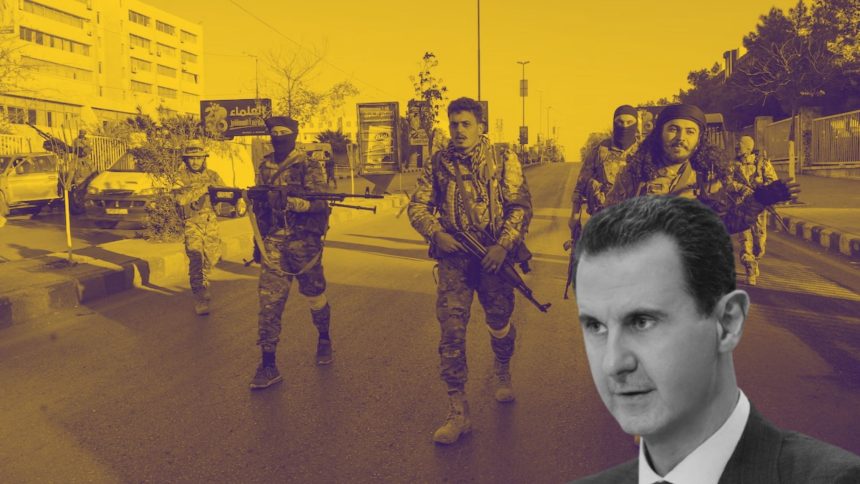
In the heart of Syria’s tumultuous northwest, a significant turning point appears to be unfolding as rebel forces launch a concerted offensive against the entrenched Assad regime. This dramatic resurgence of opposition activity not only raises the stakes in an already volatile conflict but also poses critical questions about the future of governance and control within the region. As clashes erupt and frontline positions are challenged, the balance of power is in a precarious state, prompting both local and international observers to reevaluate the trajectory of the Syrian civil war.
This article delves into the intricacies of the recent military maneuvers, the motivations behind them, and the implications they hold for the ongoing struggle for dominance in a war-torn nation where each battle echoes with the hopes and fears of countless civilians.
Analysis of the Strategic Shifts in Northwest Syrias Rebel Frontlines
The unwavering insurgent campaign in Syria’s Northwest has dealt a significant blow to President Bashar al-Assad’s regime, effectively reshaping the strategic frontline. Leveraging what seemed to be a precarious position just a few months ago, the rebels have successfully negotiated a strategic shift allowing them to ramp up their operations and gain control of key territorial assets.
Despite warnings from the Russian military and the Syrian government itself, the rebels pushed past the demarcation lines in an audacious attempt to recapture lost ground. The subsequent chain of events spells out a story of shifting dynamics and new strategic realities on the battleground. Amid these drastic power shifts, two key strategies have been deployed by the rebels:
- Coalition Building: Rather than operating as isolated entities, the rebels have forged strong alliances with numerous smaller militant groups, enhancing their strength and forging strategic unity on the ground.
- Exploiting Geographic Advantages: The rebels are leveraging the rugged topography of the region, its dense forests and high peaks, to launch surprise attacks against the Assad forces.
With these bold strategies, the rebel front in Northwest Syria has not only succeeded in destabilizing Assad’s defences but has also raised pertinent questions about the feasibility of the regime’s long-term survival. As the struggle for control continues, the rapidly changing dynamics are providing a fascinating insight into Syria’s evolving strategic landscape.
Impacts on Humanitarian Conditions and Civilian Safety in Conflict Zones
The escalating conflict in Syria’s northwest region pushes the enduring populace further into vulnerability. The recent rebel offensive, which has left the Assad regime staggering, has severe implications for the humanitarian situation and civilian safety. Reports suggest that civilian spaces, particularly hospitals and schools, have borne the brunt of this assault—which is a flagrant violation of international humanitarian laws and standards.
Increasing incidents of violence have forced the existing healthcare infrastructure to its knees. Drawing from a few reliable sources, the following key points depict the alarming situation:
- Number of hospitals damaged: 13 since the rebel Offensive
- Reduction in operational health facilities: Reduced by 60%
- Health workers killed or injured: 37 recorded cases
The engulfing conflict has made the future uncertain for more than 400,000 frightened residents who have been uprooted from their homes due to the turmoil. The table below showcases the grim state of displaced persons in this area:
| Circumstance | Number |
|---|---|
| Displaced since the offensive | 415,000+ reported cases |
| Living in improvised camps | 200,000+ individuals |
| Without access to basic resources like food and water | 175,000+ people |
These figures spotlight the urgency for robust international intervention to protect civilians and to ensure the delivery of essential life-saving services amid the chaos.
Assessing the Long-term Consequences for the Assad Regime and Regional Stability
The recent successes of the rebel forces in the northwest of Syria indicate a significant blow to the ruling Assad regime. Strategic victories have enabled the rebel coalition to regain control over key geographical locations, including Aleppo, causing a shift in the balance of power. Moreover, these wins have boosted the morale of the rebels and spurred further global attention to the Syrian crisis.
This power imbalance creates a series of concerning potential ramifications for the Assad regime as well as regional stability in and around Syria. The most alarming possibility, perhaps, would be the likelihood of a power vacuum if the Assad regime ultimately falls. This could result in a Syria that is even more fragmented than it is today, with each faction vying for control.
| Long-term Consequences | Potential Issues |
|---|---|
| Power Vacuum | Increased Factionalism |
| Loss of Strategic Locations | Spread of ISIS |
| Fragmentation of Syria | Ethnic Conflicts |
Furthermore, such an environment is fertile ground for extremist groups like ISIS to spread their influence and control, further exacerbating the instability. A stable Syria is key to a stable Middle East, and the domino effect of this instability could have far-reaching repercussions beyond the nation’s borders.
Regional Stability concerns include:
- Potential surge of refugees straining neighboring countries resources.
- Increased strain on international relations and alliances.
- Possible hijacking of the crisis by international powers for their geopolitical interests.
Hence, the recent developments in Syria not only impact the Assad regime but also pose severe concerns for regional and, potential, global stability.
Policy Recommendations for International Response and Support Initiatives
The escalating violence in Syria’s Northwest is creating a humanitarian crisis of substantial magnitude. The rebel offensive, while dealing a significant blow to the Assad regime, is also generating devastation and displacement on a massive scale. The international community needs to rally at this crucial juncture to limit damages and provide robust support to the affected citizens.
There are three key areas that the international response initiatives should emphasize:
- Humanitarian Aid: This should be priority number one. Immediately launching an emergency response to alleviate the suffering of those displaced by the combat is vital. This includes the provision of food, clean water, shelter, and medical services.
- Political Pressure: It is essential that the global community use its collective power to put diplomatic pressure on all actors involved in the conflict. Enforcing international humanitarian laws and pushing for a cease-fire can help to protect innocent civilians.
- Support to Refugee Host Countries: Countries that have opened their doors to Syrian refugees are currently overwhelmed. The international community should assist these host nations through financial support and expertise while simultaneously reducing geopolitical tensions that arise from mass migration.
The need for an effective and timely response from international actors cannot be overstated. A well-coordinated effort will not only alleviate the humanitarian crisis on the ground but also pave the way for a potential politically negotiated solution to the conflict. For, as we all know too well, the
long-term key to bringing an end to the crisis in Syria lies not in military might, but in achieving political stability.
| Key Areas | Actions |
|---|---|
| Humanitarian Aid | Emergency response including food, shelter, clean water, medical services |
| Political Pressure | Enforcing international humanitarian laws, advocating for a cease-fire |
| Support to Refugee Host Countries | Providing financial support and expertise, reducing geopolitical tensions |
Insights and Conclusions
As the dust settles in the northwest of Syria, the implications of the recent rebel offensive are beginning to unfurl. This surge comes at a critical juncture in a protracted civil conflict, reshaping the landscape of power and control. While the Assad regime faces significant challenges, the path forward remains fraught with uncertainty for all parties involved.
The resilience demonstrated by the opposition forces serves as a reminder of the complexities inherent in this multi-faceted war. Moving forward, the international community watches closely, aware that each shift in the battlefield could reverberate far beyond Syria’s borders. As negotiations and strategies develop in the coming days, the future of the region hangs in the balance, reminding us that, in the world of geopolitics, the only constant is change.