


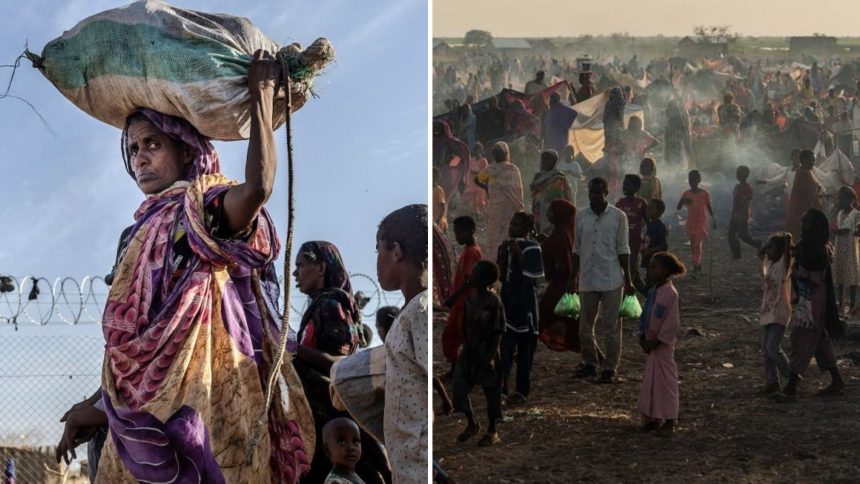
As the sun dips below the horizon, casting long shadows over the war-torn landscapes of Sudan, the chilling echoes of conflict resonate far beyond the battlefield. The ongoing civil war, which has intensified in recent months, has not only claimed countless lives but has also precipitated a grave humanitarian crisis. With critical infrastructure shattered and agricultural systems in disarray, millions of Sudanese are now grappling with an existential threat: widespread food insecurity.
This article delves into the multifaceted impacts of the escalating conflict, exploring the intricate interplay between violence, displacement, and hunger. In a nation rich in history and potential, the dire circumstances faced by its people serve as a somber reminder of the fragility of peace and sustenance in times of turmoil.
The Escalating Conflict and Its Impact on Food Supply Chains
Even as the escalating civil unrest in Sudan shows no signs of abating, food insecurity is fast becoming a grave concern for the civilian populace. Rampant clashes between government and rebel forces continue to disrupt the already fragile infrastructure; the agricultural sector – a lifeline for numerous Sudanese – is adversely impacted the most. Major supplies like wheat, peanuts and sesame are caught in the crossfire, derailing their distribution channels. This is creating an uncalled for chasm in the food supply chain, leading to unimaginable trials for the common man.
- Disrupted harvesting cycles: Owing to the violence, farmers are unable to follow the regular harvesting cycles, strongly affecting their yield.
- Destruction of Storage facilities: Warehouses/storage facilities are regularly targeted leading to huge losses post-harvest.
- Impacted food distribution: Heightened conflicts in major transportation routes hinder food movement from production houses to markets, causing supply bottlenecks.
| Crop | Expected Shortfall |
|---|---|
| Wheat | 30% |
| Peanuts | 45% |
| Sesame | 50% |
The damaging effects of this conflict extend far beyond the battlefield. The lack of access to food is forcing families to resort to extreme measures such as skipping meals or selling off valuables to afford basic sustenance. International agencies are striving to bring help to the affected regions but their efforts are thwarted by the ceaseless combat, making the free movement of aid restricted. If the turmoil persists and aid doesn’t reach in time, we could be staring at a massive humanitarian crisis. Urgent international intervention is a pressing necessity to curb the burgeoning strife, put a cork on the food crisis, and restore dignity to the lives of suffering Sudanese.
Humanitarian Efforts Amidst Chaos: Challenges and Opportunities
As the civil war in Sudan intensifies, it continues to disrupt the supply chains, leading to widespread food insecurity. People are forced to flee their homes in fear of the ongoing conflict, resulting in a massive humanitarian crisis. We’re witnessing an alarming surge in malnutrition rates, particularly among children. In spite of the chaotic environment, nongovernmental organizations (NGOs) and humanitarian aid groups are tackling these immense challenges with determination and compassion.
- Innovative Responses: In a display of remarkable resilience, NGOs are implementing innovative solutions to navigate through the conflict zones and reach affected citizens. Use of technology like food tracking apps and drone-delivered aid packages are replacing traditional methods of distribution. On the ground, mobile nutrition clinics are providing critical care to malnourished children.
- Relocating and Rebuilding: International agencies are helping displaced families by setting up temporary shelters and assisting them with establishing new livelihoods.
- Peace-building Efforts: Alongside immediate humanitarian assistance, NGOs are also working towards resolving the conflict through mediation and peace-building initiatives.
| Situation | Status |
|---|---|
| Malnutrition among children | Critical |
| Number of displaced families | Increasing |
| Impact of peace-building efforts | Growing, but slow |
Ironically, amidst the challenges, lie seeds of opportunities. Bringing aid organizations together, this crisis has fostered collaborations and partnerships like never before. Collective efforts are being made to not only address the immediate concerns but also establish a long-term, sustainable solution to the crisis – a chance for a more prosperous future for Sudan. This dire situation is a reminder of our shared humanity, sparking global solidarity and mobilizing resources on a massive scale.
Nourishing the Future: Innovative Solutions for Food Security
The rising intensity of the Sudanese civil war has led to a drastic increase in food insecurity throughout the country, impacting millions of lives. Over a third of the nation’s population is now in need of urgent action to end widespread food insecurity. Economic instability combined with the war has led to widespread displacement, disrupting the nation’s agricultural productivity and supply chains. In such a critical scenario, there’s an imperative need for innovative solutions to ensure food security.
Smart Farming Technology is one such innovative solution that has the potential to improve agricultural productivity even in adverse conditions. Smart Farming leverages cutting-edge technology such as IoT, AI, and data analytics to optimize farming operations, boost productivity and improve crop health.
Food Preservation Techniques are crucial to prevent food waste and increasing the shelf life of food products. Simple techniques such as sun drying, smoking and canning can be utilized to preserve food.
Community Farming offers another promising opportunity for improving food security in Sudan. Through community farming, individuals can share resources, knowledge, and labor, thereby improving agricultural output and sharing the risks.
| Solution | Benefit |
|---|---|
| Smart Farming | Increased agricultural productivity |
| Food Preservation Techniques | Reduced food waste |
| Community Farming | Shared resources and risks |
In this dire situation in Sudan, these innovative solutions could be invaluable for combating widespread food insecurity and establishing a more stable, secure food system for the future. It’s time for us to pivot towards sustainable and resilient approaches to nourish the future.
Global Responsibility: Engaging the International Community in Support of Sudan
In a distressing turn of events, the ongoing civil conflict in Sudan has escalated, leading to widespread food insecurity that has left millions in a state of desperation. The International community must rally to ameliorate the burgeoning humanitarian crisis, providing not only immediate aid but also assisting in the development of sustainable, long-term strategies to ensure food security and stability.
While peace talks are underway, the reality on the ground remains dire. According to the United Nations:
| Statistic | Number |
|---|---|
| Total Population Affected | 8.5 million |
| People Suffering Acute Food Shortage | 4.4 million |
| Internally Displaced People | 1.87 million |
Without support from international organizations and nations, these numbers could jump exponentially.
The international community needs to engage on several fronts to mitigate the crisis and exert pressure on warring parties to resolve their conflicts amicably. Here are some strategies that can be initiated to provide relief and sustainable solutions:
- Immediate Humanitarian Aid: Deployment of food, water and medical aid to the affected areas to alleviate the immediate plight of the suffering populace.
- Diplomatic Dialogues: Encourage peacebuilding dialogues and set in motion initiatives for conflict resolution.
- Building Resilient Communities: Invest in initiatives to build resilience among communities, such as the development of sustainable agriculture, provision of education and vocational training.
- Strengthening Local Governments: Strengthen local governments and institutions, promoting transparency, good governance and the rule of law.
the plight of Sudan requires collaborative and comprehensive interventions. The international community, in embracing its global responsibility, must act urgently and decisively to mitigate the crisis and foster a path toward peace and stability.
Closing Remarks
As the conflict in Sudan deepens, the reverberations are felt far beyond its borders, manifesting in the lives of millions who now confront the grim reality of food insecurity. The interplay of violence, displacement, and economic disarray offers no easy resolution, casting a long shadow over the nation’s future. It is crucial for the international community to acknowledge the urgent needs of the Sudanese people, whose resilience is tested daily.
The world now watches as they navigate this harrowing crisis; their plight serves as a stark reminder that peace is not a destination, but a journey—one that requires collective commitment, understanding, and action. As we reflect on the unfolding situation, we must remain vigilant, advocating for solutions that not only alleviate immediate suffering but also pave the way for lasting stability and hope in Sudan.


