


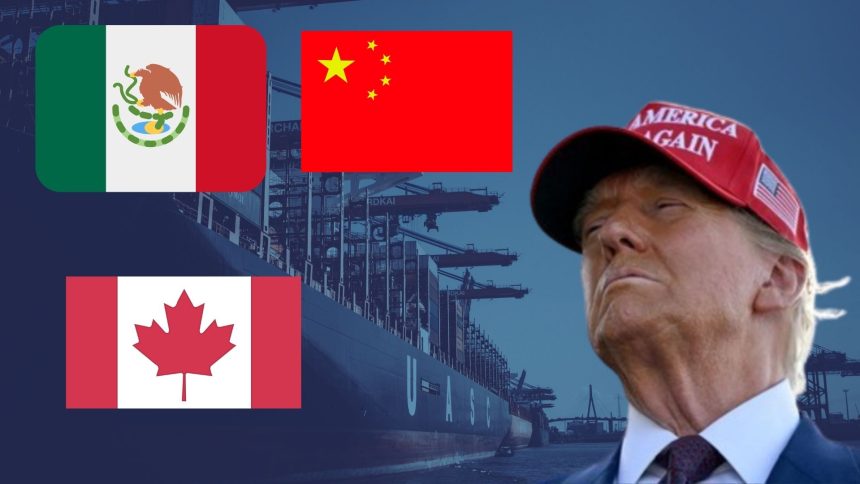
On the eve of a consequential political shift, the air buzzed with anticipation as former President Donald Trump once again sought to reshape the landscape of international trade. With a bold declaration to impose tariffs on Mexico, Canada, and China starting his first day back in office, Trump reignited discussions about American economic sovereignty and the implications of protectionist policies.
This announcement not only underscores the complexities of diplomatic relations with these three major trading partners but also raises critical questions about the potential impact on American consumers, businesses, and the broader global economy. As the nation braces for a familiar yet provocative approach to trade, we delve into the implications of this commitment and what it could mean for the future of U.S. relations with its North American neighbors and China.
Trumps Economic Strategy and its Implications for North America
In a startling departure from previous administrations, President Donald Trump has pledged to impose strategic economic tariffs on neighboring nations Canada and Mexico, in addition to China, upon his initial day in office. This proclamation signifies a drastic shift in American international trade and economic policy. Trump’s strategy appears to revolve around levying tariffs to protect and bolster domestic industries, reducing trade deficits, and encouraging businesses to operate within the United States.
- Domestic Industries: By imposing tariffs, Trump aims to protect industries hit hardest by foreign competition, helping them stay afloat and retain jobs.
- Trade Deficits: The Trump administration perceives trade deficits with nations like China as detrimental to the U.S. economy. Increased tariffs could, in theory, lower these discrepancies.
- Business Incentives: The tariffs could potentially compel companies to keep their operations on American soil, benefiting local economies and job markets.
However, while such an economic strategy might initially seem beneficial to the U.S economy, it doesn’t come without potential repercussions. It’s important to understand that tariffs aren’t a one-way street. Countries may retaliate with their own economic sanctions, leading to a slowdown or even a halt in global trade, a scenario often referred to as a trade war.
| Country | Potential Repercussions |
|---|---|
| Mexico | Retaliation could harm U.S.-Mexico trade relations potentially impacting industries such as auto manufacturing and agriculture. |
| Canada | As the U.S.’s largest export market, Canada’s retaliatory measures could significantly hurt American businesses. |
| China | Given China’s substantial role in the global economy, a trade war could have wide-ranging negative consequences. |
While it’s yet fully to be seen how these changes will unfold and to what extent they’ll impact North America’s economic landscape, Trump’s economic strategy undeniably signals a new era in U.S. trade policy. Whether this will ultimately be to the benefit or detriment of the nation remains a heated topic of debate.
Assessing the Potential Impact of Tariffs on Trade Relations
In a shocking declaration on the campaign trail, Donald Trump, former president and business mogul, guaranteed immediate enforcement of tariffs on Mexico, Canada, and China on his very first day in office. This assertive move towards protectionist policies, if unfolded, holds the potential to drastically reshape world trade relationships, affecting not only economies of the targeted nations but also global trade as a whole.
Let’s delve into the crucial aspects and the potential impacts of such a policy:
Key Considerations
- Tariffs: These are essentially taxes put on imported goods. The aim is usually to protect domestic industries by making foreign goods more expensive.
- Trade Relations: The enforcement of tariffs could highly strain relations with the affected nations. Responses could range from reprisals in the form of reciprocal tariffs or even escalating into a trade war.
- Economic Impact: Beyond the immediate effects on trade, tariffs can also impact economies more broadly. Consumers often bear the brunt of these policies, as higher costs of imported goods may be passed on to them.
Tariffs can potentially lead to severe consequences in terms of trade relations, as depicted in the following table:
| Country | Potential Impact |
|---|---|
| Mexico | Draws back progress on improved trade relations |
| Canada | Escalation of softwood lumber dispute |
| China | Potential trigger for a full-fledged trade war |
Crucially, Trump’s declaration disregards the intricacies of international trade and the inherent interconnectedness of world economies. While it is veiled as a move to bolster American economy, the consequences could be far-reaching and unintended. The confluence of global economic, political, and social forces ensures that no action, especially one involving significant economic powers, occurs in isolation.
Evaluating the Response from Mexico, Canada, and China
In the wake of President Trump’s strong-armed trade rhetoric, prompt reactions came from Mexico, Canada, and China, with each country pushing back on his proposals. Mexico, a country largely dependent on its northern neighbor for economic stability, conveyed regret and concern, indicating that such actions would result in a trade war. In stark contrast, President Lopez Obrador of Mexico extended a hand for dialogue about the new trade policies with hopes of mitigating the fallout.
On the other hand, Canada, also one of the biggest trading partners with the US had a more diplomatic response. Prime Minister Justin Trudeau emphasized the robust and beneficial trade relationship the two countries have built over the years. He was firm on protecting Canadian interests, but underscored the importance of maintaining a well-functioning trade relationship with the US. In the far East, China, too, voiced its opposition to Trump’s prospective measures. Beijing argued that a trade war would not only damage both economies but would also cause global economic instability. China promised to retaliate if Trump followed through with his threats.
| Country | Response |
|---|---|
| Mexico | Voiced concern and regret, extended hand for dialogue |
| Canada | Stressed importance of maintaining trade relationship, vowed to protect Canadian interests |
| China | Opposed the measures, warned of global economic instability, threatened retaliation |
Examining these reactions, it is apparent that the proposed tariffs could shift global economic landscapes significantly. Countries seem willing to either strengthen dialogue or retaliate in order to protect their own economic interests. While each nation’s response has a unique tone and message, all agree that Trump’s proposed tariff imposition could result in a greatly transformed international trade setting.
- Mexico is motivated by the desire to avoid a trade war with the US.
- Canada is keen on maintaining its well-functioning trade relationship with the US while also protecting its own interests.
- China opposes the measures and warns of global economic instability.
Recommendations for Navigating a New Trade Landscape
The new trade landscape is a challenging arena, especially with the bold promises of new tariffs on Mexico, Canada, and China by Donald Trump. However, these changes do not spell doom for businesses. In fact, they present unique opportunities that can be capitalized on, if navigated wisely. Therefore, the following recommendations are offered to help businesses adapt and thrive in this new environment.
The first recommendation is to “embrace the change”. While changes in tariff agreements might seem alarming on the surface, they can actually create novel avenues for businesses to explore. These changes could potentially lead to opportunities to expand into markets that were previously unexplored or thought of as too risky.
| Strategy | Action Plan |
|---|---|
| Embrace change | Explore new markets, develop products for these markets |
A strong knowledge and understanding of the proposed tariff changes will be indispensable in navigating the new trade landscape. Therefore, businesses are encouraged to “study the tariffs”. The more detailed your understanding of the changes, the better equipped you will be to adapt your business strategy to meet the new environment. With comprehensive knowledge of tariffs, you can effectively plan how to reorganize your production, sourcing, and supply chain strategies.
| Strategy | Action Plan |
|---|---|
| Study the tariffs | Analyze changes, reorganize production, revise supply chain strategies |
Despite the uncertainties, these changes present a unique opportunity for companies to grow and thrive. By adapting and innovating in response to the new trade landscape, businesses could turn these challenges into opportunities.
In Conclusion
As the dust settles on President Trump’s bold promise to impose tariffs on Mexico, Canada, and China from day one of his administration, the implications of this move ripple beyond mere economic calculations. It signifies a shift towards a more assertive trade policy that may redefine the landscape of international relations and domestic industries. While supporters hail it as a necessary step to protect American jobs and industries, critics warn of the potential for retaliatory measures and a strain on vital trade partnerships.
As we watch the unfolding developments, one thing remains clear: the road ahead is fraught with challenges and opportunities that could reshape not only the U.S. economy but also its standing on the global stage. As the countdown to inauguration day begins, stakeholders across the spectrum remain on high alert, ready to respond to the changing tides of trade and diplomacy. What remains to be seen is the long-term impact of this opening gambit and how it will ultimately influence America’s economic future.


