


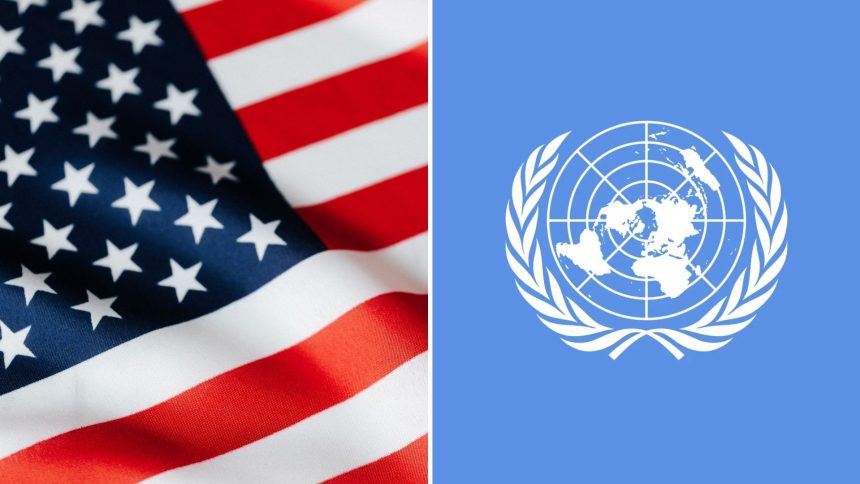
In a striking declaration that has sent ripples through the corridors of international diplomacy, the United States’ envoy-in-waiting has leveled serious accusations against the United Nations, labeling the organization as corrupt and hinting at potential funding cuts. As global leaders convene to address pressing issues from climate change to humanitarian crises, this bold statement raises critical questions about the future of U.S. engagement with one of the world’s most pivotal institutions.
This article delves into the implications of these remarks, exploring the envoy’s perspective on the UN’s operations, the potential ramifications for international cooperation, and the broader context of U.S.-UN relations. As we navigate this complex landscape, the integrity and effectiveness of global governance are once again thrust into the spotlight.
US Envoy-in-Waiting Issues Stark Warning on UN Integrity
The incoming US envoy to the United Nations has sent shockwaves through international diplomatic circles, issuing a piercing critique of the governing body and calling its integrity into question. During a hard-hitting speech delivered yesterday, the envoy-in-waiting blasted the UN as corrupt and riddled with self-interest. He accused it of failing in its key objectives of promoting international cooperation and maintaining world peace with stark words: “The UN has become a playground for the corrupt and the self-interested.”
Threatening to cut US funding that is a crucial part of the organization’s operating budget, the speech was seen as a clear statement of intent: the new envoy will not approach his role with diplomatic gloves on. Instead, he will demand reform and transparency from within the centuries-old organization. The allegations of corruption he levelled against the UN included:
- Abuse of power through favoritism and nepotism
- Usurpation of funds meant for humanitarian action
- Covering up human rights abuses
- Immunity for high-ranking officials involved in scandals
The speech has sparked fierce debate among global leaders and policymakers, with many expressing concerns over the potential implications of funding cuts. However, others back the envoy’s assertions and call for urgent restructuring of the UN. The US government’s stance on the matter will be under close scrutiny as the discourse unfolds.
| US Contribution to UN Budget | 2019 | 2020 | 2021 (Projected) |
|---|---|---|---|
| Regular Budget | $674 million | $591 million | $550 million |
| Peacekeeping Budget | $2.1 billion | $1.7 billion | $1.5 billion |
These figures highlight the enormity of the contribution made by the US and illustrate why the envoy’s threats of funding cuts could seriously destabilize the workings of the UN, particularly in peacekeeping operations. It remains to be seen how the story will unfold over the next few days, but one thing is clear – the gloves are off, and an era of direct confrontation might be upon the United Nations.
Examining Allegations of Corruption: The UNs Accountability Crisis
The upcoming US ambassador to the UN has let out an explosive tirade against the international body, blasting it for widespread corruption and accountability issues. The exasperated envoy-in-waiting has not only punched holes in the UN’s reputation but also hinted at major funding cuts as a form of retaliation for its alleged incompetence.
In a candid revelation, the nominee stated that the UN is plagued by systemic mismanagement, transparency issues, and dubious financial conduct. These allegations, if proven, show a dark side of an organization that is supposed to be a torchbearer for international peace and cooperation. Here are some of the major issues raised by the ambassador designate:
- Systemic Corruption: There are allegations of endemic corruption going unchecked in the UN system. This ranges from bribery to misuse of funds meant for crucial operations.
- Lack of Transparency: Despite efforts to maintain an open administrative process, accusations of secret deals and negotiations continue to tarnish the organization’s image.
- Accountability issues: Failures in holding individuals or nations accountable for their actions is one of the major criticism faced by the UN.
| Country | Funding Status |
| United States | Possible cuts |
| Germany | Stable |
| China | Increased Contribution |
An investigation is certainly a necessity to quell these concerns. However, the looming risk of a US funding cut and its subsequent domino effect could cripple the UN’s efforts to maintain global peace and security. Only time will tell if these allegations of corruption will precipitate a crisis in the UN or if they will inspire a transformative change.
Funding Cuts on the Table: A Strategic Shift in US Foreign Policy
The spotlight is on the recently nominated US envoy to the United Nations who has ignited a global controversy with some incendiary comments. Labeling the organization as a “den of corruption,” he has ignited an existential funding debate that might reshape the contours of American foreign policy. This audacious move is seen by many as a strategic shift in Washington’s approach towards global multilateral organizations like the United Nations, signaling a possible retrenchment away from international cooperation.
The envoy’s threats of funding cuts are not mere rhetoric, they manifest a distinct change in international strategy. The United States contributes by far the largest share to the UN budget; therefore, any significant reduction would severely impact the body’s functioning. The implications of such a provocative stance would be felt globally, affecting numerous essential UN programs and operations such as:
- Peacekeeping operations: These missions are critical in conflict zones, providing security and humanitarian support
- World Food Program: A potential reduction in funds could exacerbate global hunger
- UNICEF: The world’s leading advocate for children may face a curtailment of activities
- WHO: Deep cuts could impair the global health community’s ability to respond to pandemics
| Organization | Potential Impact |
|---|---|
| Peacekeeping Operations | Severe logistical and operations disruption |
| World Food Program | Rapid increase in global hunger |
| UNICEF | Major setback to child welfare and education |
| WHO | Compromised global health response |
Such a bold departure from traditional American diplomacy has both alarmed international stakeholders and sparked intense domestic debate. The coming months will test the mettle of this new approach as the world closely watches how these threatened cuts, if enacted, will reshape global diplomacy’s landscape.
Charting a Path Forward: Recommendations for Reform and Oversight
Uncertainty looms over the future relationship between the United States and the United Nations due to the US’s Envoy-in-waiting outright accusations of corruption. In the past, the US has been a significant contributor to the UN’s budget, hence the threat of funding cuts presents a dire situation that demands urgent rectification and oversight.
The recommended path forward lies in drastic reform within the United Nations. Transparency, accountability, and merit-based appointments should be given top priority, thereby enabling UN’s operations to wash away the perceptions of corruption. The following unnumbered list highlights key areas for reform:
- Refine the selection process: The selection process for high-ranking UN officials should be more transparent and publicly disclosed to address charges of favoritism and corruption.
- Implement strict auditing systems: Regular audits with publicly accessible results can help ensure that any misallocation of funds is quickly detected and addressed.
- Revamp the whistleblower policy: An effective whistleblower policy must be in place to encourage insiders to expose corrupt practices, without the fear of retribution.
| Reform Area | Significance |
|---|---|
| Selection Process | Eliminate corruption and favoritism |
| Auditing Systems | Ensure financial transparency |
| Whistleblower Policy | Encourage inside information disclosure |
With these reforms, the United Nations can regain trust, not just from its member states but from the global populace as a whole. Such measures would serve to assure the US, paving the way for continued cooperation and financial support.
In Conclusion
the recent remarks by the US envoy-in-waiting highlight a growing tension between national perspectives and international institutions. By characterizing the United Nations as corrupt and threatening potential funding cuts, this move signals a pivotal moment that could reshape the landscape of global diplomacy. The implications of these statements echo widely, sparking conversation about the efficacy and integrity of multilateral organizations in addressing pressing global challenges. As stakeholders from every corner of the world watch closely, it remains to be seen how this stance will influence future interactions and negotiations.
The path forward may well redefine the relationships between the US and its allies, as well as the broader effectiveness of the UN itself. In a world increasingly defined by interconnected challenges, the need for constructive dialogue and cooperative solutions has never been more critical.


