


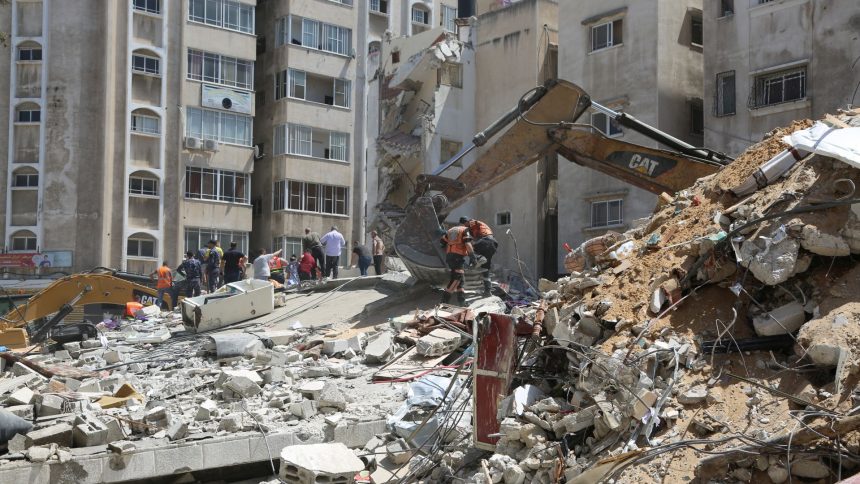
As the embers of conflict continue to smolder in the heart of the Middle East, whispers of diplomacy hang heavy in the air. The fragile agreements crafted by international mediators and US officials now stand precariously on the brink, teetering between hope and despair. In the ongoing saga of the Israel-Hamas conflict, a recent report has emerged, illuminating the daunting challenges that threaten to unravel any semblance of peace.
As military actions persist and rhetoric intensifies, the pivotal role of negotiation surfaces once more, raising urgent questions about the future of Gaza and the wider region. This article delves into the complexities of the current situation, examining the intricate dynamics at play and the implications of a potential collapse in negotiations—an event that could reshape the landscape of peace efforts and deepen the scars of a long-standing conflict.
US Negotiation Strategies and Their Impacts on the Gaza Conflict
According to high-ranking US officials, the peace deal that had been narrowly striked between Israel and Hamas is teetering on the brink of failure. Intensive negotiation efforts have been poured into this pivotal agreement to temper the escalating violence in the Gaza strip. Nonetheless, the fragility of the situation makes the outcome highly unpredictable.
It is worn mentioning that three major principles govern the US approach to negotiations of this nature:
- No tolerance for terrorism: The US consistently asserts that no negotiation can legitimize or reinforce violent behavior.
- International law enforcement: The US works within the parameters of international law to guarantee fair dialogue.
- Fostering peace: The ultimate goal remains always the stabilization of the region and the establishment of lasting peace.
| Negotiation Principles | Impacts on Gaza Conflict |
|---|---|
| No tolerance for terrorism | Impedes Hamas’s bargaining position |
| International law enforcement | Dictates the allowable negotiation parameters |
| Fostering peace | Directs efforts towards conflict deescalation |
The impacts of these principles on the Gaza conflict are complex and nuanced. As an organization branded as terrorists by many nations, Hamas is significantly handicapped by the first principle. With the US emphasizing international law enforcement, the permissible range of negotiations is effectively restricted. the continual push for peace redirects the emphasis from the attribution of blame to strategies for conflict deescalation.
Humanitarian Concerns: Addressing the Needs of Civilians Amidst Turmoil
In the heart of a complex geopolitical struggle between Israel and Hamas, lies a burgeoning humanitarian crisis. Both sides are on the edge of cancelling their temporary ceasefire, which was orchestrated to allow aid relief into Gaza. US Officials fear that the increasingly precarious perch of the agreement could lead to an irreversible collapse, leading to catastrophic consequences. The key concerns revolve around food insecurity, healthcare, and shelter.
- Food Insecurity: The relentless conflict has severely disrupted agricultural activities and food distribution systems, pushing a significant percentage of the population into food insecurity.
- Healthcare: Hospitals and healthcare centers in Gaza have been overwhelmed with casualties, leading to an urgent need for medical supplies, professionals, and functioning facilities.
- Shelter: The massive displacement of people due to the conflict has created an immediate need for temporary and long-term shelter solutions.
| Issue | Current Status | Required Action |
|---|---|---|
| Food Insecurity | Deteriorating fast | Immediate food aid and restoration of distribution systems |
| Healthcare | Critical shortage of medical supplies | Emergency medical aid and functional facilities |
| Shelter | Mass displacement of people | Temporary& long-term shelter solutions |
The ongoing conflict has not only disrupted life in Gaza but has escalated the humanitarian needs manifold. A collapse of the truce could further exacerbate these needs. The urgent challenge lies in navigating the political tensions to ensure humanitarian aid reaches the civilians in need. Saving the truce is not only critical to restoring peace but is indispensable for the survival of countless innocent civilians caught in the crossfire.
Regional Stakeholders: The Role of Neighboring Countries in Peace Efforts
In the complex landscape of Middle Eastern politics, neighboring countries play a significant role in the peace negotiations and ceasefire agreements. Particularly, the United States has a historically proven stake in contributing to the resolution of conflicts in this region. As we observe the precarious nature of the truce deal between Israel and Hamas, it is clear that geopolitical pressures from nations such as Egypt, Qatar, and the UAE are influencing the shifts in discourse.
These countries offer unique positionalities:
- Egypt: Traditionally serving as a mediator in Israel-Hamas talks. Their current fragile connection with Hamas presents an unpredictable variable in the talks.
- Qatar: Has provided humanitarian aid to Gaza. This aid may be used as a strategic tool influencing ceasefire decisions.
- UAE: With its recent recognition of Israel, the UAE introduces a new dynamic to the geopolitical relations.
| Country | Stance | Impact Factor |
|---|---|---|
| Egypt | Mediator | Unpredictable |
| Qatar | Aid Provider | Influential |
| UAE | Recognizing Israel | Dynamic |
It remains to be seen how the strategic interests of these countries, coupled with US diplomatic intervention, will shape the progress, or regression, of the potential peace deal. As we analyze these global political interactions, the importance of understanding the potential power each regional stakeholder holds in determining the fate of the Gaza deal becomes exceedingly clear.
Path Forward: Recommendations for Sustainable Solutions in Gaza
Despite the tense state of affairs in the Israel-Hamas dispute, US officials warn that the Gaza deal teeters on the brink of collapse. However, sustainable solutions can be salvaged from the ashes if the involved parties pledge to some essential actions. These include:
- Committing to Non-Violence: The warring factions must make a bold decision to steer clear of violent engagements. Such a commitment can pave a way for peaceful negotiations and save innocent lives that would otherwise be caught in the crossfire.
- Encouraging Dialogue: Involved parties should encourage open dialogue and mutual understanding. This will foster a conducive environment for peacemaking and negotiation.
- International Mediation: Outside parties such as the USA, EU, and the United Nations must play a significant role in moderating the discussions and diffusing tensions. This can ensure unbiased resolutions and help to restore stability in the region.
| Recommendations | Benefits |
|---|---|
| Non-Violence | Preservation of lives, Resources & Infrastructure |
| Dialogue | Mutual understanding, Conflict resolution |
| International Mediation | Neutral perspectives, Sustainable Peace |
Further, supporting humanitarian aid and recovery efforts is crucial. The international community must recognize the urgency and rise to the occasion. As such, aid agencies and non-governmental organizations must reinforce their commitment to maintaining Gaza’s infrastructure, including hospitals, schools, and housing. Economic support can also pave the way for Gaza’s recovery and development.
Developing Economic Policies: Investment in Gaza’s economy can inspire hope among the inhabitants and provide the youth with a purposeful direction, keeping them away from destructive tendencies. Sound policies such as improvement of transport links, promotion of small-medium sized enterprises (SMEs), access to micro-finance for startups can help create local opportunities and provide a sense of stability and normalcy in daily lives.
These recommendations offer a sustainable path forward and an opportunity to transform the narrative of the Gaza region from despair to hope.
Concluding Remarks
As the dust of diplomacy continues to swirl in the wake of the Israel-Hamas conflict, the fragile prospects for a sustainable Gaza deal hang in the balance, overshadowed by deep-rooted tensions and unforeseen complexities. With US officials voicing concerns over the imminent collapse of negotiations, the path forward appears more enigmatic than ever. This intricate web of politics, humanitarian urgency, and regional stability highlights the delicate dance that leaders must navigate, often with the weight of history pressing heavily upon their shoulders.
As we observe the unfolding situation, the stakes remain high—not just for the parties directly involved, but for the broader international community that grapples with the repercussions of these ongoing hostilities. The quest for peace is riddled with challenges, yet it remains a beacon of hope for those yearning for resolution amidst the chaos. In this ever-evolving narrative, the story is far from over; each development serves as a reminder that in the realm of geopolitics, every moment counts, and every decision resonates far beyond the negotiating table.


