


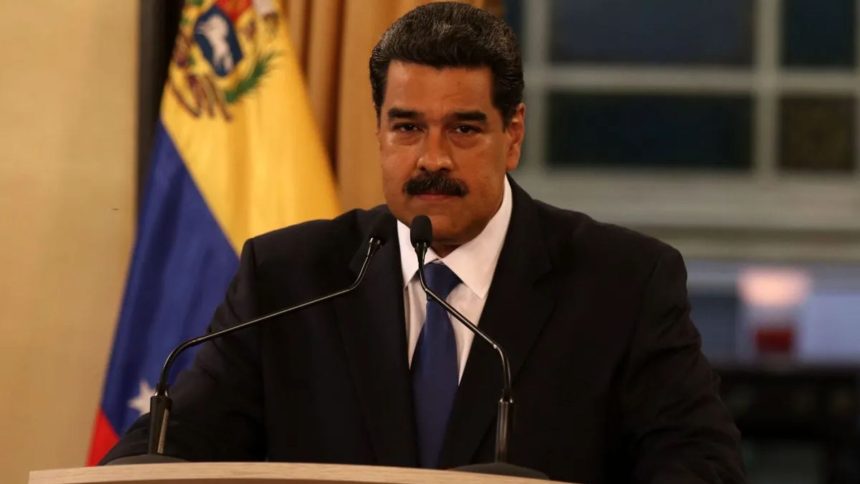
In a move that has sent ripples through the realms of international diplomacy and aviation, the United States has seized an aircraft previously linked to Venezuelan President Nicolás Maduro. The incident, shrouded in layers of political intrigue and legal complexities, shines a spotlight on the shadowy dealings that underlie global aviation and the intricate web of sanctions that characterize U.S.-Venezuela relations.
As authorities probe deeper into the circumstances surrounding the plane’s acquisition, questions arise regarding the implications for both national sovereignty and international law. This article delves into the details of the seizure, the illicit purchase that led to it, and the broader ramifications for Venezuela’s leadership in a time of economic strife and political turbulence.
US Authorities Take Action: The Seizure of Maduros Aircraft
In a major crackdown, US authorities have seized an expensive aircraft belonging to Venezuelan President Nicolas Maduro. This bold move came after probe investigators discovered the illicit purchase of the aircraft which had been funded through a fraudulent money network. The operation was executed by the Homeland Security Investigations (HSI), adding a new twist to Maduro’s already embattled regime.
The cornered Maduro administration, already facing severe allegations of financial mismanagement and human right abuses, now confronts additional accusations. The seized aircraft, a luxurious model built for high-level government cruises, is worth millions. Here is a brief comparison of Maduro’s seized aircraft and a standard commercial plane:
| Aircraft Type | No. of Passengers | Est. Worth |
|---|---|---|
| Maduro’s Seized Plane | Less than 50 | Millions of USD |
| Avg. Commercial Airplane | 150-850 | Varies greatly |
The seizure of President Maduro’s plane serves as an alarming wake-up call for other leaders who potentially abuse their power for personal gain. The authorities’ action has sent ripples of shock throughout their corridors of power. Below are some of the major implications of the enforcement:
- In-depth Scrutiny: Increased investigation into potential illicit networks connected to the Maduro administration.
- Deterrence: Acts as a deterrent for individuals or groups planning similar schemes.
- International Pressure: Puts additional pressure on the Maduro regime, which already faces international condemnation.
One thing is clear – there is no hiding place for those who exploit their positions for personal whims and fancies.
Unraveling the Purchase: Insights into Illicit Transactions
In a shocking turn of events, the US authorities have recently seized a plane belonging to Nicolás Maduro, the President of Venezuela, due to suspicions of illicit purchase. In an operation that has been lauded as a triumph in barring corrupt practices at international levels, the incident has unraveled the intricate web of questionable transactions that is being referred to as an alarmingly growing trend.
With this incident coming to light, it’s become all the more apparent that certain high-profile personages may be implicated in shady deals. Some of the case’s significant points include:
- Deceptive Procurement: The Venezuelan government’s acquisition of the plane was allegedly shrouded in secrecy and deceit, raising the authorities’ eyebrows.
- Violation of Sanctions: The transaction, as it stands, is deemed to have been in breach of the economic sanctions imposed on Venezuela.
- Role of Intermediaries: The meticulous analysis of the case has disclosed the significant role played by intermediaries in facilitating illicit purchases.
The intricacy of these illicit transactions is starkly evident from their comprehensive breakdown. To illustrate, a comparative study was conducted between the seemingly legitimate and illicit deals. The data acquired was organized into a table for an easier understanding of the unfolding scenario.
| Legitimate Purchases | Illicit Purchases |
|---|---|
| Transparent Procedures | Opaque Procedures |
| No Sanction Violation | Sanction Violation |
| Accountable Parties | Anonymous Parties |
With the illicit transactions rapidly increasing on a global scale, it is necessary to strengthen international regulations to stem the tide of secretive deals. The Maduro incident should serve as a wake-up call to implement stringent measures and tighter controls.
Implications for International Relations: A Shift in Diplomatic Dynamics
The recent unprecedented seizure of Venezuelan President Maduro’s aircraft by the US government indicates an undeniable shift in diplomatic relations at an international level. This event can be seen as a reflection of emerging power dynamics and can potentially influence future foreign policy decisions. Issues like these give rise to wrangles that extend beyond the two countries involved, as they may impact other nations whose interactions are closely tied with Venezuela and the USA.
The following insights are pivotal in understanding this shift:
- Unilateral Actions: The unilateral decision by the US to impound a foreign nation’s head of state’s plane forebodes a bolder approach in asserting their authority, which might set an unfavourable precedent for international politics.
- Rule of Law: This occurrence does not only scrutinize the global code of conduct among nations but also interrogates the sanctity of the rule of law in international relations.
- Geopolitical Implications: As influential powers, both US and Venezuelan actions can significantly sway the geopolitical landscape. The reactions of allies, trade partners and international organisations will shape the coming narrative.
| Country | Potential Impact |
|---|---|
| Russia | May intensify discontent with US foreign policy |
| Brazil | Could force a reconsideration of diplomatic stance towards the US |
| China | Risks straining bilateral relations with the US |
This abrupt American action has thus far ignited innumerable debates, and only time will reveal the full breadth of its implications on the global diplomatic stage.
Future Recommendations: Strengthening Oversight on Illicit Aviation Deals
In a landmark move, the US government displayed its commitment to curbing illicit aviation dealings. Having seized Venezuelan President Maduro’s plane, the incident reveals the pressing need for more rigorous global oversight in airplane transactions. Dissembling deals are adversely impacting the global economy, not to mention the implications for international safety and security. These events should propel us towards the development of comprehensive protocols and legal frameworks, enabling governing bodies to exert total jurisdiction over these illicit dealings.
Strengthening Oversight Procedures
Oversight procedures should include detailed scrutiny of aircraft acquisition documents, authenticating the history of assets, and tracing financing sources. Building on these fundamentals, the incorporation of the following measures could greatly improve oversight on potential illicit airplane purchase, and in turn, present a viable resolution to this escalating crisis:
- Increased Transparency: Share transaction documents with all involved jurisdictions to allow input and review. This promotes good governance while eliminating the possibility of concealed or illegal contracts.
- International Cooperation: A unilateral approach to oversight unfortunately results in loopholes exploiting by unscrupulous individuals. To counter this, countries need to cultivate inter-agency and international collaborations in the aviation industry.
- Periodic Surveillance: Implement regular check-ups of assets and transactions, ensuring the lawfulness of plane deals. Rigorous monitoring discourages illicit activities and promotes the culture of honesty in trading.
- Streamlined Legislation: A harmonized set of statutes applied globally would resolve inconsistencies currently present in monitoring airplane transactions. Similarly, the penalties for violations must be severe enough to act as a deterrent.
| Recommendation | Result |
|---|---|
| Increased Transparency | Elimination of illegal contracts |
| International Cooperation | Plug loopholes, promote global responsibility |
| Periodic Surveillance | Lawfulness, discourage illicit activities |
| Streamlined Legislation | Resolve inconsistencies, harsh penalties |
The time has come for the aviation industry to toughen its oversight procedures and governance frameworks. Only then can illicit deals be curtailed, buying and selling of planes made more transparent, and international security and trust be restored.
To Wrap It Up
As the dust settles on the dramatic seizure of President Maduro’s plane, the implications of this event reach far beyond the confines of aviation law and international relations. This incident not only highlights the ongoing tension between the United States and Venezuela but also sheds light on the complexities surrounding illicit procurement practices in today’s globalized world. As investigations continue to unfold, the focus will likely turn to the broader consequences of such actions—not just for Maduro and his administration, but for the geopolitical landscape as a whole.
What remains to be seen is how this will impact not only U.S.-Venezuelan relations but also the wider dialogue about sovereignty, legality, and accountability in international affairs. In a world increasingly defined by its intricate webs of diplomacy and conflict, this incident serves as a potent reminder of the fragile equilibrium that governs nations and the actions that can tip it off balance.


