


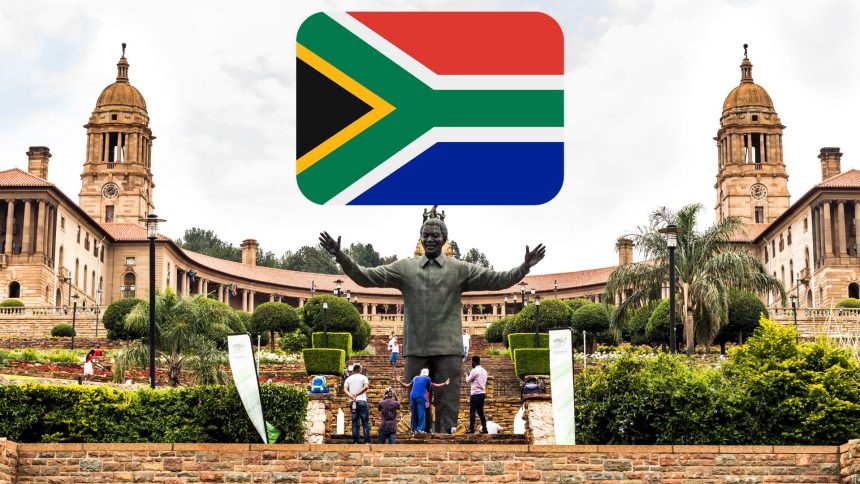
As the dawn of the 20th century unfolded, South Africa stood at a crossroads, shaped profoundly by over three centuries of European settlement. The arrival of Dutch and British settlers laid the foundations for a complex sociopolitical landscape marked by dispossession, conflict, and systemic inequality. By the early 1900s, these dynamics had reached a critical juncture, particularly with the establishment of policies that entrenched racial segregation and economic disparity.
This article delves into the significant ramifications of European colonization during this pivotal era, exploring how the resultant structures of governance, land ownership, and social stratification have reverberated through history, shaping the nation’s trajectory and the lives of its diverse populations.
Table of Contents
- Impact on Indigenous Communities and Land Dispossession
- Economic Transformations and the Rise of Mining Industries
- Social Stratification and the Emergence of Racial Segregation
- Lessons Learned and Recommendations for Inclusive Development
- Q&A
- In Retrospect
Impact on Indigenous Communities and Land Dispossession
The arrival of European settlers in South Africa during the early 1900s had profound implications for Indigenous communities, fundamentally altering their social, cultural, and economic landscapes. Land dispossession was one of the most devastating outcomes, as vast areas traditionally inhabited by these communities were expropriated under colonial policies. Indigenous people found themselves forcibly removed from their ancestral lands, facing restrictions on movement and loss of access to resources critical for their survival. The systemic nature of this dispossession resulted in widespread poverty and dislocation, undermining traditional practices and leading to the erosion of cultural identities. Over time, communities were compelled to adapt to a restrictive economy, often relegated to laboring in the very lands they once owned.
This process was facilitated through a variety of legal and political mechanisms, such as the Natives Land Act of 1913, which restricted land ownership for Indigenous peoples to designated areas. The following table illustrates key aspects of land dispossession policies enacted during this period:
| Policy/Act | Year Enacted | Impact |
|---|---|---|
| Natives Land Act | 1913 | Restricted land ownership to 7% of South Africa’s land for Indigenous peoples |
| Group Areas Act | 1950 | Established residential segregation and enforced further dispossession |
| Native Trust and Land Act | 1936 | Increased land reserves, but continued to deny full ownership rights |
This systemic marginalization not only dispossessed Indigenous peoples of their land but also stripped them of their autonomy, reducing their ability to participate fully in economic and political life. The legacy of these displacements continues to reverberate through society, manifesting in ongoing struggles for land restitution and social justice among Indigenous communities in South Africa today.
Economic Transformations and the Rise of Mining Industries
In the early 1900s, the agricultural landscape of South Africa underwent significant changes due to European settlement, leading to a profound economic transformation. The discovery of precious minerals, particularly gold and diamonds, not only propelled the growth of the mining sector but also reshaped the socio-economic fabric of the region. The influx of European settlers facilitated the establishment of mining towns that drew individuals from various backgrounds, effectively creating a melting pot of cultures while driving industrial growth. This surge in mining activities had several notable impacts:
- Increased Employment Opportunities: The mining boom created numerous jobs, attracting thousands of migrant workers from surrounding regions.
- Infrastructure Development: The burgeoning industry necessitated the expansion of transport networks, including railways and roads, to link remote mines to ports.
- Urbanization: Growth in mining led to the rapid urbanization of previously rural areas, as workers flocked to cities in search of better prospects.
These economic shifts also precipitated considerable socio-political repercussions. The wealth generated from minerals enriched not only individuals but also fueled governmental policies, leading to the enforcement of land reforms that favored European settlers. This often resulted in the displacement of indigenous populations, reshaping land ownership and usage in South Africa. Key statistics from this vibrant era illustrate its lasting influence:
| Year | Gold Production (oz) | Diamond Exports (carats) |
|---|---|---|
| 1900 | 1,000,000 | 800,000 |
| 1910 | 3,500,000 | 1,300,000 |
| 1920 | 5,000,000 | 2,700,000 |
Social Stratification and the Emergence of Racial Segregation
The early 1900s in South Africa were marked by a significant shift in social structures, spurred largely by European colonial settlement. The imposition of strict class hierarchies began to redefine societal organization, creating a landscape where race became a defining characteristic of one’s social standing. This emerging division was not merely about economic status; rather, it entrenched racial identities in ways that would resonate for generations. The result was a deeply stratified society where the white minority exerted dominance over the non-white majority, leading to an institutionalized system of privileges and discrimination based on race.
This system facilitated the establishment of racial segregation, codifying separation in various aspects of life. Under colonial rule, legislation was enacted to segregate residential areas, education, and economic opportunities, such as:
- Land Ownership: Whites received preferential access to fertile lands.
- Education System: Different curricula were implemented, with inadequate funding for black schools.
- Employment Opportunities: Job reservations enforced through labor laws ensured lower wages for non-whites.
| Group | Rights Granted |
|---|---|
| White Settlers | Full political and economic rights |
| Black South Africans | Minimal rights, mostly restricted |
Lessons Learned and Recommendations for Inclusive Development
Additionally, the role of community engagement has emerged as a vital aspect of development initiatives. Historical attempts to impose top-down policies often overlooked local needs and perspectives, resulting in ineffective solutions and societal fragmentation. As a recommendation, development strategies must prioritize inclusive mechanisms, fostering active participation from underrepresented groups. This can be achieved through open dialogues, collaborative planning, and transparent governance structures. Embracing this approach not only enriches development projects but also strengthens social cohesion and community resilience.
Q&A
Q&A: Understanding the Impact of European Settlement in South Africa in the Early 1900s
Q1: What were the primary motivations behind European settlement in South Africa during the early 1900s?
A1: European settlement in South Africa during the early 1900s was largely driven by the pursuit of resources, agricultural expansion, and economic opportunity. The discovery of diamonds and gold in the late 1800s spurred a massive influx of European settlers and prospectors, eager to exploit the country’s mineral wealth. Additionally, European powers sought to establish colonial dominance in the region, influencing both local politics and economic systems.
Q2: What were some of the immediate social consequences of European settlement in South Africa at that time?
A2: The early 1900s saw significant social upheaval due to European settlement. Indigenous populations faced land dispossession, displacement, and violence as settlers expanded their territories. Policies of segregation began to take root, laying the groundwork for systemic racial discrimination. The introduction of the pass laws heavily restricted the movement of non-white South Africans, segregating communities and institutionalizing apartheid-like conditions.
Q3: How did European settlement affect the economy of South Africa in the early 1900s?
A3: The economy transformed dramatically due to European settlement. The mining industry boomed, attracting investments and creating job opportunities for many, albeit often under exploitative conditions for black laborers. European settlers implemented agricultural practices that altered land use and shifted traditional livelihoods. However, this economic growth predominately benefited the European settlers and contributed to vast inequalities.
Q4: What role did the government play in managing the settlement dynamics during this period?
A4: The colonial government actively supported European settlement through policies that favored settlers over indigenous populations. Laws were enacted to facilitate land acquisition by Europeans, while simultaneously enforcing control over native populations. The South African War (1899-1902) further entrenched British authority and led to the establishment of a power structure that prioritized settler interests.
Q5: What were the long-term implications of early 1900s European settlement on South African society?
A5: The long-term implications were profound and persistent, culminating in a deeply divided society that would endure for decades. The foundations of institutionalized racism laid during this period ultimately evolved into the apartheid system, which formally began in 1948. Economic disparities, social tensions, and cultural dislocation rooted in early 1900s settlement patterns continue to affect contemporary South African society.
Q6: How is this period remembered in today’s South Africa?
A6: Today, this period is often viewed through a lens of critique, emphasizing the injustices faced by indigenous populations and the lasting consequences of colonial rule. It serves as a reminder of the ongoing struggles against inequality and the importance of reconciliation efforts. Historical narratives are continually reexamined to foster a society that acknowledges its complex past while striving for a more equitable future.
In Retrospect
the European settlement in South Africa during the early 1900s reshaped the socio-political landscape of the region in profound and lasting ways. The establishment of colonial governance facilitated the implementation of policies that favored European settlers while systematically disenfranchising the indigenous population. This resulted in significant social stratification, economic disparity, and the entrenchment of racial divides that would culminate in decades of conflict and resistance.
As contemporary South Africa grapples with the legacies of colonialism, the consequences of early 20th-century policies remain palpable. Economic inequities, social tensions, and political challenges persist, serving as a reminder of the complex history that continues to influence the nation. Understanding this period is critical not only for acknowledging past injustices but also for forging a more equitable future.


